01
Book with the exact travel document
For foreign visitors, the passport is the identity key for booking, check-in, security, and boarding. A small name or document mismatch can become a counter problem.
Flight day guide
China domestic flights are efficient when the setup is clean. The common friction points are not mysterious: passport details, airport choice, counter check-in, baggage allowance, security rules, and tight transfers.

Page map
01
For foreign visitors, the passport is the identity key for booking, check-in, security, and boarding. A small name or document mismatch can become a counter problem.
02
Major Chinese cities can have more than one airport, and airport transfers can be longer than the flight. Choose the flight after calculating door-to-door time.
03
Foreign-passport travellers may need an airline counter even when local passengers use ID-card kiosks or app boarding. Build time for this.
04
Power banks, batteries, liquids, lighters, aerosols, tools, and checked-bag rules can decide whether the day stays calm or becomes repacking theatre.
Booking details
Chinese domestic aviation works heavily through identity checks. Local travellers may move through ID-card systems; foreign visitors should assume the passport and the ticket record must line up clearly.
Use the same order, spelling, and spacing accepted by the booking platform. If the system separates surname and given names, check the final ticket record before travel day.
Choose passport as the travel document when booking as a foreign visitor, and bring that same physical passport to the airport. Do not book with one document and travel with another.
If the booking flow asks for nationality, date of birth, or passport expiry, fill them consistently. Keep a screenshot of the final passenger details.
Use a booking channel that can help in English or your preferred language if a name correction, refund, delay, or missed connection problem appears.

Airport choice
Capital (PEK) and Daxing (PKX)
Both are useful, but they sit in different directions from the city. A cheaper flight can cost more in transfer time.
Hongqiao (SHA) and Pudong (PVG)
Hongqiao is often convenient for domestic and rail connections; Pudong is a major international gateway. Do not assume they are interchangeable.
Tianfu (TFU) and Shuangliu (CTU)
Tianfu can involve a long transfer from central Chengdu. Match the airport to your hotel, train, or onward plan.
Several regional options
A map can make Pearl River Delta airports look close. Border, ferry, rail, and traffic time can change the real choice.
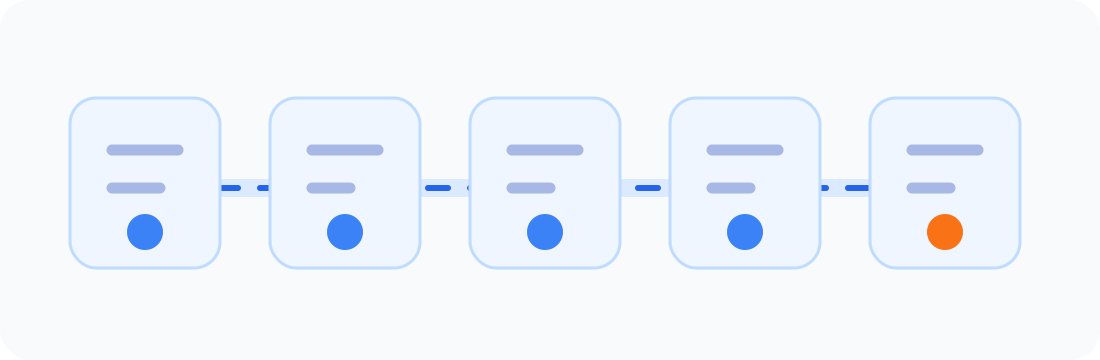
Flight day flow
Confirm flight status, terminal, baggage allowance, airport transfer time, weather, power-bank label, and whether online check-in works with your passport.
Pack passport, booking confirmation, Chinese airport name, power bank in carry-on, liquids arranged, and enough time for traffic or metro transfer.
Go to the correct airline counter or bag drop. If kiosks reject the passport, do not fight the machine; move to staffed service.
Keep power banks, laptop, camera batteries, and liquids easy to remove. Be ready for extra questions if labels are unclear.
Chinese airports can involve long walks, bus gates, terminal changes, and early boarding. Reach the gate before the final call becomes stressful.
Baggage and security
Allowance depends on airline, fare, route, and ticket type. Check kilograms and piece count before buying, not only after reaching the counter.
Domestic flights can be strict about size and weight, especially on smaller aircraft or full flights. Keep essentials in a smaller under-seat pouch.
Carry in cabin baggage only. For China domestic flights, use clearly labelled, non-recalled power banks with accepted markings, and avoid high-capacity units near the limit.
Security can be stricter than travellers expect. Pack non-essential liquids in checked luggage and check current airline or airport restrictions before flying.
Do not rely on carrying them through Chinese airport security. Leave them behind instead of negotiating at the checkpoint.
Timing
Arrive about two hours early, especially with checked luggage, passport counter check-in, children, or a large airport.
You may need less time, but foreign-passport check-in can still add uncertainty. Keep a buffer.
Add time for road traffic, metro crowds, security queues, and slower counters. Do not schedule the day tightly.
Leave a large buffer. Immigration, baggage reclaim, customs, terminal change, and domestic check-in can be separate processes.
Treat it like two unrelated trips. If the first flight is late, the second airline may not protect you.
Delays
Summer storms, winter weather, congestion, and late inbound aircraft can disrupt a neat schedule. Keep critical plans away from the same evening when possible.
Watch airline messages and airport screens, but confirm gate changes, meal vouchers, baggage, or rebooking options with the airline counter when the change matters.
A delayed evening flight can arrive after metro service or hotel reception convenience. Save taxi, ride-hailing, and hotel contact details before takeoff.
Timed museum entries, shows, and prepaid transfers should not depend on a domestic flight landing exactly on time.
Flight or train
Very long distances, remote regions, limited rail routes, or when the airport is close to both ends
Remember airport transfer, check-in, security, baggage, and delay risk.
City pairs such as Beijing-Shanghai, Shanghai-Hangzhou, Guangzhou-Shenzhen, Chengdu-Chongqing
Often easier door-to-door when stations are central and luggage is manageable.
Late arrival before a major transfer, elderly travellers, families, or weather-risk connections
An airport hotel can be smarter than forcing a night transfer across a large city.
When the flight saves little time or creates airport backtracking
Sometimes adding a rail leg or changing city order removes a flight day entirely.
Traveller matches
Use major airlines, reasonable daytime departures, and airport transfers with margin. The first flight is not the place to test a 45-minute airport sprint.
Pay attention to baggage allowance, car transfer time, food, bathrooms, and gate distance. Choose calmer departure windows.
Keep the previous evening clear, use airport hotels when needed, and avoid separate-ticket tight connections before meetings.
Check flight frequency and backup days. Some routes have fewer alternatives if weather or aircraft rotation disrupts the plan.
Compare the full cost: baggage, airport transfer, early taxi, late arrival, and cancellation flexibility can erase the cheap fare advantage.

Backup stack
Domestic flights become low-stress when each possible failure has a simple backup: correct identity, right airport, clean packing, and a plan if the schedule moves.
Passport, booking confirmation, passenger-detail screenshot, visa or entry proof if relevant, and airline support contact.
Chinese airport name, terminal, transfer route, taxi or ride-hailing fallback, and enough buffer to absorb a slow counter.
Clear allowance, carry-on essentials, power bank in cabin bag, and no fragile packing assumptions.
Hotel contact, late-arrival transport, flexible evening plan, and no must-do activity immediately after landing.
Troubleshooting
Go to the airline counter with passport and booking confirmation. Do not waste time trying every machine.
Contact the booking platform or airline before departure day. Small formatting differences may be fine, but do not assume a true spelling error will pass.
Check whether changing the flight is cheaper than a long transfer. If already on the day, calculate traffic honestly and ask the airline about options early.
Show the capacity label and accepted mark if present. If it is unlabelled, recalled, damaged, or too large, expect it may be refused.
Recheck hotel arrival, airport transfer, last metro, and next-day plans. Move non-refundable activities before the delay causes a second problem.
File the report before leaving baggage claim, keep the tag, save the hotel address in Chinese, and photograph all documents.
Keep planning
Pick one connected topic and finish the practical setup before adding more places to the itinerary.
Browse all guides ->Important disclaimer
This guide is for general trip-planning information, not legal, medical, financial, or immigration advice. Rules, availability, and provider policies can change—verify time-sensitive details with the relevant official source before you travel or book.
Content confidence
Domestic Flights in China has been reviewed for practical visitor use, internal links, route relevance, and clear action steps.
Rules for entry, payment products, bookings, transport, and attractions can change. Verify official or provider sources before relying on time-sensitive details.
Check official sources before booking time-sensitive items.
Plan with cities
Use these city guides to turn the topic into a route, hotel choice, transfer day, or first-stop decision.

History, culture, and iconic landmarks.
Open city guide ->
Modern, vibrant, and full of surprises.
Open city guide ->
Relaxed, lovely, and famous for pandas.
Open city guide ->
Xinjiang gateway with markets, museums, and mountain access.
Open city guide ->