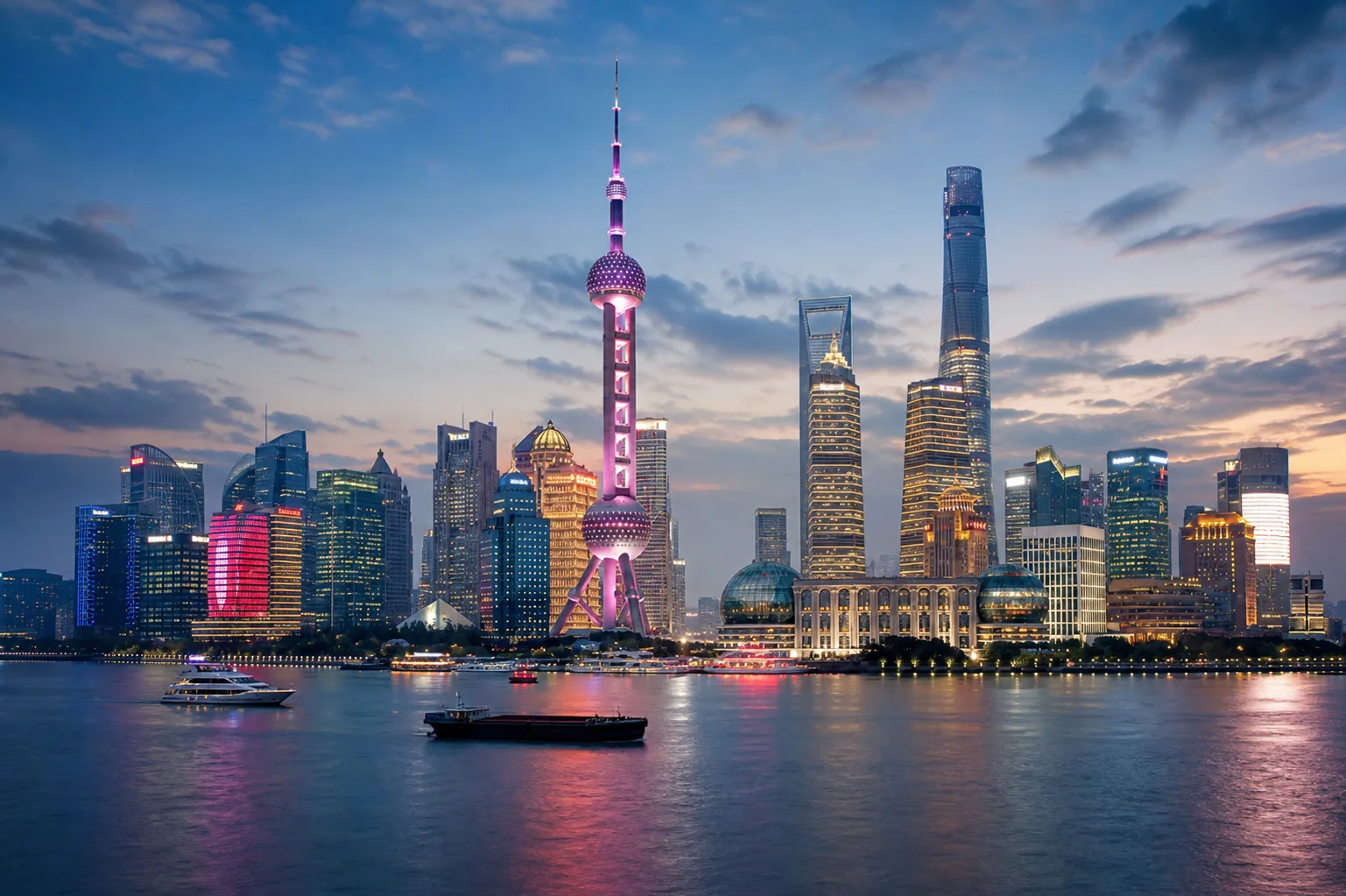
Shanghai is usually the easiest first China city for international visitors, combining riverfront skyline views, historic streets, excellent food, and a very practical transport network.
Shanghai city overview, suggested stay, highlights, transport notes, nearby trips, and connected planning guides have been reviewed for practical trip planning.
Use this city page as a planning framework. Confirm current opening hours, ticket windows, transport schedules, and local rules before booking.
Check official sources before booking time-sensitive items.
Planning overview
How to Plan Shanghai
Shanghai is the smoothest big-city introduction to China for many international travelers: metro-first, visually dramatic, rich in food and shopping, and easy to pair with nearby Jiangnan cities. Plan it by neighborhoods rather than by isolated attractions, because the strongest days usually combine a river view, a historic district, and an evening food or shopping area.
The BundYu GardenFrench Concession
Best suited for
First-time China arrivals
Skyline and night photography
Food, cafes, and shopping
Easy high-speed rail side trips
Best time to visit
Spring and autumn are the most comfortable seasons. Summer is hot, humid, and storm-prone, while winter is chilly and damp but still workable for museums, food, and city walks.
Stay near People's Square, Nanjing Road, Jing'an, Xintiandi, or Lujiazui if this is your first visit.
Use the metro for most cross-city trips, then walk within compact areas such as the Bund, Old City, and former French Concession.
Keep one evening flexible for skyline weather: the Bund and Lujiazui are best when visibility is good.
Book or verify popular museum, garden, and observation deck rules before committing a day around them.
Start with the riverfront: it gives first-time visitors the quickest sense of Shanghai's scale.
Suggested routes
Itineraries for Shanghai
Nanjing Road keeps central routes easy when you want shopping, food, and transit.
Wikimedia Commons
1 day
Classic Shanghai snapshot
Best for a stopover or a tight business-trip add-on. Keep the day central and save energy for the evening skyline.
1Yu Garden and Old City in the morning
2People's Square or Nanjing Road in the afternoon
3The Bund at sunset
4Optional Lujiazui night view across the river
2 days
First-timer essentials
Enough time to balance historic Shanghai, modern Pudong, and a slower neighborhood walk.
1Day 1: Old City, Yu Garden, Nanjing Road, the Bund
2Day 2: Former French Concession, Xintiandi or Tianzifang, Lujiazui
3Add a museum or observation deck depending on weather
3-4 days
Deeper city plus side trip
Use the extra time for food, museums, shopping, and a high-speed rail day trip instead of overloading central Shanghai.
1Add Shanghai Museum, urban planning/history stops, or contemporary art areas
2Spend one evening around Jing'an or the French Concession
3Take a day trip to Suzhou or Hangzhou if the weather is good
Neighborhoods
Best Areas to Explore
The Bund and Huangpu riverfront
The classic Shanghai first impression: historic banks and trading houses on one side of the Huangpu River, Pudong towers on the other. It works best around sunset, then again after dark when the skyline lights come on.
Bund promenadeWaibaidu BridgeNanjing Road East
Old City and Yu Garden
The older Chinese core of Shanghai, useful for traditional architecture, gardens, temples, snacks, and a very different texture from the glass-and-steel skyline.
Yu GardenCity God Temple areaOld streets and teahouses
Former French Concession
Tree-lined streets, restored shikumen lanes, boutiques, cafes, small galleries, and some of the city's easiest slow walking. This is the best area when you want Shanghai to feel local rather than landmark-heavy.
XintiandiTianzifangFuxing Park
Lujiazui and Pudong
The modern financial district across the river from the Bund, with observation decks, malls, and the most recognizable skyline cluster.
Oriental Pearl TowerShanghai Tower areaRiverside viewpoints
What to see
Top Sights
The Bund
Shanghai's signature riverfront, pairing early modern architecture with the Pudong skyline across the Huangpu River.
Arrive before sunset, walk north-south, then decide whether to cross to Lujiazui for the reverse view.
Yu Garden and Old City
A compact area for classical garden scenery, traditional roofs, snack streets, and a useful contrast to modern Shanghai.
Go earlier in the day for calmer lanes, and verify current ticket or reservation rules before building the morning around the garden.
Former French Concession
One of Shanghai's best walking areas, with leafy streets, lane-house architecture, boutiques, cafes, and restaurants.
Do not rush it as a checklist. Pick one or two anchors, then leave time for side streets.
Lujiazui skyline
The Pudong cluster of towers gives Shanghai its futuristic side and works well for observation decks, malls, and riverfront photos.
Choose this on a clear day; haze or rain can make paid viewpoints less rewarding.
People's Square and museums
A practical central hub with major metro connections, museums, shopping, and easy access to Nanjing Road.
Use it as a transfer-friendly indoor block when weather is poor.
Getting around
Transport Notes
Arriving by air
Shanghai has two major airports. Pudong handles most long-haul international flights, while Hongqiao is especially useful for domestic flights and high-speed rail connections. Both connect into the metro system.
Arriving by train
Hongqiao Railway Station is the key high-speed rail hub for many routes. Shanghai Railway Station and Shanghai South Railway Station are also useful depending on your destination.
Getting around
The metro is usually the easiest way to cross the city. For short hops inside a neighborhood, walking is often better than trying to force every movement through transit.
Taxis and ride-hailing
Taxis help late at night or with luggage, but traffic can be slow. Save hotel and destination names in Chinese to reduce friction.
Food
What to Eat
Start with local staples
Look for xiaolongbao, shengjianbao, scallion oil noodles, red-braised dishes, and seasonal river or seafood dishes.
Use neighborhoods, not single restaurants
The former French Concession, Jing'an, Huangpu, and local mall food floors all work well for flexible meals without crossing town.
Mix old and new Shanghai
Shanghai is strong at both classic local snacks and polished modern dining, so a good food day can move from street-level buns to a stylish dinner.
Go next
Easy Trips from Shanghai
Suzhou
The easiest classic day trip: gardens, canals, and old Jiangnan streets, commonly reached by high-speed train in about half an hour.
Hangzhou
Best when you want scenery and tea culture. West Lake is the anchor, and the city pairs naturally with a longer Shanghai stay.
Nanjing
A stronger history-focused extension, better as an overnight or long day if you want museums, city walls, and republican-era sites.
Keep planning
Useful next pages for Shanghai
Connect this city page with the practical setup decisions most likely to affect arrival, tickets, transport, and daily movement.