01
Fix the trip mechanics first
Payment, mobile data, maps, bookings, passport checks, language, and backups affect every day. Set them up before adding more sightseeing.
Practical first-visit guide
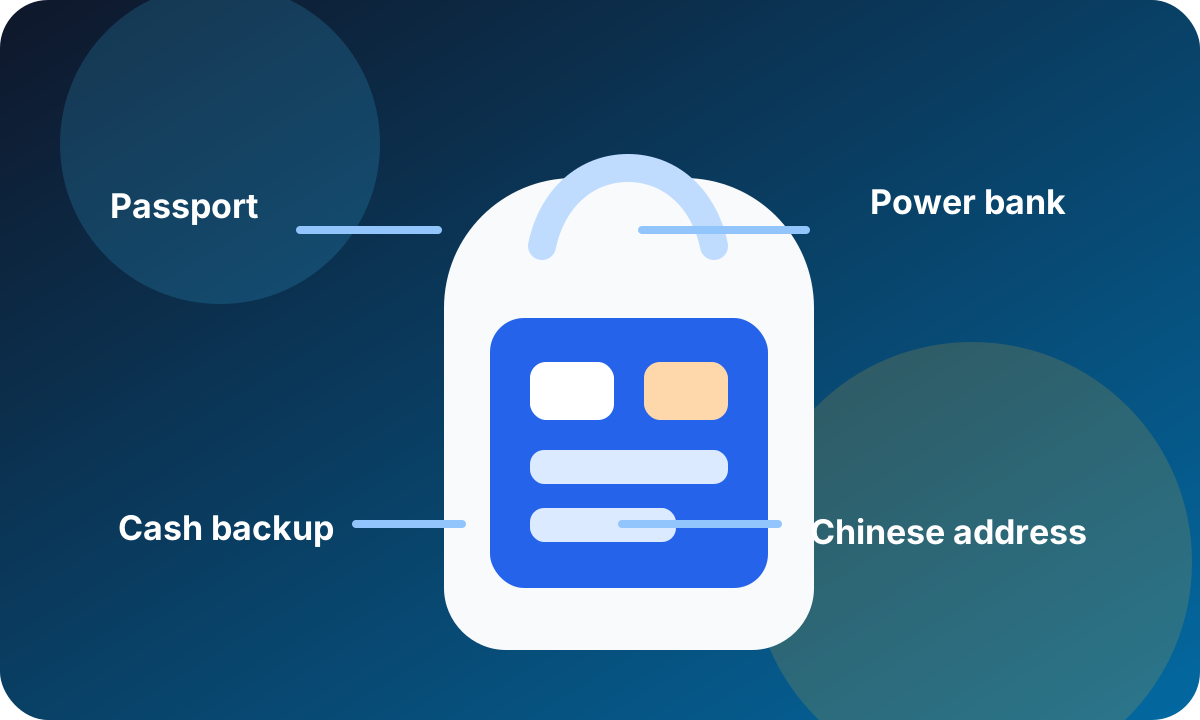
Page map
01
Payment, mobile data, maps, bookings, passport checks, language, and backups affect every day. Set them up before adding more sightseeing.
02
Install core apps, link cards, arrange eSIM or roaming, save Chinese addresses, and make bookings with passport details exactly as printed.
03
Keep the route simple, confirm data and maps, test payment with a small purchase, and avoid time-sensitive reservations.
04
Plan trains, hotels, attractions, and backup moves so one failed app, wrong map pin, or missed SMS does not break the day.
Common friction
Answer these six questions before departure and the rest of the trip becomes easier to adjust on the ground.
Set up Alipay and WeChat Pay before departure, link more than one card if possible, and carry RMB for a taxi, a meal, or a short app failure. Payment works best when you have two digital paths and one cash fallback.
Arrange roaming, eSIM, or a local SIM plan before you need it. Keep your home number reachable for bank and wallet verification. Do not depend on public Wi-Fi; many networks require a Chinese phone number.
Use Chinese addresses, a local map app, station exit letters, ride-hailing through mini apps, and hotel screenshots. The final walk from station exit to hotel door is often the part that needs the most precision.
Alipay can cover many visitor tasks, but WeChat is still useful for hotel contact, attraction mini programs, some restaurants, and local communication. Install and verify both if possible.
Trains, hotels, domestic flights, and many attractions tie booking and entry to passport details. Use the same passport name and number everywhere, and carry the physical passport on major travel days.
You do not need fluent Mandarin for a first trip. You do need short prepared Chinese text for addresses, allergies, medicine, phone-number issues, and common requests.
Before you fly
Install Alipay, WeChat, Amap or Gaode, an offline-capable translation app, Trip.com or another booking app you trust, and 12306 if you want to book trains directly. Android users should not rely on post-arrival app-store access.
Choose roaming, a China-capable eSIM, or a local SIM plan. Keep your home SIM reachable if banks, wallets, email, or card issuers send verification codes. Airport Wi-Fi should be a backup, not the plan.
Set up Alipay and WeChat Pay if possible, link more than one card, complete identity checks, and notify your card issuer. Carry enough RMB for one taxi, one meal, and a short payment outage.
For each hotel, station, airport, and attraction, save the Chinese name, full address, phone number if available, and a screenshot. English names may be duplicated, outdated, or useless to a driver.
Use your passport name exactly as printed. Keep booking confirmations offline and use the same passport number across hotels, trains, flights, and attraction reservations.
Core system
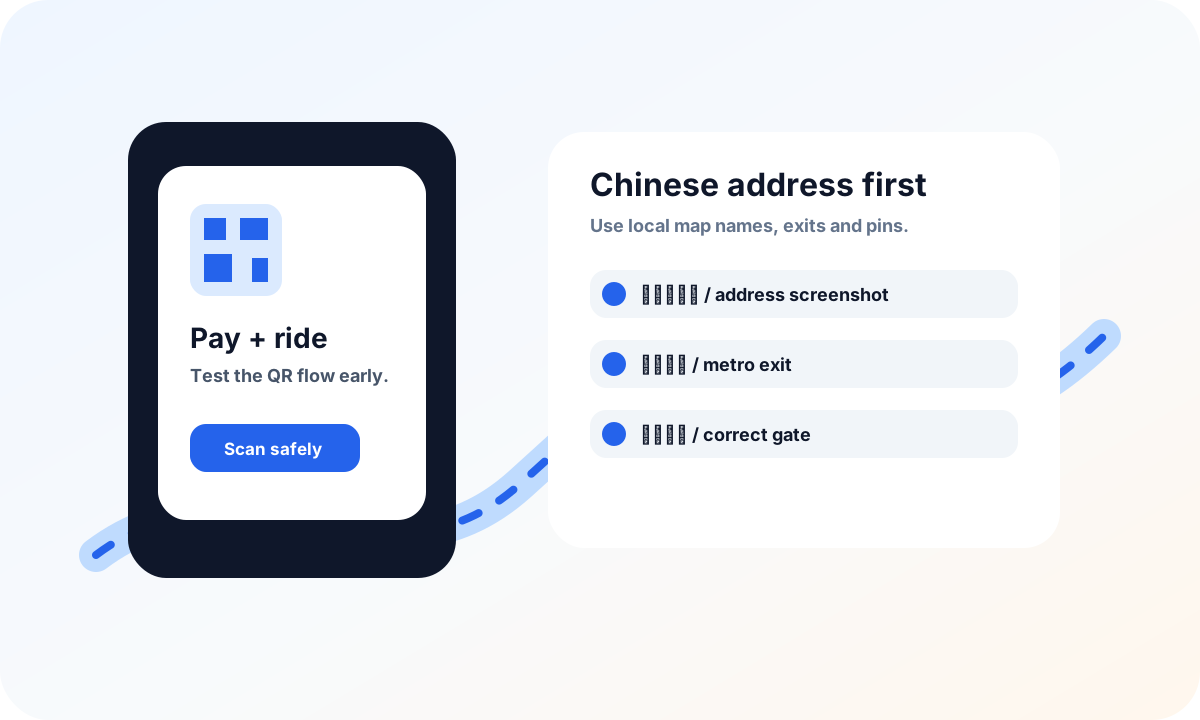
Most first-trip friction starts when one phone-dependent task fails: mobile data is not working, a payment app is not verified, a map pin is wrong, or the hotel address is saved only in English.
Your phone may handle payment, translation, ride-hailing, restaurant menus, train tickets, attraction bookings, and hotel contact. Make it reliable before arrival, then keep enough offline information to recover without it.
Payment
Alipay can cover many daily visitor needs; WeChat Pay is still valuable for merchants, restaurants, mini programs, and local contacts. The safest setup is not choosing one app. It is redundancy.
Link two cards if possible, keep physical cards separate from the phone, and carry RMB. If a wallet transaction fails, a bank requests verification, or signal drops, you still have a way to pay.
Internet access
Choose the access method that fits your device, trip length, and verification needs: roaming, China-capable eSIM, local SIM, or a combination. The important part is knowing what works before you land.
Public Wi-Fi may require a Chinese phone number. Some app stores and services may be harder to reach. Bank verification may still go to your home number. Build the access plan at home, not at the airport curb.
Maps and movement
High-speed trains and metro lines are usually easier than the last turn into the correct hotel, gate, or station exit. Large stations have many exits, attractions may have multiple entrances, and English names can point to the wrong place.
Before each travel day, save the Chinese address, nearest station exit, and one nearby landmark. For taxis, show the Chinese address. For metro, choose the exit before leaving the platform area.
Bookings and passport
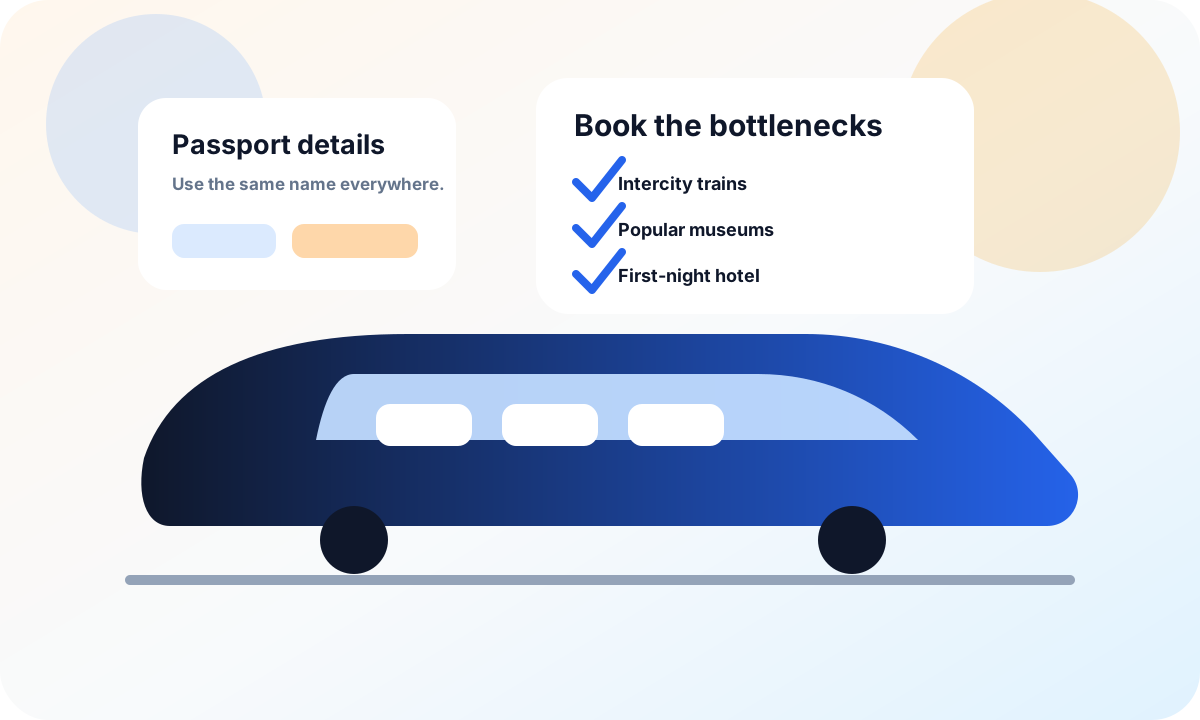
Hotels, train tickets, domestic flights, museums, and attractions may connect booking and entry to passport details. Treat the passport as part of the ticketing system.
Use the same passport name and number across platforms. Carry the physical passport for travel days and major attractions. Save confirmations offline, especially for timed-entry sights and holiday periods.
Language
Most interactions need clear details, not fluent conversation: hotel address, food allergy, medicine, "less spicy", "I cannot receive SMS", "please call this number", or "is this the entrance?"
Keep messages short. Camera translation helps with menus and signs, but a prepared Chinese sentence or screenshot is faster and less error-prone than a long machine-translated explanation.
First 24 hours
Step 1
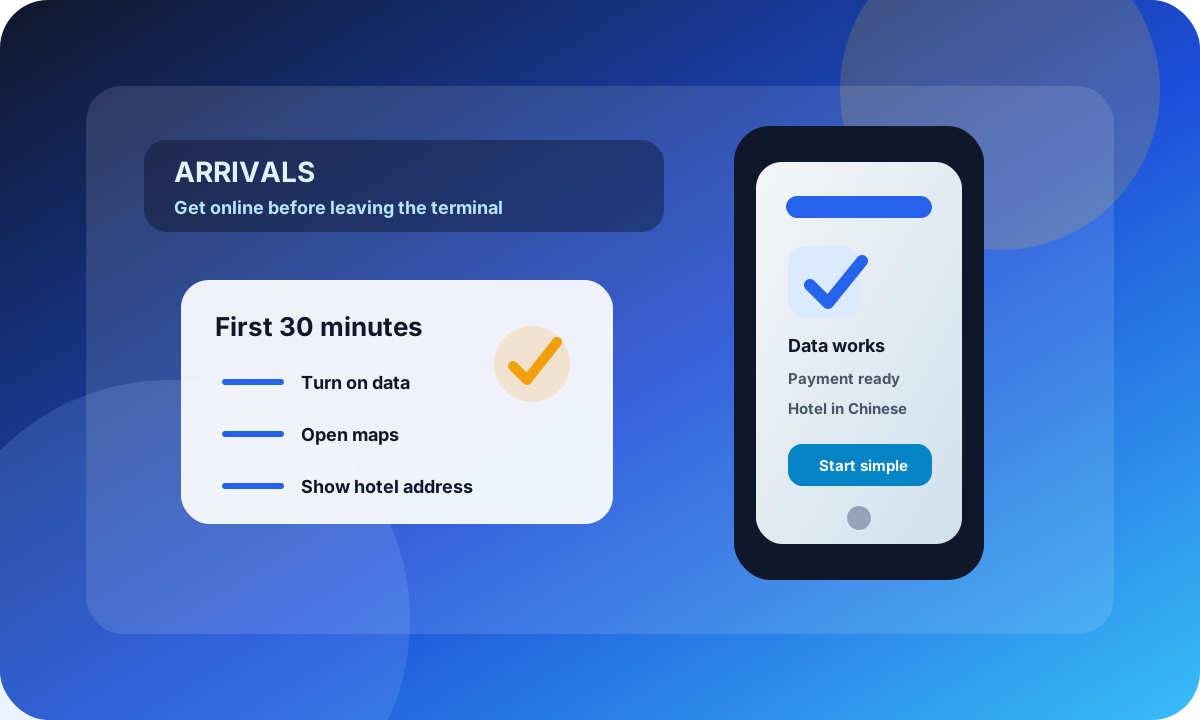
Turn on data, open maps, confirm messaging, and load your hotel address in Chinese. If anything fails, fix it near airport service desks and transport counters.
Step 2
Choose the route with the fewest unknowns: airport rail, official taxi queue, hotel pickup, or a ride-hailing order you can track. Save experimentation for day two.
Step 3
Have passport, reservation name, arrival contact, and payment backup ready. Hotel check-in is document-driven, so exact names and booking proof matter.
Step 4
Use a low-pressure restaurant or cafe to test QR ordering, camera translation, and wallet payment. Learn the flow before you are tired, hungry, or in a queue.
Step 5
Charge everything, add tomorrow's Chinese addresses, screenshot train or attraction confirmations, and repack passport, cash, and power bank together.
First route
Start in a forgiving city, add one high-speed rail segment, then choose one clear contrast. Fewer hotel changes leave more energy for food, neighbourhoods, museums, and recovery time.
Days 1-3
Beijing or Shanghai
Start where airport access, hotels, transit, and visitor infrastructure are forgiving. Use these days to learn payment, maps, food ordering, and metro routines.
Days 4-6
One high-speed rail move
Add Xi'an, Suzhou, Hangzhou, Nanjing, or Chengdu. Book trains with passport details and leave time for station security and the correct gate.
Days 7-9
One contrast
Choose one contrast: mountains, food city, old town, pandas, or a second megacity. Fewer hotel changes usually make a first trip better.
Final day
Return buffer
Sleep in the departure city or keep a large connection buffer. Domestic transfers and international check-in can make a simple final day tight.
Day bag
If the phone dies, you still need identity, money, directions, and proof of bookings.
If something breaks
Try the second app or second card, pay cash, or move to a staffed counter. Test payment early, before you depend on it for transport or a full meal.
Use the home SIM if active, connect to hotel Wi-Fi, ask whether email verification works, or use a booking platform that does not require a local number.
Search the Chinese name, confirm the metro exit, use a nearby landmark, or ask hotel staff to write the destination for a driver.
Try the official mini program, hotel help, or a booking platform. If it still fails, switch plans instead of losing half a day to one reservation.
Use the power bank early. Keep passport, hotel address, and cash physically separate from the phone so low battery stays a nuisance, not an emergency.
Keep planning
Pick one connected topic and finish the practical setup before adding more places to the itinerary.
Browse all guides ->Important disclaimer
This guide is for general trip-planning information, not legal, medical, financial, or immigration advice. Rules, availability, and provider policies can change—verify time-sensitive details with the relevant official source before you travel or book.
Content confidence
First Time in China has been reviewed for practical visitor use, internal links, route relevance, and clear action steps.
Rules for entry, payment products, bookings, transport, and attractions can change. Verify official or provider sources before relying on time-sensitive details.
Check official sources before booking time-sensitive items.
Plan with cities
Use these city guides to turn the topic into a route, hotel choice, transfer day, or first-stop decision.

Modern, vibrant, and full of surprises.
Open city guide ->
History, culture, and iconic landmarks.
Open city guide ->
Relaxed, lovely, and famous for pandas.
Open city guide ->
Ancient capital with a direct link to China's imperial past.
Open city guide ->