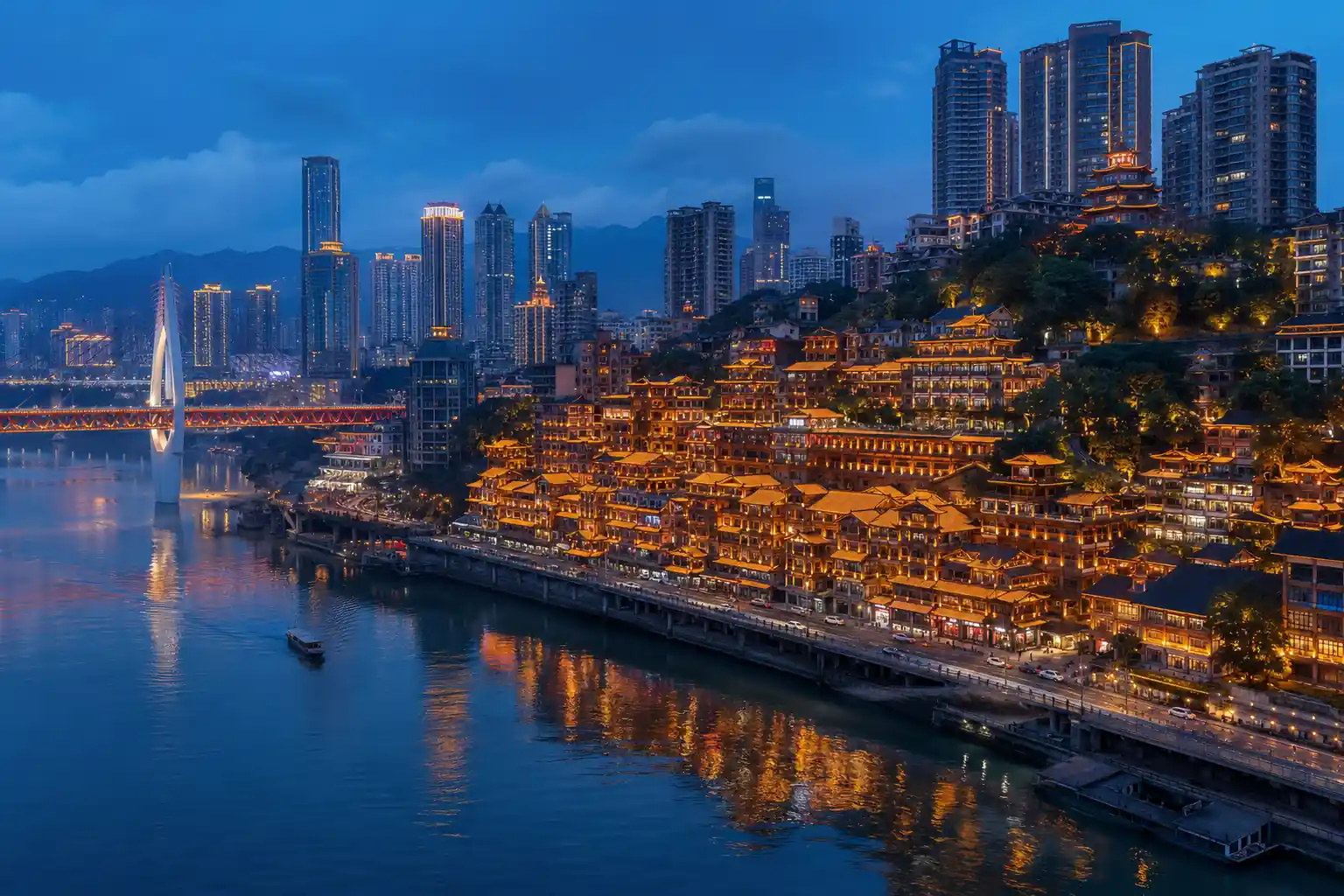
Chongqing is a dense, vertical, cinematic city known for spicy hotpot, layered streets, river confluences, and excellent night photography.
Suggested stay
2-4 days
Travel style
Hotpot
Best for
Food, night views, urban exploration
Content confidence
Reviewed for practical travel use
Chongqing city overview, suggested stay, highlights, transport notes, nearby trips, and connected planning guides have been reviewed for practical trip planning.
Use this city page as a planning framework. Confirm current opening hours, ticket windows, transport schedules, and local rules before booking.
Check official sources before booking time-sensitive items.
Planning overview
How to Plan Chongqing
Chongqing suits travelers who like big-city intensity more than polished sightseeing circuits. The draw is not one monument but the full urban setup: rivers, bridges, steep lanes, monorails, night views, and a food culture built around heat. Plan it by terrain and neighborhoods rather than by straight-line distance, because short moves on the map can take time on the ground. Two days covers the core well; add another day for museums, slower walks, or a side trip such as Dazu.
Hongya CaveJiefangbeiYangtze River cableway
Best suited for
Night views and city photography
Spicy food-focused trips
Urban exploration and unusual transit
Second-trip China travelers
Best time to visit
Spring and autumn are the easiest seasons for walking, viewpoints, and day trips, with less oppressive heat than midsummer. Summer is very hot and humid, while winter is workable but often gray, damp, and less rewarding for skyline views.
Stay in Yuzhong, Jiefangbei, or nearby if this is your first visit, because many of the best-known sights cluster around the peninsula.
Use the metro for cross-city moves, but expect stairs, level changes, and exits that place you on very different elevations.
Treat Hongya Cave and the main riverfront as evening stops rather than daytime checklist items; the city reads best after dark.
Keep destination names in Chinese for taxis or ride-hailing, especially when going to stations, cableway terminals, or hillside viewpoints.
Start with the skyline and rivers: they explain why Chongqing feels more vertical and theatrical than most Chinese cities.
Suggested routes
Itineraries for Chongqing
The layered lanes and stairways matter because they show how the city actually works away from the postcard river views.
Wikimedia Commons
1 day
Night-view focused first taste
Best for a short stop when you want Chongqing's core urban drama without overreaching.
1Jiefangbei and nearby lanes in the morning
2Three Gorges Museum or a slower Yuzhong walk in the afternoon
3Yangtze River Cableway before evening if lines are manageable
4Hongya Cave, Chaotianmen, or a north-bank river view after dark
2 days
Core city plus old-town contrast
Enough time to combine the central peninsula, one traditional district, and one higher viewpoint area.
1Day 1: Jiefangbei, Hongya Cave, Chaotianmen, and an evening skyline route
2Day 2: Ciqikou in the morning, then People's Square, Three Gorges Museum, and Eling Park or Shancheng Alley
3Keep one meal window open for hotpot rather than fixing every hour in advance
3-4 days
Deeper Chongqing with side trip
Use the extra time for terrain-heavy neighborhoods, museums, and one substantial outing beyond the central city.
1Day 1: Yuzhong peninsula highlights and night riverfront
2Day 2: Ciqikou, Shapingba, and a slower food-focused evening
3Day 3: People's Square, Three Gorges Museum, Eling Park, and hillside walks
4Day 4: Dazu Rock Carvings or another full side trip instead of adding more malls or duplicate viewpoints
Neighborhoods
Best Areas to Explore
Yuzhong peninsula core
This is the most practical base for a first trip: Jiefangbei, Hongya Cave, Chaotianmen, river views, and dense food streets all sit close together by Chongqing standards. It is busy, vertical, and commercial, but it gives the quickest feel for the city's scale and layout.
JiefangbeiHongya CaveChaotianmen
Shapingba and Ciqikou
Head here when you want a break from central skyscrapers and a better sense of older Chongqing textures. Ciqikou is touristy, but it still works for traditional streets, snack stops, teahouse atmosphere, and a riverfront contrast to downtown Yuzhong.
Ciqikou Ancient TownJialing River edgeShapingba university district
Upper Yuzhong and hillside walks
The upper ridge of Yuzhong is better for museums, older urban layers, and viewpoint-style walking than for shopping. Pair People's Square, the Three Gorges Museum, Eling Park, and restored stair-and-lane sections such as Shancheng Alley for a fuller sense of the city beyond the riverfront icons.
Three Gorges MuseumChongqing People's HallEling Park
Jiangbeizui and the north bank skyline
Across the river from Yuzhong, this newer district works best for reverse skyline views, wider river perspectives, and a more modern business-district feel. Come here for night photography or to see the peninsula from outside it, not for historical depth.
Jiangbeizui riverfrontQiansimen Bridge viewsGrand Theatre area
What to see
Top Sights
Hongya Cave and the Qiansimen riverfront
Hongya Cave is the image most people associate with Chongqing: a stacked riverside complex that reads best from outside, especially when lit at night. The real value is the surrounding riverfront scene, bridge views, and the sense of how tightly the city is built into the water and cliffs.
Treat this as an evening viewpoint stop; the exterior views are usually more rewarding than spending too long inside the busiest sections.
Jiefangbei
The Liberation Monument stands at the center of Chongqing's main commercial core and carries wartime memory as well as present-day retail energy. Even if you are not visiting for shopping, it is a useful geographic anchor for understanding central Yuzhong and starting walks through the surrounding lanes.
Use it as a meeting point and orientation marker, then step off the main plaza streets when you want food or a less generic atmosphere.
Yangtze River Cableway
Opened in 1987, the cableway is one of the city's best-known pieces of urban transport and still gives a clear read on Chongqing's river geography. It is short, but the crossing explains the relationship between Yuzhong and the south bank better than any static viewpoint.
Go with realistic expectations: it is a quick ride rather than a long attraction, so combine it with nearby walks on either bank.
Ciqikou Ancient Town
Ciqikou, the old Porcelain Port on the Jialing River, is one of the clearest surviving fragments of old Chongqing street texture. It is commercial and often crowded, but it still works for traditional lanes, temple atmosphere, snack browsing, and a different pace from the central peninsula.
Arrive earlier in the day if possible, then move uphill or toward the river edges when the main commercial lane gets too dense.
Three Gorges Museum and People's Square
The museum, opened in 2005 near Chongqing People's Hall, is the strongest indoor stop for understanding the city, the Three Gorges region, and Chongqing's wartime role. It is especially useful if you want context before a river cruise, a Dazu side trip, or a broader Southwest China route.
Use this block on a hot, wet, or gray day, then decide whether to continue to Eling Park for a higher outdoor view.
Getting around
Transport Notes
Arriving by air
Chongqing Jiangbei International Airport is about 21 km northeast of the city and handles both major domestic routes and a broad range of international links. Terminal 2 and Terminal 3 connect into the metro network, and there is also a free shuttle between the terminals.
Arriving by train
Chongqing North Station is the most useful high-speed rail hub for most travelers, while Chongqing West and the newer Chongqing East Station matter for some routes. High-speed trains connect to Chengdu in about 1.5 hours, and longer intercity routes make Chongqing easy to combine with other major cities.
Getting around
The metro is usually the best way to cross the city, especially for Jiefangbei, Ciqikou, the airport, and major rail stations. Chongqing is steep and layered, so walking works best inside one zone after you have used transit to get onto roughly the right elevation.
Taxis and ride-hailing
Taxis are relatively affordable, but terrain and traffic can make short trips slower than they look on the map. Keep your destination in Chinese, and use cars mainly for late-night returns, luggage moves, or awkward hill-to-hill transfers.
Food
What to Eat
Start with heat, but pace it
Chongqing hotpot is the headline meal, but it is not the only one worth planning around. Also look for Chongqing noodles (xiaomian), spicy blood curd stew (maoxuewang), and other numbing, chile-forward dishes that show the city's Sichuan-linked food culture. If you do not eat very spicy food regularly, do not make every meal a full-strength hotpot session.
Use districts for flexible eating
Jiefangbei is the easiest base for varied meals, late hours, and quick snack detours between sights. Ciqikou works for old-town snack browsing, while neighborhood streets and mall food floors elsewhere in the core are often a better choice than chasing one famous restaurant across town.
Treat food as part of the city experience
In Chongqing, eating fits naturally with the city's rhythm of late evenings, river views, and dense commercial streets. A good plan mixes one serious hotpot meal with lighter stops such as noodles, skewers, or teahouse breaks so you can keep walking instead of burning out early.
Go next
Easy Trips from Chongqing
Dazu Rock Carvings
The strongest side trip from Chongqing: a UNESCO-listed complex of Buddhist, Taoist, and Confucian carvings in Dazu District, commonly treated as a full-day outing from the city.
Chengdu
A natural intercity extension if you want to compare two very different Southwest China cities, reached by high-speed train in about 1.5 hours.
Wulong
Best for karst scenery and a change from urban Chongqing; it works better as a long day or overnight extension than as a rushed add-on.
Keep planning
Useful next pages for Chongqing
Connect this city page with the practical setup decisions most likely to affect arrival, tickets, transport, and daily movement.