01
Book the identity, not just the seat
China rail is a real-name system. The passport or ID document used for booking becomes the key for station entry, gate checks, boarding recovery, and refund issues.
High-speed rail setup
China’s rail network is excellent, but the friction for visitors is rarely the train itself. It is passport-based booking, huge stations, similar station names, security checks, luggage, gate timing, and knowing what to do when a plan changes.
Page map
01
China rail is a real-name system. The passport or ID document used for booking becomes the key for station entry, gate checks, boarding recovery, and refund issues.
02
Large cities can have several railway stations: Beijing South is not Beijing Railway Station, Shanghai Hongqiao is not Shanghai Railway Station, and the wrong station can ruin a perfectly valid ticket.
03
Security, passport/manual gate checks, long concourses, waiting halls, platform gates, and luggage walking time all happen before you see the train.
04
Sold-out trains, holiday crowds, missed gates, printed reimbursement receipts, and weather delays are easier when you know what can be changed online and what requires a station counter.
Booking basics
Enter the passenger name, passport number, and document type exactly as they will be checked. If a middle name, order, or spacing is inconsistent, station staff may need to intervene.
12306 is the official China Railway platform. Third-party travel apps can be convenient, but keep the order number, passenger name, route, train number, and station names easy to find offline.
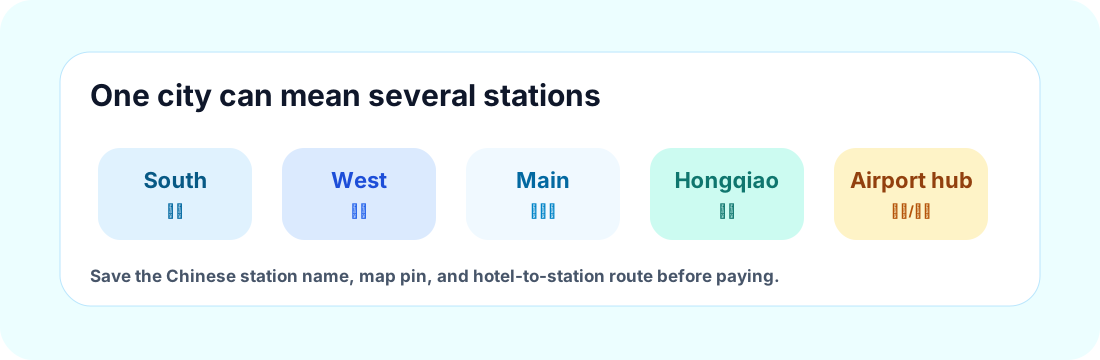
City names are not enough. Confirm the full departure and arrival station: South, West, North, East, Hongqiao, West Kowloon, or an airport-adjacent station can mean a different part of the city.
Peak weekends, public holidays, summer routes, and popular city pairs can sell out or leave only awkward times. Lock the long-distance train before building the rest of the day.
China Railway uses e-tickets. Itinerary sheets or reimbursement receipts are not tickets for travel. The useful backup is the booking screen, order number, and original ID document.
Some changes can be handled online if available; cash purchases, printed reimbursement receipts, or certain ticket states can force you to a station counter.
Station flow
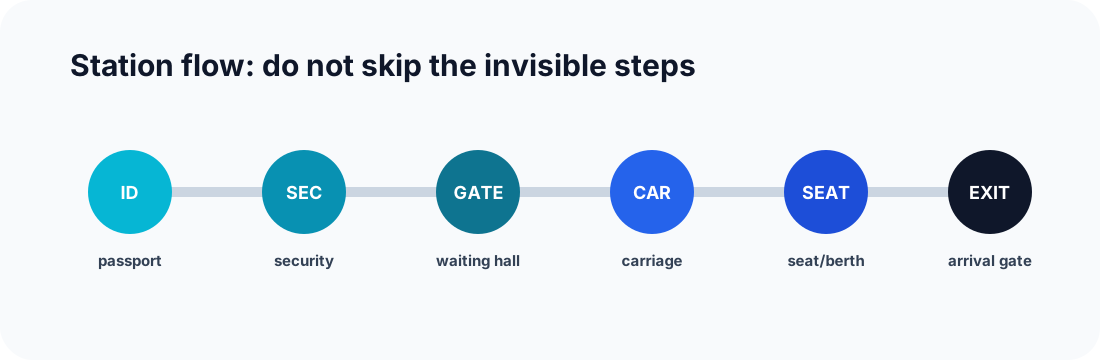
For large stations, arrive early enough for security, passport/manual entry, walking, toilet, food, and finding the waiting hall. First-timers should avoid tight station timing.
Bring the original document used for booking. If automatic gates do not read it, go to the staffed manual gate or passport channel.
All passengers and belongings are subject to station security checks. Keep liquids, sprays, knives, batteries, and tools in mind before packing.
Use the train number, departure time, and destination to identify the gate. Platform access opens only close to departure.
Know your carriage number, seat or berth, and direction of the platform queue. Keep luggage manageable because boarding can be fast.
You may need the original ID at station exit, during checks, or if there is a ticket problem. Do not bury it deep in a suitcase.
Route choice
Best for: Most city-to-city travel between major cities, especially when stations are central enough and the journey is under half a day.
Watch: Second class is practical for most travellers; business class is expensive but calmer; baggage space fills quickly on busy trains.
Best for: Longer routes where saving a hotel night or reaching a less connected city matters more than speed.
Watch: Choose sleeper berths carefully, bring comfort basics, and do not assume the experience feels like a modern high-speed train.
Best for: Routes where station access, airport transfers, security time, and weather risk make the train simpler door to door.
Watch: For very long distances, compare total travel time honestly: hotel-to-station, station walking, arrival transfer, and fatigue.
Best for: Huge cross-country jumps, far-west routes, or city pairs where the high-speed network still creates a long day.
Watch: Airport distance, baggage rules, delays, and transfer time can erase the apparent time saving.
Best for: Routes where a direct ticket is sold out or a smaller city needs a hub transfer.
Watch: Use realistic station-transfer buffers. A legal connection is not always a comfortable connection with luggage and passport gates.
Station names
Before paying, compare the full station name against the map: South, West, North, East, Hongqiao, West Kowloon, and airport-area stations can sit in completely different districts. Save the Chinese station name and a map pin because a taxi driver, hotel desk, or local map may understand that faster than an English abbreviation.
Timing
Buffer: 60-90 minutes for a major station if you are new, using a passport, or carrying luggage.
Why: You are learning station entry, gates, security, displays, and carriage boarding all at once.
Buffer: 45-60 minutes for large stations; less may work only when you know the station and have little luggage.
Why: Station size, queues, and gate location vary more than the timetable suggests.
Buffer: Add extra time and book earlier.
Why: Security, taxi drop-off, food queues, and waiting halls become slower before the train itself is delayed.
Buffer: Avoid ultra-tight transfers unless the route is protected and you know the station layout.
Why: Passport gates, platform changes, stairs, crowd control, and late arrival can consume the gap.
Buffer: Treat it as a city transfer, not a rail transfer.
Why: You may need metro, taxi, security again, and a new waiting hall.
Seat and berth choice
Use when: Default choice for most high-speed trips: practical, frequent, and usually the best value.
Caveat: Can be crowded on peak routes, and luggage space near your seat is not guaranteed.
Use when: Useful when you want more space, a calmer ride, or a long route without paying business-class prices.
Caveat: Not necessary for short city hops unless comfort matters.
Use when: Premium high-speed option for long routes, work needs, older travellers, or recovery days.
Caveat: Expensive and not available or needed on every route.
Use when: Useful on conventional overnight trains when the route is long and time flexibility matters.
Caveat: The station, carriage, noise, toilets, and luggage experience differs from high-speed rail.
Use when: A last resort when the train is sold out and the route is short enough to tolerate.
Caveat: Avoid for first-timers, families, seniors, luggage-heavy days, and long-distance trips.
Luggage and security
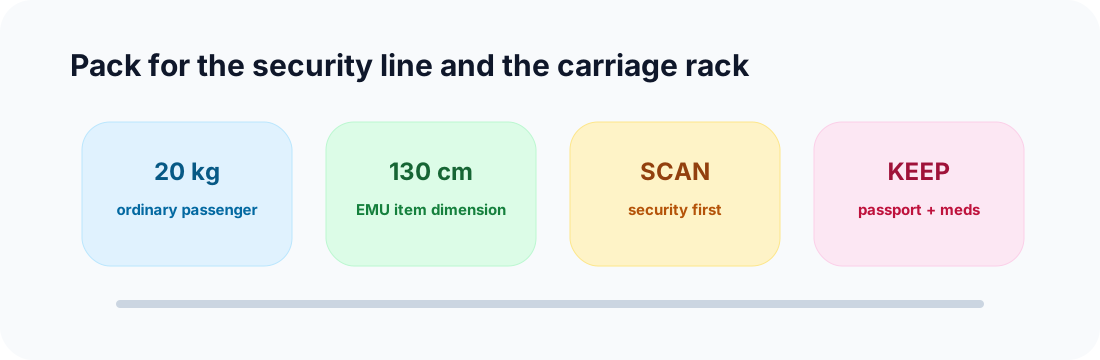
Plan around the official free cabin luggage limit: commonly 20 kg for ordinary passengers, with individual item dimensions tighter on EMU/high-speed trains than traditional trains.
Small and medium bags are easiest. Large suitcases may need end-of-car storage, which can be crowded and away from your seat.
Avoid knives, large sprays, flammable liquids, strong-smell items, and tools that could fail screening. Pack like station security is part of the trip.
Keep batteries, passport, payment cards, medicine, tickets, and electronics in the bag that stays with you, not in a luggage rack you cannot see.
Bring water and simple snacks for long routes, but avoid strong-smell food if possible. Hot water may be available on many trains, but do not depend on it as your only plan.
Reduce bag count before station day. One adult cannot comfortably handle two suitcases, a stroller, passports, tickets, and a platform rush.
Change and refund
China Railway calls this endorsement. It usually depends on available capacity, and each ticket generally has limited change opportunities.
Destination changes have stricter timing and availability rules. Do this only when the route change is real, not as a casual experiment.
Refunds can often be handled before departure, but timing affects fees. If a reimbursement receipt was printed or cash was used, a station counter may be required.
Options narrow sharply. If you miss the train, go to the station counter quickly rather than guessing inside the app.
If the railway cannot carry you as ticketed, station or onboard staff can arrange alternatives. Keep the order, passport, and screenshots ready.
Real traveller friction
Search the Chinese station name, check the map, and compare transfer time before paying. Do not assume the first station in a city is central.
Use the staffed manual channel. Keep the booking screen and original passport ready, and arrive early enough for this to be mildly annoying rather than catastrophic.
Follow the train number and waiting gate first. Platform access usually opens close to boarding; the waiting hall gate matters more than wandering toward tracks.
Check nearby departure times, seat classes, alternate stations, hub transfers, and waitlist options. For holidays, do not build the day around a ticket you do not yet hold.
If you need to change or refund, you may have to return the receipt at a station counter. Avoid printing receipts before the trip unless you truly need them.
Reduce bags, use hotel storage, allow taxi access, and avoid station transfers with multiple suitcases. The hardest part is often not the train but the walking.
Useful phrases
请问进站口在哪里?
Qingwen jinzhankou zai nali?
Where is the station entrance?
请问人工通道在哪里?
Qingwen rengong tongdao zai nali?
Where is the manual channel?
这趟车在哪个检票口?
Zhe tang che zai nage jianpiao kou?
Which gate is this train at?
我错过了这趟车,请帮我改签。
Wo cuoguo le zhe tang che, qing bang wo gaiqian.
I missed this train; please help me change it.
请问这是几号车厢?
Qingwen zhe shi ji hao chexiang?
Which carriage number is this?
请帮我查一下订单。
Qing bang wo cha yixia dingdan.
Please help me check this order.
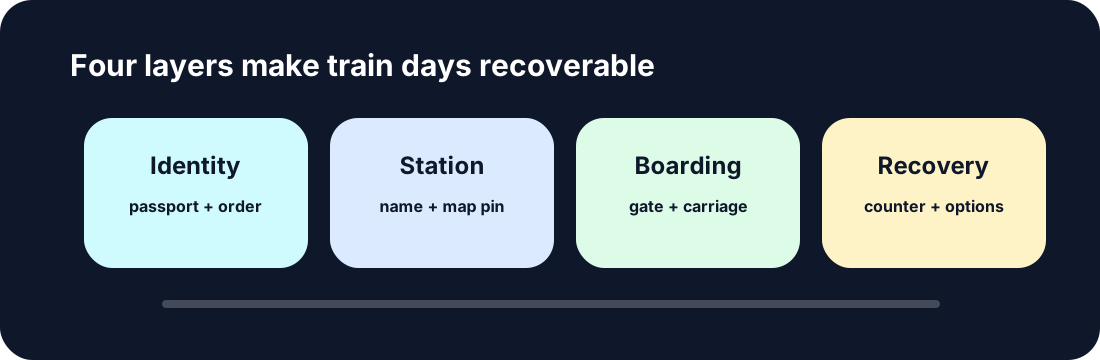
Backup stack
The train ride is usually the easy part. The system around the ride is what needs planning.
Original passport, booking name, order number, phone access, offline screenshots, and a backup copy stored separately.
Correct station name, Chinese station text, map pin, hotel-to-station transfer, arrival buffer, and manual-gate expectation.
Train number, departure time, waiting gate, carriage number, seat or berth, luggage plan, and food/water for the route.
Change/refund awareness, station counter fallback, alternate trains, extra hotel night possibility, and enough buffer around fixed bookings.
Troubleshooting
Stop and recalculate. If time is tight, change the ticket if possible or take a taxi directly to the correct station. Do not go to the wrong building hoping it connects.
Watch station displays, keep the next hotel or connection flexible, and avoid leaving the waiting area unless staff confirm the situation clearly.
Go to the ticket counter immediately with passport and order number. Ask about same-day endorsement or available alternatives.
Bring the exact booking record and original passport to a staffed counter. Avoid making duplicate panic purchases before staff review the issue.
Look for end-of-car racks, keep valuables with you, and board early enough that storage space is not already full.
Ask station staff about the required temporary or replacement certificate route. A screenshot alone is not a substitute for the valid ID used to buy the ticket.
Keep planning
Pick one connected topic and finish the practical setup before adding more places to the itinerary.
Browse all guides ->Important disclaimer
This guide is for general trip-planning information, not legal, medical, financial, or immigration advice. Rules, availability, and provider policies can change—verify time-sensitive details with the relevant official source before you travel or book.
Content confidence
Train Travel Guide has been reviewed for practical visitor use, internal links, route relevance, and clear action steps.
Rules for entry, payment products, bookings, transport, and attractions can change. Verify official or provider sources before relying on time-sensitive details.
Check official sources before booking time-sensitive items.
Plan with cities
Use these city guides to turn the topic into a route, hotel choice, transfer day, or first-stop decision.

History, culture, and iconic landmarks.
Open city guide ->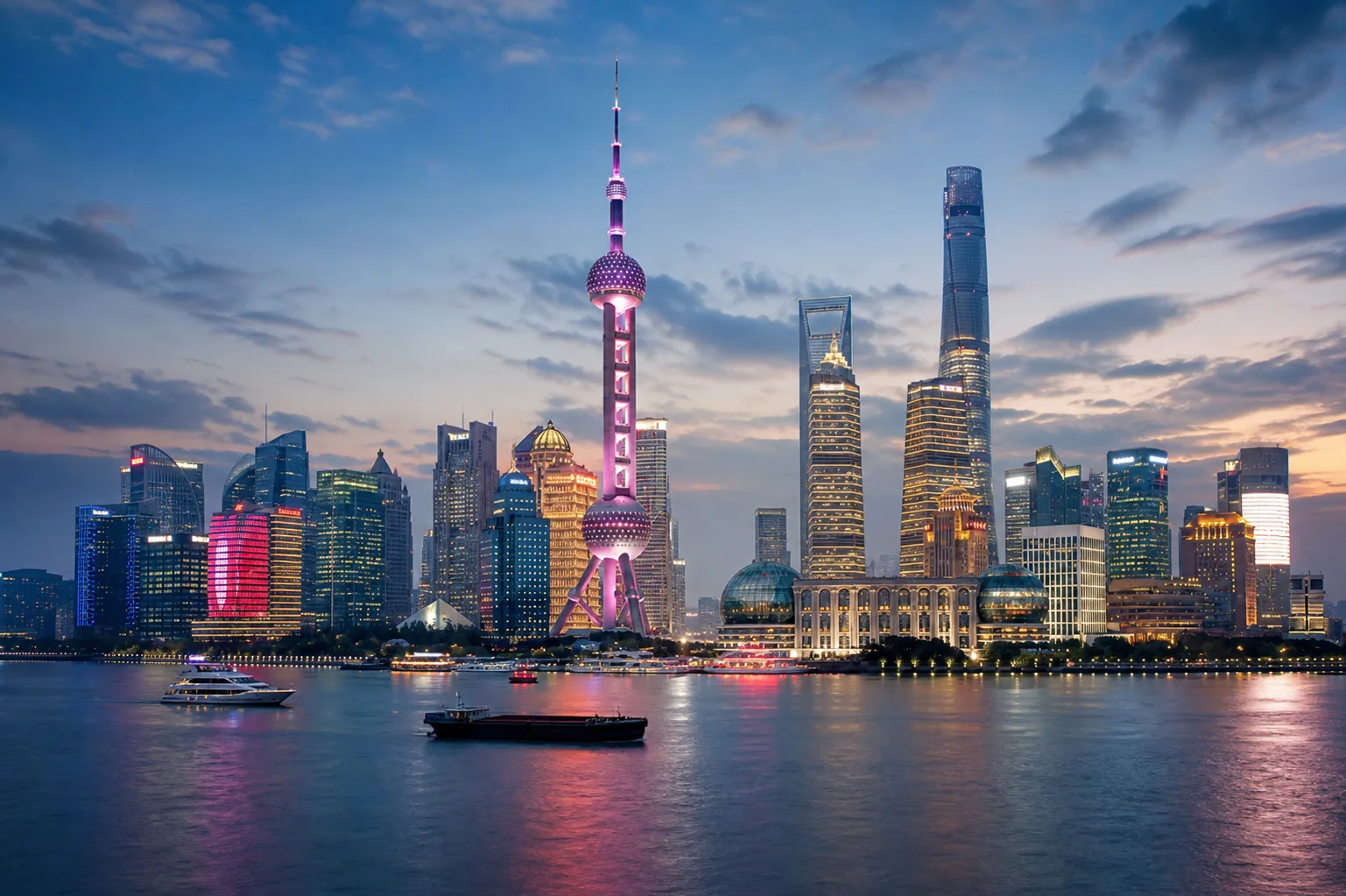
Modern, vibrant, and full of surprises.
Open city guide ->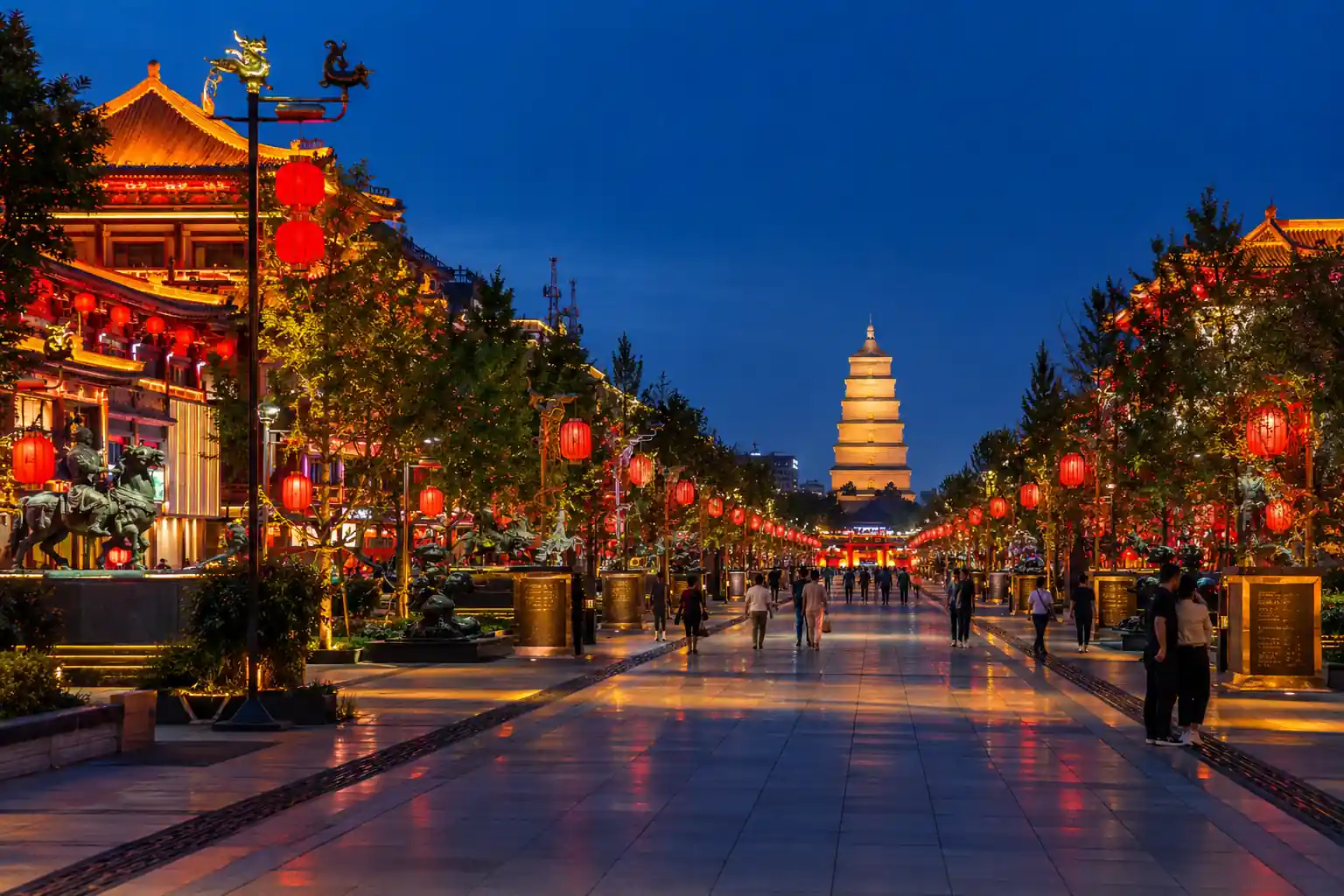
Ancient capital with a direct link to China's imperial past.
Open city guide ->
Historic capital with leafy avenues and deep cultural sites.
Open city guide ->