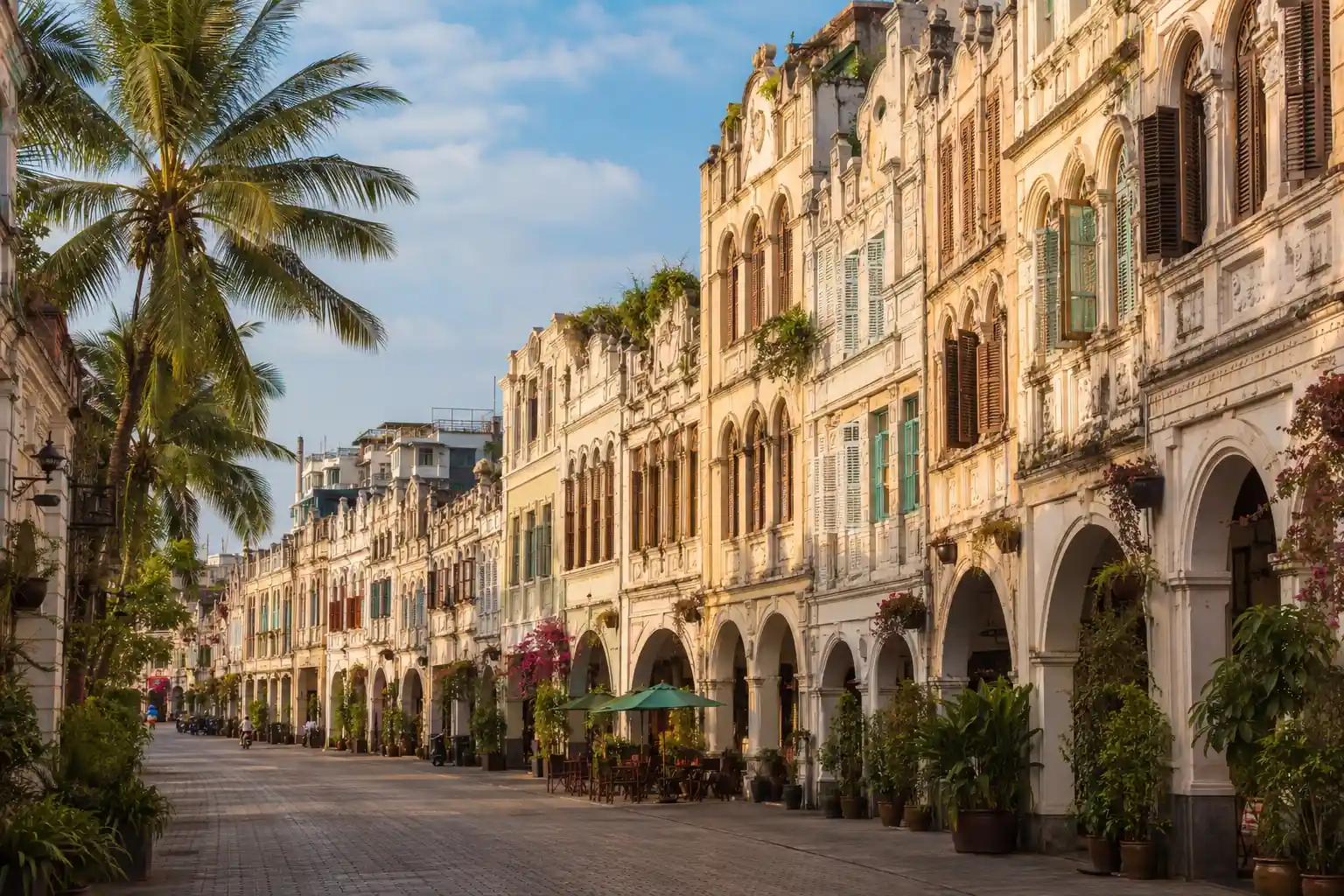
Haikou is a practical Hainan entry point with volcanic landscapes, old arcade streets, coastal parks, and a more local rhythm than Sanya.
Suggested stay
1-2 days
Travel style
Island Gateway
Best for
Hainan entry, old streets, coastal food
Content confidence
Reviewed for practical travel use
Haikou city overview, suggested stay, highlights, transport notes, nearby trips, and connected planning guides have been reviewed for practical trip planning.
Use this city page as a planning framework. Confirm current opening hours, ticket windows, transport schedules, and local rules before booking.
Check official sources before booking time-sensitive items.
Planning overview
How to Plan Haikou
Haikou works best as a practical first stop on Hainan rather than a resort destination in itself. It is useful for travelers who want old arcade streets, local Hainan food, an easy arrival city, and one or two half-days in parks or volcanic landscapes before moving on around the island. Plan it as a compact 1-2 day stay: one day for the old city and waterfront, another for the volcanic park, museum, or a short onward trip.
Qilou Old StreetVolcano ParkHoliday Beach
Best suited for
Hainan first-night arrivals
Old street and food walks
Low-key coastal city breaks
North Hainan side trips
Best time to visit
November to March is the most comfortable period for walking, food, and day trips, with warm days and lower rainfall. April is still workable, but from May to October the heat, humidity, rain, and typhoon risk make long outdoor days less pleasant. Winter is mild rather than cold, though fog can occasionally affect ferry and coastal transport.
Stay around Longhua, central Haikou Bay, or near Haikou East Station for the easiest balance of food, transit, and short taxi rides.
Use Haikou East Station for most Hainan high-speed rail trips; Haikou Railway Station is farther west and mainly matters for mainland trains and nearby ferry links.
Keep beach expectations modest in the city itself, and use the waterfront more for evening walks, parks, and seafood than for a classic swimming day.
Build ferry or island-transfer plans with weather buffer in summer and winter, because typhoons and heavy fog can disrupt crossings.
The city makes most sense as a coastal gateway with a softer pace than the bigger mainland capitals.
Suggested routes
Itineraries for Haikou
The volcanic park is the strongest half-day nature outing near the city and gives Haikou a different profile from Sanya.
Wikimedia Commons
1 day
Gateway day in Haikou
Best for a flight arrival, ferry transfer, or a short Hainan stop before continuing elsewhere on the island.
1Qilou Old Street and nearby old lanes in the morning
2Hainan Museum or Temple of the Five Lords in the afternoon
3Haikou Bay or Evergreen Park around sunset
4Seafood or Hainan snacks in the evening
2 days
City plus volcanic park
The most balanced short stay, combining Haikou's old commercial core with its best nearby nature stop.
1Day 1: Qilou Old Street, Temple of the Five Lords, Haikou Bay evening walk
2Day 2: Haikou Volcanic Cluster Global Geopark, then a relaxed dinner back in town
3Add Baishamen Park if you want more open space and less museum time
3-4 days
North Hainan base
Use Haikou as a transport-friendly base if you want a slower island start without moving hotels every night.
1Day 1: Old city, Qilou district, waterfront evening
2Day 2: Volcanic park and Guoxing Avenue cultural stops
3Day 3: Wenchang or Qionghai by high-speed rail
4Day 4: Ferry onward to the mainland or continue south to Sanya
Neighborhoods
Best Areas to Explore
Qilou Old Street and the old port core
This is the most useful first stop in Haikou: arcaded streets, old commercial buildings, snack streets, and an older treaty-port texture that still reads clearly on foot. It is best treated as a walking district rather than a single attraction, especially in the late afternoon and evening when the streets become more animated.
Qilou Old StreetBoai Road areaOld port-side lanes
Haikou Bay waterfront
The city waterfront is more about walking, open space, and evening air than about landmark collecting. Evergreen Park, Binhai roads, yacht-club views, and the bay edge make a relaxed route after the heat drops, especially if you want a second half of the day after the old streets.
Evergreen ParkHaikou Bay promenadeCentury Bridge viewpoints
Haidian Island and Baishamen side
North of the old core, Haidian Island feels more residential and open, with university influence, wider roads, and easier access to Baishamen Park and beach. It is a good area when you want less traffic pressure and a slower evening, though it is not a historic district in the same way as Qilou.
Haidian IslandBaishamen ParkHainan University area
Guoxing Avenue cultural district
This inland district is useful when weather is poor or when you want a more structured half-day around museums and public cultural buildings. Hainan Museum is the anchor, and the wider avenue setting makes it easier to combine with a station transfer or a shorter city stay.
Hainan MuseumHainan LibraryGuoxing Avenue
What to see
Top Sights
Qilou Old Street
Haikou's best-known historic quarter preserves rows of arcaded buildings that reflect the city's port and treaty-era history. It is not a monumental old town on the scale of major inland heritage cities, but it gives the clearest sense of how Haikou developed as a trading city with southern Chinese and overseas influences.
Treat it as a late-afternoon and dinner area, and keep time to wander beyond the most polished facades.
Haikou Volcanic Cluster Global Geopark
About 8 miles south of the city, this geopark is the strongest half-day excursion from central Haikou. The park covers a broad volcanic field with more than 40 Quaternary volcanoes, and the crater area gives Haikou a clear natural counterweight to its flat coastal core.
Go early or on a less humid day, because the park is more rewarding when walking conditions are manageable.
Temple of the Five Lords
This memorial complex commemorates five exiled officials from the Tang and Song dynasties, which fits Hainan's long history as a place of banishment for disgraced court figures. It gives more historical depth than the waterfront and is one of the better places in Haikou to connect the island with imperial Chinese history.
Pair it with the museum district or old-city day rather than crossing town for it on its own.
Hainan Museum
On Guoxing Avenue, Hainan Museum is the best indoor stop for understanding the island beyond beaches and resorts. Its collections and exhibitions are useful if you want context on Hainan history, archaeology, ethnic culture, and maritime links before continuing around the province.
Use this on a rainy or very hot day, or combine it with a short station-transfer day in the eastern part of the city.
Baishamen Park and beach
On the north side of Haidian Island, Baishamen is one of the easiest places for open coastal space in the city. It works better as a breezy walk, local park, or casual evening stop than as a classic tropical beach day, but it gives useful relief from dense city blocks.
Come for sunset air and space rather than clear-water swimming.
Getting around
Transport Notes
Arriving by air
Haikou Meilan International Airport is the main airport for the city and the busiest airport in Hainan. It is about 25 km southeast of the city center, and also sits on Hainan's rail network, which makes direct onward transfers easier than in many Chinese island destinations.
Arriving by train
Haikou is linked to the mainland by regular-speed rail via ferry across the strait, but for most travelers the more useful rail connections are on Hainan itself. High-speed trains connect Haikou with major east- and west-coast towns, and Sanya is roughly 1.5 to 2 hours away.
Getting around
The city is spread out enough that you will usually combine walking with taxis or ride-hailing rather than rely on a single compact center. Qilou Old Street, the bayfront, and some museum areas are walkable once you arrive, but the volcanic park and transport hubs require motorized trips.
Taxis and ride-hailing
Taxis and ride-hailing are practical for airport transfers, station moves, and cross-city trips, especially in heat or with luggage. Keep destination names in Chinese, because attractions can be spread across several districts and not every driver will know the English name.
Food
What to Eat
Focus on Hainan staples first
Start with dishes that clearly belong to the island rather than generic seafood menus. Wenchang chicken (Wenchang ji), Hainan-style noodle breakfasts, and qingbuliang, the local chilled dessert with beans, fruit, jelly, or coconut elements, are better introductions than chasing random snack lists.
Use the old city for flexible eating
Qilou Old Street and the surrounding central districts are the easiest places to sample several foods in one evening. This part of Haikou is useful because you can combine street snacks, simple local restaurants, and dessert stops without crossing the city.
Seafood is better with local rhythm
Haikou is strong on seafood, but the city feels less polished and less resort-driven than Sanya, which is part of the appeal. Choose seafood as an evening meal near the waterfront or in established local districts, and keep expectations on setting modest so the meal stays about freshness and price rather than branding.
Go next
Easy Trips from Haikou
Wenchang
An easy northeast Hainan extension by high-speed rail or road, useful for a quieter county-level city, coastal routes, and the origin area of Wenchang chicken.
Qionghai and Bo'ao
A straightforward east-coast rail trip if you want a smaller Hainan stop with river, coast, and conference-town scenery beyond the provincial capital.
Sanya
The main southbound continuation on Hainan, reached by high-speed rail in about 1.5 to 2 hours if you want to move from local city rhythm to resort beaches.
Keep planning
Useful next pages for Haikou
Connect this city page with the practical setup decisions most likely to affect arrival, tickets, transport, and daily movement.