Kunming is a comfortable Yunnan gateway with spring-like weather, lakeside parks, stone forest routes, and onward access to Dali and Lijiang.
Suggested stay
1-3 days
Travel style
Gateway
Best for
Yunnan routes, mild weather, nature access
Content confidence
Reviewed for practical travel use
Kunming city overview, suggested stay, highlights, transport notes, nearby trips, and connected planning guides have been reviewed for practical trip planning.
Use this city page as a planning framework. Confirm current opening hours, ticket windows, transport schedules, and local rules before booking.
Check official sources before booking time-sensitive items.
Planning overview
How to Plan Kunming
Kunming is one of the easiest city stops in Southwest China: mild for much of the year, less intense than Chengdu or Chongqing, and well placed for moving deeper into Yunnan. It suits travelers who want parks, temples, lakeside air, and a practical base rather than a checklist-heavy metropolis. Plan it as a calm city break plus one major excursion, usually the Stone Forest or a wider Yunnan rail route, instead of trying to force every attraction into one rushed day.
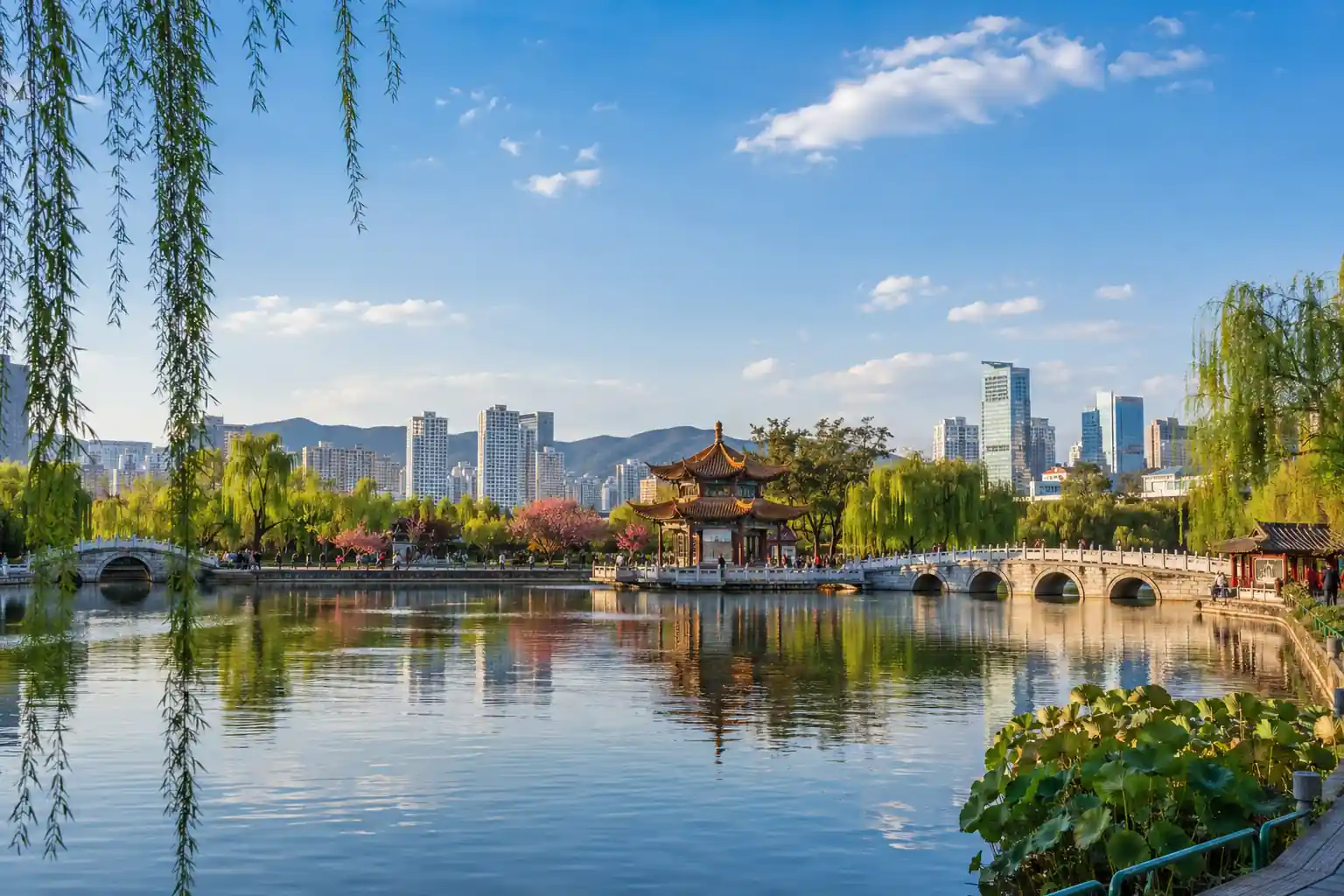
Green Lake ParkStone ForestDianchi Lake
Best suited for
First stops in Yunnan
Mild-weather city breaks
Parks, temples, and easy walks
Rail-based Southwest China routes
Best time to visit
March to May and October to November are usually the easiest seasons for city walks and day trips, with comfortable temperatures and lower rain risk. June to September is greener but much wetter, so views around Dianchi and the Stone Forest can be less predictable. Winter is cooler than many visitors expect, especially in the mornings and whenever it rains, but it is still workable with layers.
Stay around Green Lake, Yuantong, or the Nanping Street area if you want a first visit with easier walking and food options.
Pack sun protection even on cool days: Kunming's altitude makes UV noticeably stronger than the temperature suggests.
Treat the Stone Forest as a separate half-day or full-day outing rather than trying to combine it with airport transfers or a tight train connection.
Use the metro for airport and Kunming South Railway Station runs, then switch to taxi or ride-hailing for lakeside and hillside sights where routes are less direct.
Kunming works best as a calm highland base city, with water, hills, and easy urban green space close to the center.
Suggested routes
Itineraries for Kunming
The Stone Forest is the city's most distinctive excursion, and this kind of karst landscape is the main reason many travelers add extra time in Kunming.
Wikimedia Commons
1 day
Central Kunming at an easy pace
Best for a stopover or a first day in Yunnan. Keep the route compact and leave the farthest sights for another trip.
1Green Lake Park and the Yunnan University side streets in the morning
2Yuantong Temple before lunch
3Nanping Street or the Jinma-Biji area in the afternoon
4Finish at Dianchi or a central evening food area depending on weather and energy
2 days
City plus one major outing
The most balanced first visit: one day for central Kunming, one day for the excursion or landscape side that makes the city different.
1Day 1: Green Lake, Yuantong Temple, central shopping streets, evening local food
2Day 2: Stone Forest as the main excursion, or Dianchi plus Western Hills if you prefer a lighter day
3Add Golden Temple Park if you have extra time and clear weather
3-4 days
Kunming as a Yunnan gateway
Use the extra time for one deeper city day and one onward Yunnan extension instead of overloading the center with repeated urban stops.
1Day 1: Green Lake, Yuantong Temple, Wenlin Street, and the old commercial core
2Day 2: Stone Forest excursion
3Day 3: Dianchi, Western Hills, and Golden Temple depending on transport and weather
4Day 4: Continue by high-speed rail to Dali, Lijiang, or Jianshui rather than spending a fourth full day only in central Kunming
Neighborhoods
Best Areas to Explore
Green Lake, Yunnan University, and Wenlin Street
This is the easiest part of Kunming to like on a first visit: a central park, older streets, student energy, tea houses, and low-pressure walking. It works well for mornings, cafe breaks, and a relaxed first or last day when you do not want long transfers.
Green Lake ParkYunnan University areaWenlin Street cafes and casual food
Yuantong Temple and the northern old center
North of the commercial core, this area gives Kunming some of its older religious and civic texture. Come here when you want temple architecture, a slower rhythm than the shopping streets, and an easy pairing with Green Lake on the same day.
Yuantong TempleYuantong Hill surroundingsOlder streets between the temple and central park
Nanping Street, Jinma-Biji, and the commercial center
This is the most convenient area for transport links, shopping streets, and evening energy. It is not the city's most atmospheric quarter, but it is useful when you want a central hotel, quick meals, and short hops to other districts.
Nanping StreetJinma and Biji archwaysEastern and Western Pagodas
Dianchi, Western Hills, and the eastern park belt
South and west of the center, Kunming opens up into lake and hillside scenery. This zone is better for half-day outings than dense landmark-hopping, and it works best when the weather is clear enough to justify the wider views.
Dianchi Lake shoreWestern Hills viewpointsGolden Temple Park
What to see
Top Sights
Green Lake Park
Kunming's most convenient urban park, with linked lakes, bridges, older pavilions, and an everyday local rhythm that is better than many formal sightseeing stops. It is especially useful at the start of a trip because it helps you settle into the city without much planning.
Go in the morning or late afternoon, then pair it with Yuantong Temple or Wenlin Street rather than treating it as a standalone destination.
Yuantong Temple
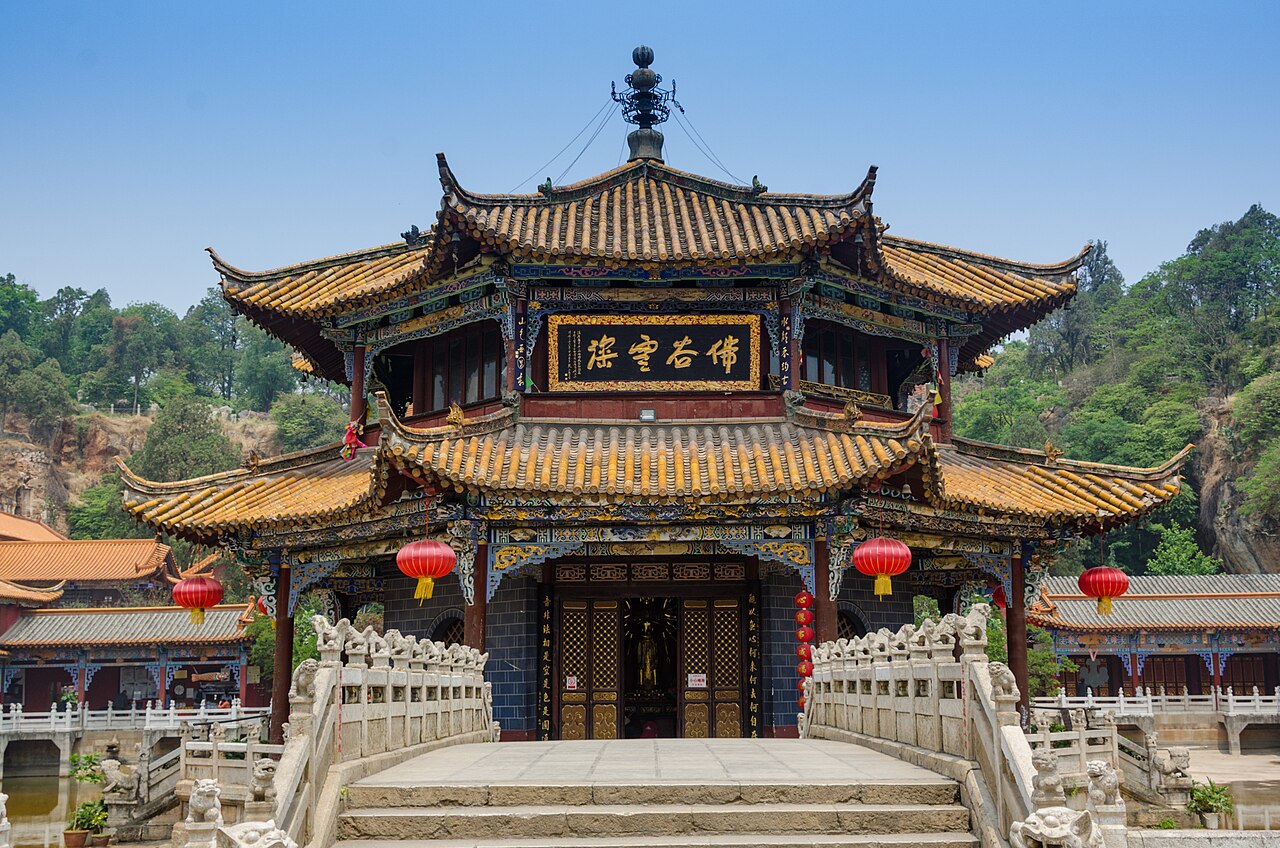
An ancient Buddhist temple first built in the Tang period, known for its unusual layout in a natural depression and for halls, corridors, and pools arranged below the entry level. It feels older and more spatially distinctive than many urban temples in larger Chinese cities.
Visit earlier in the day for a calmer atmosphere, and combine it with Green Lake on foot or a short taxi ride.
Stone Forest
The famous karst landscape southeast of Kunming is the region's defining geological sight: limestone pillars, narrow paths, and rock shapes that feel very different from the city itself. It is the strongest single excursion from Kunming and usually the clearest reason to stay at least two days.
Give it enough time and go with reasonable weather; it is better as a dedicated outing than a quick add-on between other commitments.
Dianchi Lake and Western Hills
Dianchi is the large lake on Kunming's southern edge, with the Western Hills rising beside it. Travelers usually come here for air, lake views, wetland or shore walks, and the sense that Kunming sits in a highland basin rather than on a flat plain.
Choose this on the clearest day of your stay, because haze and rain reduce the value of the wider viewpoints.
Golden Temple Park
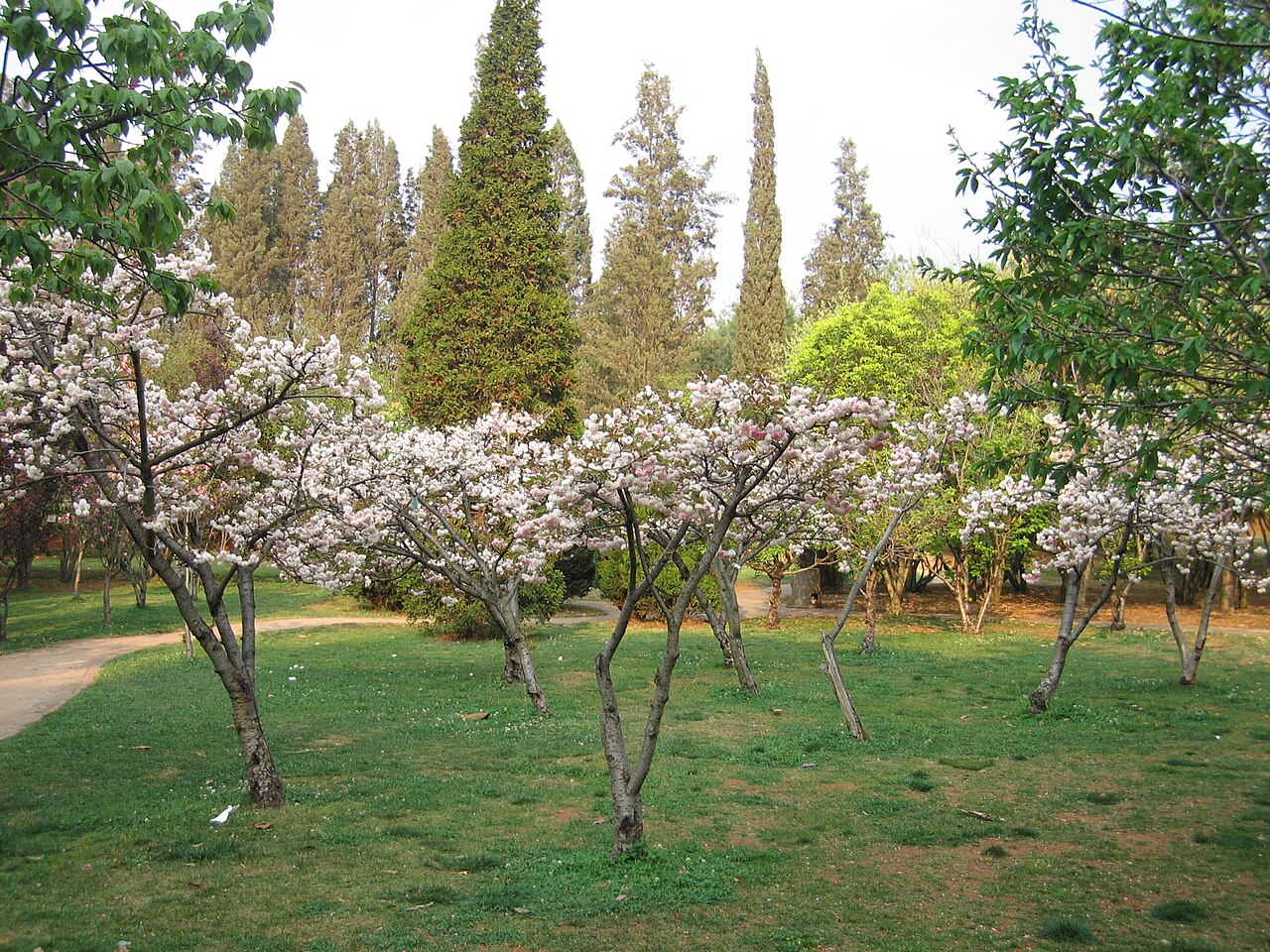
Set in the Mingfeng Mountains, Golden Temple Park is built around a late-Ming bronze temple and greener grounds that feel more removed from the center. It works well when you want history and temple architecture but prefer a quieter setting than the commercial core.
Use it as a half-day green-space stop, not as a rushed checkmark between station transfers.
Getting around
Transport Notes
Arriving by air
Kunming Changshui International Airport is the city's main airport, about 24.5 km northeast of the city center. It is a major Southwest China hub and a practical gateway for wider Yunnan routes. Metro Line 6, airport buses, and taxis connect the airport into the city.
Arriving by train
Kunming Railway Station is the older station closer to the central city, while Kunming South Railway Station in Chenggong is the main high-speed rail hub. South station is the important one for many longer Yunnan and intercity rail connections, so check your departure station carefully before booking hotels or transfers.
Getting around
Kunming Metro is extensive enough for most visitor logistics, with six operational lines and direct usefulness for both the airport and Kunming South Railway Station. Central districts such as Green Lake, Yuantong, and parts of the commercial center are still best handled by combining metro rides with walking.
Taxis and ride-hailing
Taxis and ride-hailing help most for Dianchi, hillside sights, early departures, or hotel runs with luggage. Keep destination names in Chinese, especially for stations and temple or park entrances, because some attractions have multiple gates.
Food
What to Eat
Start with Yunnan noodle basics
Kunming is a good place to begin with Yunnan-style rice noodles rather than chasing one famous restaurant. Look for crossing-the-bridge rice noodles (guoqiao mixian), small-pot rice noodles (xiaoguo mixian), and other local noodle bowls that show how central mixian is to everyday eating here. These work best as flexible breakfasts or quick lunches between parks, temples, and station runs.
Use the city to sample wider Yunnan flavors
Because Kunming is the provincial capital, it is one of the easiest places to try dishes from across Yunnan without traveling deeper into the province first. Look for steam-pot chicken, seasonal wild mushroom dishes, and Yunnan ham in practical local restaurants rather than only in tourist areas. A good Kunming food stop is often about variety and convenience, not a single signature dish.
Pair food with walkable neighborhoods
Green Lake, Wenlin Street, Nanping Street, and central mall food floors all make meals easy without crossing the city. Kunming also suits a slower food rhythm: tea, light snacks, flower cakes, and casual evening eating fit the city better than building the day around one large banquet meal.
Go next
Easy Trips from Kunming
Dali
The most natural onward stop from Kunming, reached by high-speed rail and good for old-town walking, Erhai Lake views, and a slower continuation of a Yunnan route.
Lijiang
A stronger scenery-and-heritage extension, usually paired with Kunming by rail when you want old town atmosphere and access to mountain landscapes.
Jianshui
A quieter southeastern option for old-town streets, Confucian heritage, and a more local-feeling Yunnan stop that fits well after Kunming.
Keep planning
Useful next pages for Kunming
Connect this city page with the practical setup decisions most likely to affect arrival, tickets, transport, and daily movement.