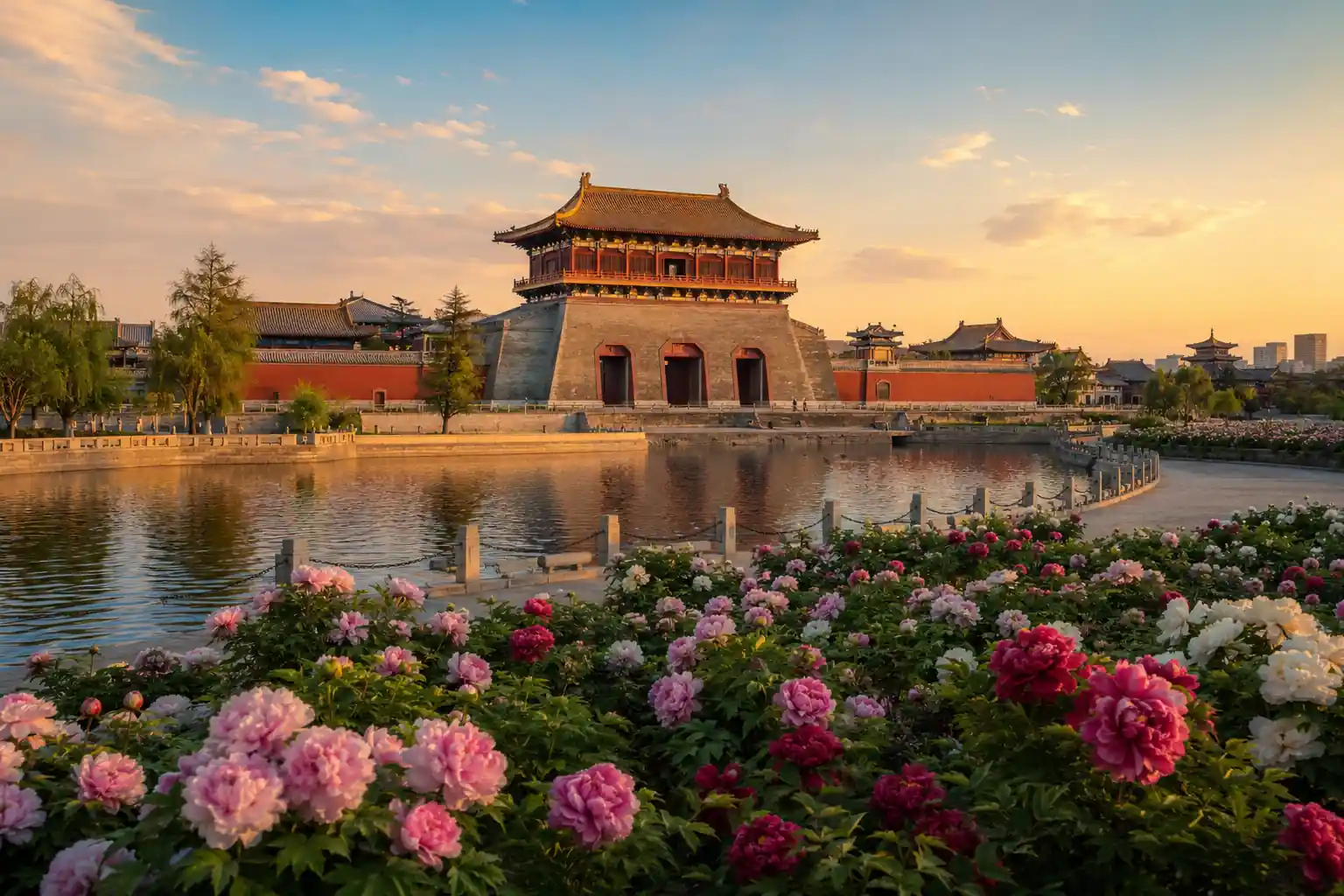
Luoyang is a compact history destination with Buddhist grottoes, temples, old capital heritage, and seasonal peony displays.
Suggested stay
1-2 days
Travel style
Heritage
Best for
Ancient history, grottoes, temple routes
Content confidence
Reviewed for practical travel use
Luoyang city overview, suggested stay, highlights, transport notes, nearby trips, and connected planning guides have been reviewed for practical trip planning.
Use this city page as a planning framework. Confirm current opening hours, ticket windows, transport schedules, and local rules before booking.
Check official sources before booking time-sensitive items.
Planning overview
How to Plan Luoyang
Luoyang works best as a compact history stop rather than a big-city wander. Come for Buddhist cave art, early temple history, and the remains of several imperial capitals, then structure your days by zone: Longmen in one block, the eastern temple area in another, and the old central city for gates, museums, and evening walks. It suits travelers who want depth without the scale and planning load of Beijing or Xi'an.
Longmen GrottoesWhite Horse TempleLuoyang Old Town
Best suited for
Ancient capital history
Buddhist art and temple heritage
Henan cultural routes
Short rail-based stopovers
Best time to visit
Spring and autumn are the easiest seasons for Luoyang, especially April to May for peony season and September to October for cooler walking weather. Summer is hot and rainier, which makes long outdoor visits less comfortable, while winter is dry and cold but still manageable if your plan leans toward museums, gates, and shorter site visits.
Stay in Luolong or near Luoyang Longmen Railway Station for the easiest access to Longmen Grottoes, newer hotels, and metro connections.
Do Longmen Grottoes early or late in the day if possible: the site is long, exposed, and better when tour groups thin out.
Keep White Horse Temple and the old-city gate area on separate halves of a day unless you are moving quickly by taxi or metro.
If you are planning around peony season, expect heavier crowds in April and verify opening hours before building a tight schedule.
Use Luoyang as a layered history stop: the city makes most sense when you connect grottoes, temple sites, and old-capital remains.
Suggested routes
Itineraries for Luoyang
Yingtian Gate helps visitors read Luoyang as an old capital, not only as a grotto stop.
Wikimedia Commons
1 day
Luoyang essentials
Best for a rail stopover or a tight Henan route. Focus on one major heritage site and one central-city block.
1Longmen Grottoes in the morning
2Late lunch and transfer back into the city
3Yingtian Gate or Luoyang Museum in the afternoon
4Old city walk around Lijingmen in the evening
2 days
First serious visit
Enough time to cover Luoyang's strongest Buddhist and old-capital sights without forcing too many long transfers into one day.
1Day 1: Longmen Grottoes, Guanlin area if useful, then an evening in the old city
2Day 2: White Horse Temple, Luoyang Museum, and Yingtian Gate
3Keep one central evening open for food streets or a second gate-and-plaza walk
3-4 days
Luoyang plus Henan context
Use the extra time to slow down inside the city and add one nearby history-focused extension rather than overfilling the urban core.
1Day 1: Longmen Grottoes with time for the larger river-cliff circuit
2Day 2: White Horse Temple, Luoyang Museum, and Yingtian Gate
3Day 3: Old city lanes, central gates, and a slower food-focused day
4Day 4: Day trip to Dengfeng and the Shaolin-Songshan area, or onward rail to Zhengzhou or Kaifeng
Neighborhoods
Best Areas to Explore
Luolong District and the Longmen corridor
This is the most practical base for many first-time visitors. It gives you the clearest access to Longmen Grottoes, Luoyang Longmen Railway Station, newer hotels, and broad roads that make taxis and metro transfers easier than in the older core.
Longmen GrottoesLongmen Avenue areaLuoyang Longmen Railway Station
Old City, Lijingmen, and central historic core
For evening atmosphere and easier old-capital texture, head into the older central districts around gates, old streets, and traditional-style commercial lanes. This area is less about one perfect monument and more about giving shape to Luoyang after the major daytime sights.
Lijing Gate areaOld streets and night market lanesHistoric core walks
Xigong and museum-government axis
This central district is useful when you want indoor history, major transit access, and broad ceremonial spaces rather than temple scenery. It is a strong weather backup day, especially if you pair the museum with Yingtian Gate and nearby central stops.
Luoyang MuseumYingtian GateLuoyang Railway Station area
White Horse Temple and eastern outskirts
East of the main urban core, this is where Luoyang's Buddhist history feels oldest and most direct. It is better approached as a dedicated half-day or day block, not as a quick add-on between central stops.
White Horse TempleTemple compounds and newer international hallsEastern suburban temple zone
What to see
Top Sights
Longmen Grottoes
The core sight in Luoyang: a UNESCO World Heritage site south of the city with thousands of Buddhist carvings cut into limestone cliffs along the Yi River. Most of the surviving caves date from the Northern Wei and Tang periods, so the site works as both an art stop and a direct lesson in how important Luoyang was as an imperial center.
Give it a real half day, wear shoes for a long riverside walk, and avoid treating it as a quick photo stop between trains.
White Horse Temple
Traditionally regarded as China's first Buddhist temple, White Horse Temple carries more historical weight than visual drama alone suggests. It is especially worthwhile if you want to connect Luoyang's Eastern Han history with the later Buddhist flowering visible at Longmen.
Pair it with a lighter central-city stop rather than Longmen on the same day, because the transfers add up.
Yingtian Gate
Yingtian Gate was the southern gate of the imperial palace city in the Sui and Tang periods and is now reconstructed over the original site with a museum in the base. It is one of the clearest places to read Luoyang as an old capital of ceremony, courts, and foreign envoys rather than only as a temple city.
It works particularly well late in the day, when you want a shorter central stop after the museum or old-city walks.
Luoyang Museum
If the city's dynastic history starts to blur together on site, the museum helps organize it. Its collections cover Luoyang's long sequence of capitals and include bronzes, pottery, stone works, and Han to Tang material that give useful context before or after the bigger outdoor monuments.
Use this on a hot, rainy, or winter day, or to anchor the middle of a two-day visit.
Lijing Gate and the old city
This is the easiest evening-facing part of Luoyang: a gate zone, old-style streets, snack stops, and a more local sense of how the center is used after dark. It will not replace Longmen or White Horse Temple, but it makes the city feel lived-in rather than purely archaeological.
Save it for late afternoon or night, when the old-city atmosphere is better than it is in the midday heat.
Getting around
Transport Notes
Arriving by air
Luoyang Beijiao Airport serves the city and sits about 11 km from the city center. It is workable for domestic arrivals, but many travelers still reach Luoyang more smoothly by rail if they are already moving between Zhengzhou, Xi'an, or other central China cities.
Arriving by train
Luoyang Longmen Railway Station is the key station for high-speed arrivals on the Zhengzhou-Xi'an high-speed corridor and is the most convenient option for many visitors. Luoyang Railway Station remains useful for conventional services on the Longhai Railway and for staying closer to the older central districts.
Getting around
Luoyang has a metro system with two lines and 33 stations, and it is useful for the main urban districts and the two railway stations. Even so, many travelers will still mix metro with taxis because the city's major sights are spread across distinct zones rather than one walkable center.
Taxis and ride-hailing
Taxis and ride-hailing are often the easiest way to connect Longmen, White Horse Temple, museums, and old-city stops without wasting time on transfers. Keep destination names in Chinese, especially for temple and gate sites.
Food
What to Eat
Start with the Water Banquet tradition
Luoyang's signature culinary idea is the Water Banquet (shuixi), a long sequence of cold and hot dishes built around broths, gravies, and soups. It is more useful as a group meal or a deliberate food experience than as a quick solo lunch. If you want one dish to remember from it, look for the Swallow Dish, the shredded-turnip course associated with the banquet tradition.
Use the old city for flexible eating
For ordinary meals and snack grazing, the old-city and gate areas are more practical than chasing one famous restaurant across town. They are the best places to keep dinner flexible after a heritage-heavy day, especially if you want noodles, dumplings, grilled snacks, and a simple evening walk in the same block.
Expect hearty Henan flavors, not delicate showpieces
Luoyang food leans practical and filling, which fits the city's dry inland climate and old-capital everyday style better than polished fine dining does. A good food day here is usually about one classic banquet or soup meal, then straightforward local dishes between museum and temple stops rather than destination dining.
Go next
Easy Trips from Luoyang
Dengfeng and Shaolin Temple
The strongest nearby extension if you want to keep the trip focused on religion and early Chinese history, usually done as a day trip or stop between Luoyang and Zhengzhou.
Zhengzhou
A practical onward stop for transport, museums, and wider Henan routing, especially if you are using high-speed rail across central China.
Kaifeng
A natural pairing for travelers interested in old capitals, market streets, and a broader Henan history route beyond Luoyang alone.
Keep planning
Useful next pages for Luoyang
Connect this city page with the practical setup decisions most likely to affect arrival, tickets, transport, and daily movement.