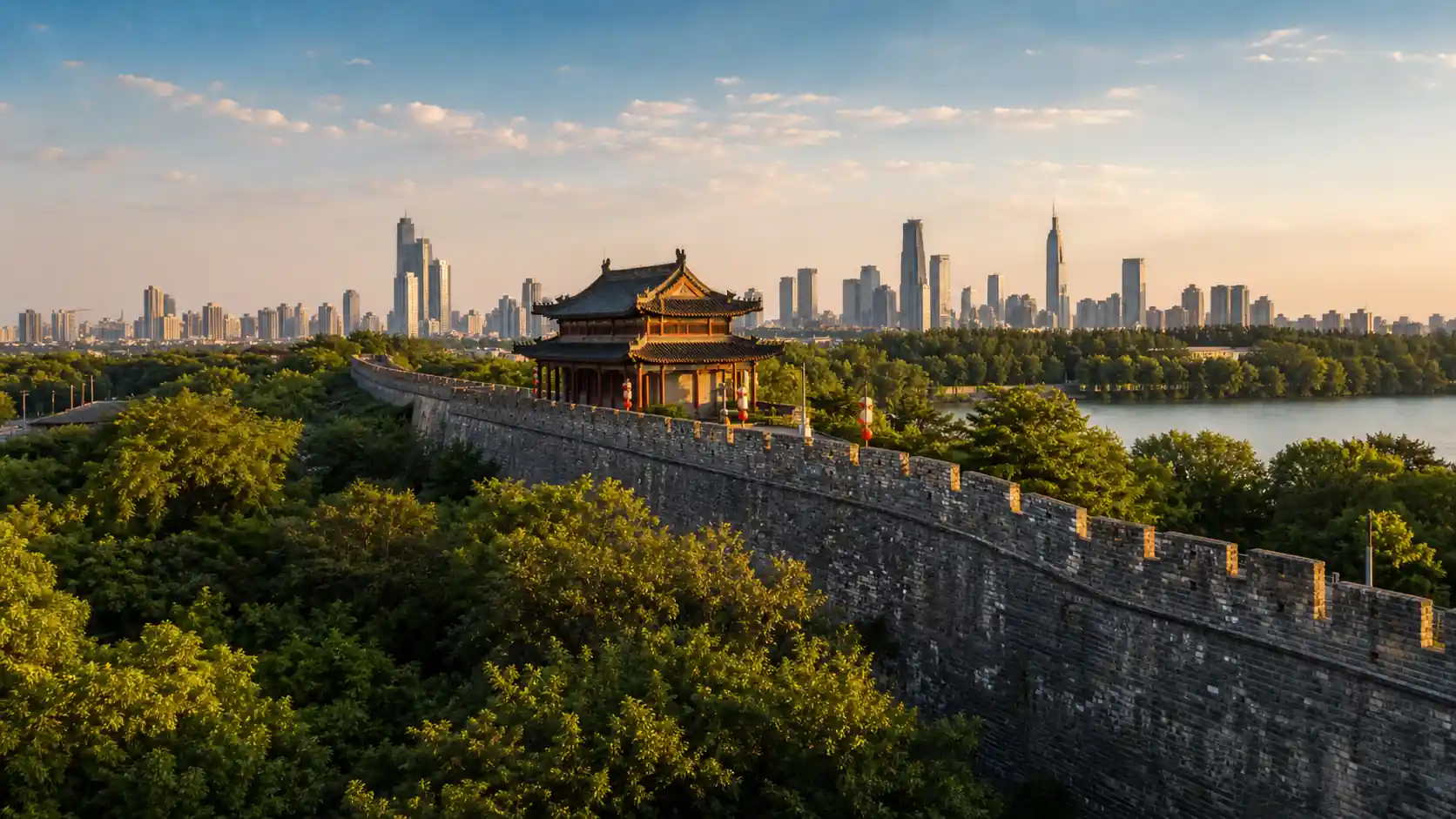
Nanjing combines Ming history, republican-era architecture, riverside scenery, and strong museum routes in a manageable East China city.
Suggested stay
2-3 days
Travel style
History
Best for
Museums, history, slower city walks
Content confidence
Reviewed for practical travel use
Nanjing city overview, suggested stay, highlights, transport notes, nearby trips, and connected planning guides have been reviewed for practical trip planning.
Use this city page as a planning framework. Confirm current opening hours, ticket windows, transport schedules, and local rules before booking.
Check official sources before booking time-sensitive items.
Planning overview
How to Plan Nanjing
Nanjing works best for travelers who want Chinese history in a city that is still practical to move around. You get Ming remains, republican-era sites, major museums, lakeside walks, and one of the country's more layered urban stories without the scale of Beijing or Shanghai. Plan at least one half day for Purple Mountain, then build the rest around compact zones such as Xuanwu Lake, the republican core, and the Qinhuai riverfront.
Sun Yat-sen MausoleumConfucius TempleNanjing Museum
Best suited for
Dynastic and republican history
Large museums and archives
Autumn city walks
East China rail itineraries
Best time to visit
Spring and autumn are the easiest seasons for most travelers, especially if you want long outdoor blocks around Purple Mountain, the city wall, and Xuanwu Lake. Summer is hot, humid, and rainy, while winter is cold but still workable for museum-heavy itineraries and clearer walking days.
Stay around Xinjiekou, Daxinggong, Xuanwu Lake, or the Presidential Palace area for the easiest first visit.
Treat Purple Mountain as a dedicated half day rather than trying to squeeze it between central-city stops.
Use the metro for long hops, but expect to do the final part of most good visits on foot inside each area.
Check reservation and closing rules for major museums and memorial sites before fixing a weekend itinerary around them.
This aerial view shows how the river, dense urban core, and broader city fabric connect, which is useful when planning Nanjing by zones rather than isolated sights.
Suggested routes
Itineraries for Nanjing
Purple Mountain is not just a single monument stop; it anchors the city's strongest half-day history route.
Wikimedia Commons
1 day
Republican core plus old riverfront
Best if you have one full day and want a balanced first look without spending too much time in transit.
1Xuanwu Lake or a short city wall walk in the morning
2Presidential Palace and the central republican district in the afternoon
3Nanjing Museum if weather is poor or history is your main focus
4Qinhuai River and Fuzimiao after dark
2 days
First-time Nanjing essentials
Enough time to split central history from Purple Mountain instead of rushing both into one overloaded day.
1Day 1: Presidential Palace, Nanjing Museum, then Qinhuai River in the evening
2Day 2: Purple Mountain with Sun Yat-sen Mausoleum and Ming Xiaoling
3Add Xuanwu Lake or a wall section if you still have daylight and energy
3-4 days
Deeper history with a side trip
Use the extra time for slower museum visits, longer walks, and one nearby rail extension rather than cramming more central stops into each day.
1Day 1: Republican core, Presidential Palace, and nearby evening streets
2Day 2: Purple Mountain in depth, including time between the major sites
3Day 3: Xuanwu Lake, city wall, and a second museum or memorial block
4Day 4: Side trip to Zhenjiang, Yangzhou, or Shanghai depending on your route
Neighborhoods
Best Areas to Explore
Xuanwu Lake and the city wall
This is one of the best first impressions of Nanjing: lake water, long wall sections, and broad views that make the city feel spacious rather than dense. It works well for an easy morning or late afternoon, especially when you want history without being indoors all day.
Xuanwu LakeMing city wall walksXuanwu Gate
Purple Mountain
Purple Mountain is Nanjing's strongest history-and-landscape zone, with major tombs, memorial sites, wooded slopes, and enough distance between stops that it deserves real time. If you only have one large-scale sightseeing block, this is usually the one to protect.
Sun Yat-sen MausoleumMing Xiaoling MausoleumLinggu scenic area
Presidential Palace and the republican core
Central eastern Nanjing holds some of the city's clearest republican-era texture: broad avenues, government compounds, museums, and institutions tied to the twentieth century. It is a practical daytime area when you want political history, architecture, and easier metro access.
Presidential PalaceNanjing Museum1912 District
Qinhuai River, Fuzimiao, and the old south city
This is the most atmospheric evening district for many visitors, with river scenery, old-street reconstruction, temple architecture, and a heavy concentration of snacks and souvenir traffic. It is busy and commercial, but still useful if you treat it as an evening walk rather than a quiet heritage district.
Qinhuai RiverFuzimiaoLaomendong
What to see
Top Sights
Sun Yat-sen Mausoleum
The main republican-era landmark on Purple Mountain, approached through a long ceremonial route and broad stairway. It is one of the clearest places to understand Nanjing's role in twentieth-century Chinese political history.
Go early and pair it with another Purple Mountain stop; it is better as part of a half-day block than as a quick standalone visit.
Ming Xiaoling Mausoleum
The tomb of the Hongwu Emperor, founder of the Ming dynasty, set within the larger Purple Mountain landscape. It carries more weight if you already know that Nanjing was the early Ming capital, because the site connects imperial ambition, tomb architecture, and the city's political peak.
Do it on the same outing as Sun Yat-sen Mausoleum instead of treating Purple Mountain as repeated cross-city trips.
Presidential Palace
This complex layers several periods of Nanjing history in one place, from earlier official compounds to the republican-era presidential seat. It is especially useful for visitors who want a concrete, walkable link between the 1911 revolution, the Republic of China period, and the city's modern political identity.
Give it proper time rather than rushing through the courtyards; the value is in the sequence of buildings and historical context.
Nanjing Museum
One of the city's strongest indoor anchors and a good choice when weather is poor or you want to understand Jiangsu and broader Chinese material culture through objects. It is particularly strong for archaeology, dynastic collections, and historical galleries.
Leave at least half a day if museums matter to you, and check current entry rules before committing the afternoon.
Qinhuai River and Fuzimiao
The most approachable evening sightseeing district for many visitors, mixing temple architecture, old-street atmosphere, snack-heavy lanes, and waterside views. It is crowded and commercial, but still worth doing once because it shows a different side of the city from the mountain and museum routes.
Go after dark, expect crowds, and step into side lanes or nearby blocks if the main strip feels too touristic.
Getting around
Transport Notes
Arriving by air
Nanjing Lukou International Airport is the city's main air gateway. Metro Line S1 connects the airport with Nanjing South Railway Station in about half an hour for a low fixed fare, while a taxi into central Nanjing usually takes a similar amount of time but costs more.
Arriving by train
Nanjing South Railway Station is the main high-speed rail hub, while the older Nanjing Station remains useful for conventional services and some central arrivals. Shanghai is about 75 minutes away by high-speed train, while Beijing is roughly four hours away.
Getting around
The metro is usually the easiest way to cross the city, especially between Nanjing South, Purple Mountain, the republican core, and Qinhuai. Once you reach the right zone, walking is often more efficient than trying to optimize every short movement through transit.
Taxis and ride-hailing
Taxis are generally straightforward for short urban hops, and many central trips cost less than about CNY 25. Keep hotel and attraction names in Chinese and expect availability to worsen during rush-hour shift changes.
Food
What to Eat
Start with the duck dishes
Nanjing is closely associated with duck, and salted duck (yanshui ya) is the place to begin: tender, pale meat with clean seasoning rather than heavy sauce. Duck blood and vermicelli soup (yaxue fensi tang) is the everyday local bowl, built around vermicelli, duck blood, tofu, and other duck parts in a savory broth. In autumn, some kitchens also lean into osmanthus-linked seasonal duck variations.
Use famous snack areas selectively
Fuzimiao and the Qinhuai riverfront are convenient for trying several local snacks in one walk, especially if you already planned to be there at night. They are useful, but not the only answer; if you want calmer meals, branch out to ordinary neighborhood streets or mall food floors rather than eating every meal in the busiest heritage zone.
Expect lighter Jiangsu flavors
Nanjing food sits within the broader Jiangsu and Jinling tradition, so balanced seasoning, soups, duck, and river ingredients matter more than aggressive spice. If you have already come from Sichuan, Hunan, or Chongqing, the local style can feel restrained at first. Give it a meal or two and judge it on texture, broth, and ingredient quality instead of heat.
Go next
Easy Trips from Nanjing
Zhenjiang
An easy rail extension west of Nanjing for Yangtze views, temple sites, and a smaller historic city that works well when you want a lighter day than Shanghai.
Yangzhou
A good contrast if you want canals, gardens, and slower Jiangsu atmosphere after Nanjing's heavier political history routes.
Shanghai
The easiest big-city add-on, reached in about 75 minutes by high-speed train and useful if your route continues deeper into East China.
Keep planning
Useful next pages for Nanjing
Connect this city page with the practical setup decisions most likely to affect arrival, tickets, transport, and daily movement.