Guides -> Travel Safety & Common Scams

Calm safety guide

Travel Safety & Common Scams in China: stay relaxed, not careless

Good safety planning should make the trip feel lighter. The useful habit is not suspicion of everyone; it is choosing official channels, checking payment amounts, keeping essentials controlled, and leaving early when a situation stops feeling normal.

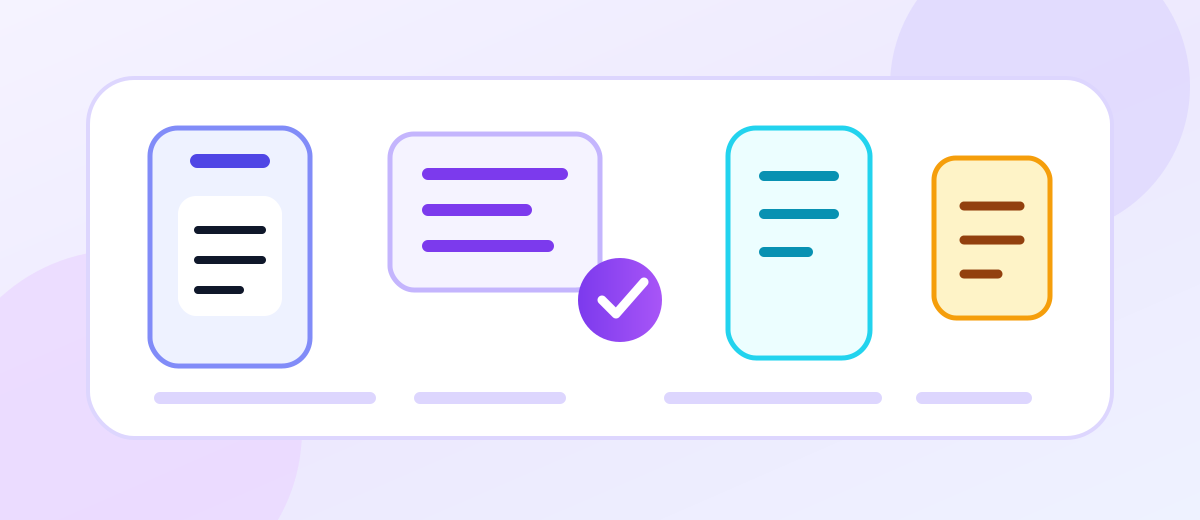
Illustration of a China travel safety board with phone, passport, taxi receipt, QR payment check, and hotel card.
Safety advice, local rules, phone scams, payment systems, and consular guidance can change. Check official government advice before travel, especially for remote regions or business trips.

Page map

Safety is mostly about clear choices at handoff points.

01

Start from normal caution, not fear

China is generally easy to travel when the basics are prepared. The problems visitors report are usually preventable: rushed payments, vague destinations, crowded places, drink invitations, phone loss, or arguing when leaving is safer.

02

Make every transaction clear before it starts

Use official channels, visible prices, metered taxis, app-based rides, written hotel addresses, trusted booking routes, and receipts. Ambiguity is where small problems grow.

03

Control the handoff moments

Most friction happens when someone else controls the route, bill, bag, phone, QR code, drink, or destination. Keep those moments boring and documented.

04

Know how to exit cleanly

If something feels wrong, move to a public place, stop debating, contact hotel staff, call your card issuer if needed, and get a police report for serious incidents or card disputes.

Risk map

Watch the pattern, not the person.

Most travellers do not need a dramatic danger list. They need to recognise a few repeated patterns and choose a cleaner option before pressure builds.

Unsolicited friendly invitation

Pattern: Someone near a tourist area invites you to practise English, see art, drink tea, visit a bar, get a massage, or follow them to a nearby place.

Move: Decline politely and keep walking. If you want tea, art, nightlife, or massage, choose the venue yourself from a map or hotel recommendation.

Taxi or transfer uncertainty

Pattern: Unmarked car, broken meter, vague flat fare, driver pressure, wrong pickup level, or no way to identify the vehicle afterward.

Move: Use official taxi queues, ride-hailing apps, hotel-arranged transfers, marked taxis, saved plates, and receipts. Do not fight over a fare inside the car.

Payment pressure

Pattern: A bill appears higher than expected, the QR amount is different, the card terminal is rushed, or staff insist you pay before you understand the charge.

Move: Pause, check the number, ask for an itemised bill, photograph the menu or receipt when safe, and use a card or app trail rather than handing over extra cash.

Crowded transport and sights

Pattern: Phone, passport, laptop, wallet, or day bag is easy to grab or forget during metro transfers, train boarding, security checks, queues, or photo stops.

Move: Keep passport and phone in front zipped pockets, split cards and cash, use a small day bag, and do a pocket check before leaving any seat.

Nightlife and drinks

Pattern: Overpriced bar bill, drink spiking risk, pushy companions, unclear minimum spend, or being separated from your group.

Move: Choose the venue yourself, keep drinks in sight, avoid unknown private rooms, leave with friends, and treat sudden illness as a safety issue.

Phone calls and messages

Pattern: A caller claims to be police, immigration, embassy, delivery, bank, or platform support and asks for payment, codes, passport data, or a transfer.

Move: Hang up, do not transfer money, do not share codes, and verify through the official app, hotel front desk, bank number, or your consulate.

Illustration of document, payment, phone, route, and behaviour safety preparation layers.

Before you go

Prepare the layers that stop one problem becoming five.

1

Document layer

Keep passport photo page, visa or entry proof, insurance, hotel address in Chinese, emergency contacts, and card issuer numbers offline.

2

Payment layer

Set up primary and backup payment, know how to freeze cards, keep some RMB backup cash, and avoid relying on one phone for every payment.

3

Phone layer

Enable device lock, find-my-phone, cloud backup, eSIM or roaming fallback, app recovery access, and offline copies of bookings.

4

Route layer

Save the Chinese names of hotels, stations, airports, police station, hospital, and the official taxi or ride-hailing pickup points.

5

Behaviour layer

Agree with companions on meeting points, what to do if separated, and when to leave rather than debate a bad situation.

Scam patterns

The problem usually starts before money changes hands.

Tea, bar, massage, or art-gallery bill trap

Where: Tourist areas, nightlife streets, shopping roads, squares, and places where visitors are likely to be wandering without a fixed plan.

Signal: The invitation is personal and flattering, the venue is not your choice, prices are unclear, and the bill arrives after the service.

Response: Do not follow strangers to private venues. If already inside, stay calm, avoid physical confrontation, move toward public space, document safely, and contact police or card issuer afterward if needed.

Taxi overcharge or unofficial car

Where: Airports, stations, attraction exits, late-night districts, and places where travellers look tired or unsure.

Signal: No clear queue, no meter, pressure to pay cash, an unusually high flat fare, or a driver who avoids the official pickup area.

Response: Use the official queue or app. Keep the plate number, destination in Chinese, and receipt. If the ride feels wrong, exit at a safe public place.

QR payment amount switch

Where: Small shops, street stalls, taxis, informal counters, or any rushed payment line.

Signal: The merchant shows a QR code but the amount is unclear, or the screen is turned away before you confirm.

Response: Check the amount before confirming. Let the queue wait. Screenshot or save the transaction record if the payment matters.

ATM or card compromise

Where: Street-facing ATMs, unattended machines, late-night withdrawals, or places where someone tries to help too eagerly.

Signal: Loose card slot, covered camera, people standing close, or the machine behaving oddly.

Response: Use ATMs inside banks, malls, or hotels during daylight. Shield the PIN, refuse help, and call the bank quickly if the card is retained.

Lost phone or passport cascade

Where: Security trays, cafe tables, taxis, trains, public toilets, and crowded photo spots.

Signal: You set essentials down for a moment while managing tickets, bags, children, or payment.

Response: Create a fixed pocket routine. If lost, freeze payment apps and cards first, then use hotel help, police report, and consular steps if passport is gone.

Authority impersonation call

Where: Phone, messaging apps, delivery notices, bank calls, or fake platform support.

Signal: Urgency, secrecy, threat of arrest, request for transfer, request for verification code, or instructions not to tell anyone.

Response: End the call. Verify through official channels only. Real authorities do not solve an alleged crime through a private money transfer.

Illustration of taxi and QR payment safety checks from pickup to receipt.

Taxi and ride safety

Make the ride traceable before you get moving.

1

Before the ride

Save the destination in Chinese, use a known pickup point, confirm the plate, and avoid accepting a random driver who approaches you first.

2

During the ride

Follow the route on your map if possible, keep luggage visible, avoid arguing, and share ride details with a companion for late-night trips.

3

At payment

Check the meter or app fare, pay only after confirming the amount, request or keep the receipt, and do not hand over your phone unlocked.

4

If there is a dispute

Move to a staffed hotel, station, or public area. Ask hotel staff or police for help rather than escalating physically with the driver.

Money safety

The best payment is one you can verify and recover.

Cards

Bring more than one card and store them separately.

A blocked card is annoying; a blocked only card can break hotel, transport, and emergency plans.

Cash

Carry modest RMB backup, not a large visible roll.

Cash helps when apps fail, but too much cash increases loss and dispute risk.

QR payments

Read the amount before tapping confirm.

QR payment is convenient, but speed makes travellers approve the wrong number too easily.

Receipts

Keep receipts for taxis, hotels, big purchases, and disputed payments.

Receipts make it easier to identify a vehicle, merchant, address, or card transaction.

ATMs

Use bank, mall, or hotel machines in daylight and shield the PIN.

Secure locations reduce skimming, distraction, and card-retention stress.

Phone wallet

Use a lock screen, biometric unlock, and a second recovery device or email path.

If the phone disappears, you need a way to freeze payment, retrieve bookings, and contact support.

Public-space habits

Most losses happen when attention splits.

Crowded metro or train

Wear the day bag in front, zip pockets, keep passport off the outer pocket, and avoid leaving the phone loose while boarding.

Security checkpoint

Use one tray for essentials, count items before leaving, and do not let passport, phone, and wallet scatter across several trays.

Cafe or restaurant

Do not hang a bag on the chair back or leave a phone on the table edge. Keep the bag against your body or between your feet.

Photo stop

Take the picture, then put the phone away before walking. Many losses happen during the happy, distracted moment after the shot.

Hotel lobby or station seat

Do a pocket check every time you stand up: phone, passport, wallet, room card, bag. Make it boring and automatic.

Local rules

Some safety risks are legal, not only criminal.

Drugs and medication confusion

Do not consume illegal drugs, and be careful with medicines that may be controlled. A legal product elsewhere can create serious problems if it violates local rules.

Police, protests, and sensitive sites

Avoid demonstrations, do not photograph police or protests without permission, and be extra cautious around military, border, government, and security-sensitive areas.

Business or employment disputes

Do not treat business conflict as a casual travel problem. In China, some civil or commercial disputes can become serious legal matters for foreigners.

Remote border areas

Xinjiang, Tibet, and border regions can have extra checks or travel restrictions. Carry passport, permits when required, and buffer time for identity checks.

Illustration of identity, money, movement and decision backup layers for China travel safety.

Backup stack

A safer trip has identity, money, movement, and decision layers.

A good backup stack is not dramatic. It simply means one lost phone, bad bill, or awkward ride does not control the whole trip.

Identity layer

Passport routine, offline scans, hotel address in Chinese, travel insurance, and consular contact saved before the trip.

Money layer

Two cards, RMB backup, QR amount checks, ATM discipline, receipts, and fast freeze routes for cards and payment apps.

Movement layer

Official taxi queues, ride-hailing records, saved plates, public pickup points, and a safe place to exit a tense situation.

Decision layer

Decline invitations, pause before paying, leave before arguing, and ask hotel staff or police for help when the situation stops feeling normal.

Response playbooks

When something goes wrong, reduce contact and increase documentation.

You sense a setup

Smile, decline once, keep moving, enter a known shop or hotel, and stop explaining. Long explanations give the other person more time to pressure you.

A bill is inflated

Ask for an itemised bill, keep your voice low, avoid physical confrontation, move toward public space, and preserve receipts or transaction records.

Your phone is gone

Freeze payment apps and cards first, use find-my-phone if safe, contact the hotel and police, then recover accounts from your backup device or email.

Your passport is gone

Report to police, obtain a report, contact your embassy or consulate, and use saved passport scans and hotel documents to support the process.

You were charged unfairly

Get safe first, record the merchant name and address if possible, contact card issuer, keep the police report if required for a dispute.

Someone threatens official trouble by phone

Do not transfer money or share codes. Hang up, verify independently, and ask hotel staff, your bank, or your consulate through official channels.

Traveller matches

Safety habits should match the way you travel.

Solo traveller

Share hotel and live route details for late arrivals, keep a visible exit plan in nightlife areas, and avoid following strangers to second locations.

Family traveller

Use fixed meeting points, put hotel cards in every adult phone, keep passports controlled by one routine, and avoid crowded exits at the last minute.

Business traveller

Separate personal and work devices, avoid sensitive data exposure, understand that commercial disputes can become legal issues, and keep local counsel contacts if needed.

Budget traveller

Low prices can be fine, but do not trade safety for unofficial transfers, unclear lodging, fake ticket channels, or one-card payment dependence.

Nightlife traveller

Choose venues yourself, keep drinks visible, leave with known companions, and treat private rooms, unclear minimum spend, and sudden friendliness as risk signals.

Important disclaimer

This guide is for general trip-planning information, not legal, medical, financial, or immigration advice. Rules, availability, and provider policies can change—verify time-sensitive details with the relevant official source before you travel or book.

Content confidence

Reviewed for practical travel use

Travel Safety & Common Scams has been reviewed for practical visitor use, internal links, route relevance, and clear action steps.

Rules for entry, payment products, bookings, transport, and attractions can change. Verify official or provider sources before relying on time-sensitive details.

Check official sources before booking time-sensitive items.