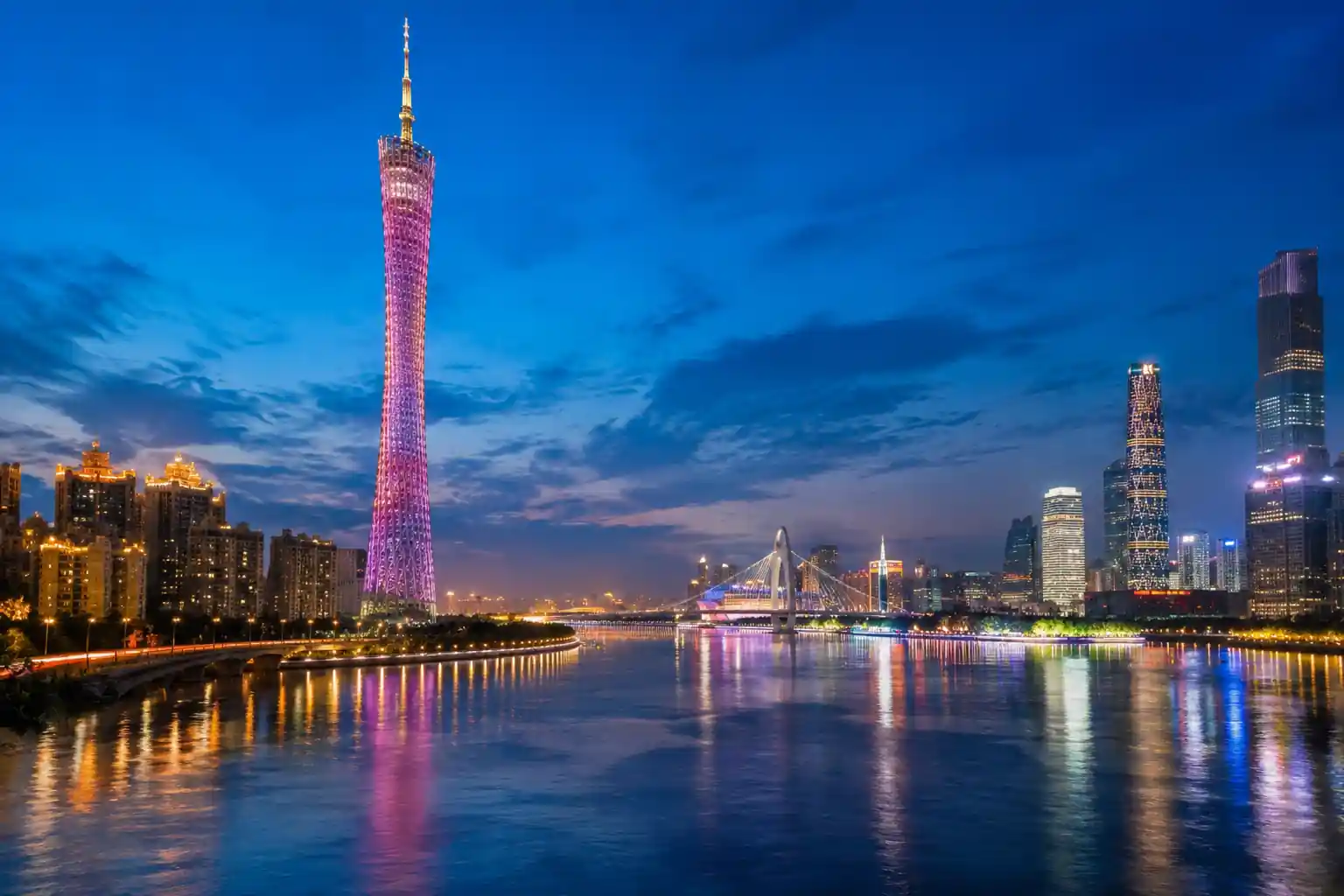
Guangzhou is practical, food-focused, and well connected, making it a strong southern China base for Cantonese dining and Pearl River Delta routes.
Suggested stay
1-3 days
Travel style
Food
Best for
Food, business travel, Pearl River Delta routes
Content confidence
Reviewed for practical travel use
Guangzhou city overview, suggested stay, highlights, transport notes, nearby trips, and connected planning guides have been reviewed for practical trip planning.
Use this city page as a planning framework. Confirm current opening hours, ticket windows, transport schedules, and local rules before booking.
Check official sources before booking time-sensitive items.
Planning overview
How to Plan Guangzhou
Guangzhou suits travelers who care more about food, neighborhoods, and practical city rhythm than about checking off monumental sights. It works especially well as a Pearl River Delta base, a business-trip extension, or a second China city after Beijing or Shanghai. Plan it in compact clusters: old west Guangzhou for Lingnan architecture and snacks, Yuexiu for history, then one riverfront or skyline evening in Tianhe or Haizhu.
Canton TowerShamian IslandDim sum
Best suited for
Cantonese food-focused trips
Pearl River Delta base planning
Repeat China visitors
Business travel with extra days
Best time to visit
October to December is usually the easiest period for walking, with drier air and more manageable temperatures. March and April are workable but often humid, while May to September is hot, wet, and storm-prone. Winter is mild by north China standards, though it can still feel damp and grey.
Stay in Liwan, Yuexiu, Tianhe, or Zhujiang New Town for the easiest balance of food, metro access, and sightseeing.
Use the metro for most cross-city movement, then walk within compact areas such as Shamian, Beijing Road, and the Pearl River promenade.
Keep one evening flexible for the riverfront or Canton Tower area, since haze, rain, and summer heat can change how rewarding it feels.
If your visit overlaps with the Canton Fair, book hotels early: Pazhou and Tianhe fill quickly and prices rise across the city.
This view shows the riverfront skyline that helps first-time visitors understand Guangzhou's modern scale and evening rhythm.
Suggested routes
Itineraries for Guangzhou
This image shows the newer cultural axis in Zhujiang New Town, useful when planning a modern Guangzhou day around museums, plazas, and skyline walks.
Wikimedia Commons
1 day
Old Guangzhou plus one skyline evening
Best for a stopover or business-trip add-on. Keep the day compact and save your energy for the riverfront at night.
1Chen Clan Ancestral Hall in the morning
2Liwan lanes or Shamian Island after lunch
3Temple of the Six Banyan Trees or Beijing Road in the late afternoon
4Canton Tower area or Pearl River promenade after dark
2 days
First-time Guangzhou essentials
Enough time to balance Lingnan heritage, practical food stops, and the newer skyline districts.
2Day 2: Yuexiu historical core, temples, Beijing Road, night walk by the river
3Day 3: Zhujiang New Town, Guangdong Museum or Opera House area, Canton Tower or cruise
4Day 4: Day trip to Foshan, Shenzhen, or Hong Kong depending on your wider route
Neighborhoods
Best Areas to Explore
Liwan and Shamian
This is the best part of Guangzhou for travelers who want older urban texture rather than a pure skyscraper city. Liwan gives you arcades, traditional shopfronts, temples, and local food streets, while Shamian offers a quieter, colonial-era walking break by the river.
Shamian IslandChen Clan Ancestral HallXiguan-style streets and food stops
Yuexiu and the old civic core
Yuexiu is the historical and administrative center, useful for parks, memorial halls, temples, and older commercial streets. It is one of the easiest districts for understanding Guangzhou beyond food and trade, especially if you want the city's republican and older religious layers.
Yuexiu ParkSun Yat-sen Memorial HallTemple of the Six Banyan Trees
Tianhe and Zhujiang New Town
This is modern Guangzhou: broad avenues, malls, cultural venues, office towers, and the clearest skyline identity. It can feel business-heavy by day, but it works well for museums, architecture, and an evening walk once the heat drops.
Guangzhou Opera HouseGuangdong MuseumCentral axis plazas and towers
Haizhu and the riverfront south bank
Haizhu matters for Canton Tower, stretches of Pearl River promenade, and the Pazhou exhibition zone. It is less about traditional neighborhood wandering and more about river views, event venues, and pairing a modern skyline stop with a night cruise or river walk.
Canton Tower areaPearl River promenadePazhou exhibition district
What to see
Top Sights
Shamian Island
Shamian is the city's easiest slow-walking district, with tree-lined streets, former concession buildings, churches, and a calmer pace than most of central Guangzhou. It works best as texture rather than as an all-day checklist stop.
Go in the morning or late afternoon, then pair it with Liwan food stops instead of treating it as a standalone half-day.
Chen Clan Ancestral Hall
This late Qing clan academy is one of Guangzhou's strongest architectural stops, known for its Lingnan decorative carving, ceramic work, and courtyard layout. It is also one of the clearest introductions to regional craftsmanship.
Visit earlier in the day if possible, then continue into Liwan rather than doubling back across the city.
Canton Tower and the Pearl River
Canton Tower is the city's most recognizable landmark and the anchor for a modern riverfront evening. Even if you do not go up the tower, the surrounding promenade and skyline views still justify the trip.
Choose a clearer evening if possible; on hazy or rainy days, the tower area works better as a river walk than as a paid viewpoint.
Yuexiu Park and Sun Yat-sen Memorial Hall
This pairing gives you a wider sense of Guangzhou's civic history, from the city symbol of the Five Rams to one of its best-known republican-era buildings. It is a practical combination when you want history without leaving the metro core.
Treat it as a flexible half-day and adjust according to heat, since the park is more pleasant outside the hottest hours.
Temple of the Six Banyan Trees
One of the city's most important Buddhist sites, this temple offers a quieter, older layer of Guangzhou close to the busy central districts. It fits especially well for travelers who want a religious or historical stop between major commercial areas.
Combine it with Yuexiu or Beijing Road; it is most useful as part of a central walking sequence rather than a separate destination.
Getting around
Transport Notes
Arriving by air
Guangzhou Baiyun International Airport is the city's main airport and the main air gateway for much of south China. It sits north of the center and connects into the metro system, so many travelers can reach central districts without needing a taxi.
Arriving by train
Guangzhou South is the main high-speed rail hub for intercity routes across the Pearl River Delta and beyond. Guangzhou East and the central city stations can also be useful depending on your route, so check the exact station before booking.
Getting around
The metro is usually the easiest way to cross Guangzhou, especially between Liwan, Yuexiu, Tianhe, Haizhu, and the airport. Walking works best once you arrive in compact pockets such as Shamian, central Yuexiu, or the riverfront, and the BRT system is also useful on some busy east-west corridors.
Taxis and ride-hailing
Taxis and ride-hailing help late at night, in heavy rain, or when carrying luggage, but traffic can be slow in central districts and around major events. Keep your hotel and destination names in Chinese to make pickups and drop-offs easier.
Food
What to Eat
Start with dim sum and Cantonese basics
Guangzhou is one of the best cities in China for building a trip around breakfast and lunch. Start with dim sum and tea-house staples such as har gow, siu mai, rice noodle rolls (cheung fun), and steamed buns, then move on to roast goose, wonton noodles, white-cut chicken, or claypot rice later in the day.
Use neighborhoods, not celebrity restaurants
Liwan and Yuexiu are the easiest districts for older Cantonese food culture, while Tianhe is practical for polished restaurants and easy mall dining between metro stops. In Guangzhou, a good meal plan usually comes from picking the right area and following local turnover rather than chasing one famous address across town.
Leave room for sweets, tea, and late meals
Do not reduce the city to dim sum alone. Cantonese dessert shops, double-skin milk, herbal drinks, congee, and late-night seafood or noodle stops are part of the rhythm, and a slower tea-house break often tells you as much about Guangzhou as any landmark.
Go next
Easy Trips from Guangzhou
Foshan
The easiest culture-focused side trip, with Lingnan temples, martial-arts associations, and Cantonese opera heritage, commonly reached in well under an hour by metro or short rail connection.
Shenzhen
A useful contrast if you want a newer, more design- and tech-oriented PRD city, commonly about 30 to 60 minutes away by high-speed rail depending on the station and service.
Hong Kong
An easy cross-border extension if your route continues south, typically around 50 minutes by high-speed rail from Guangzhou South to West Kowloon before immigration formalities.
Keep planning
Useful next pages for Guangzhou
Connect this city page with the practical setup decisions most likely to affect arrival, tickets, transport, and daily movement.