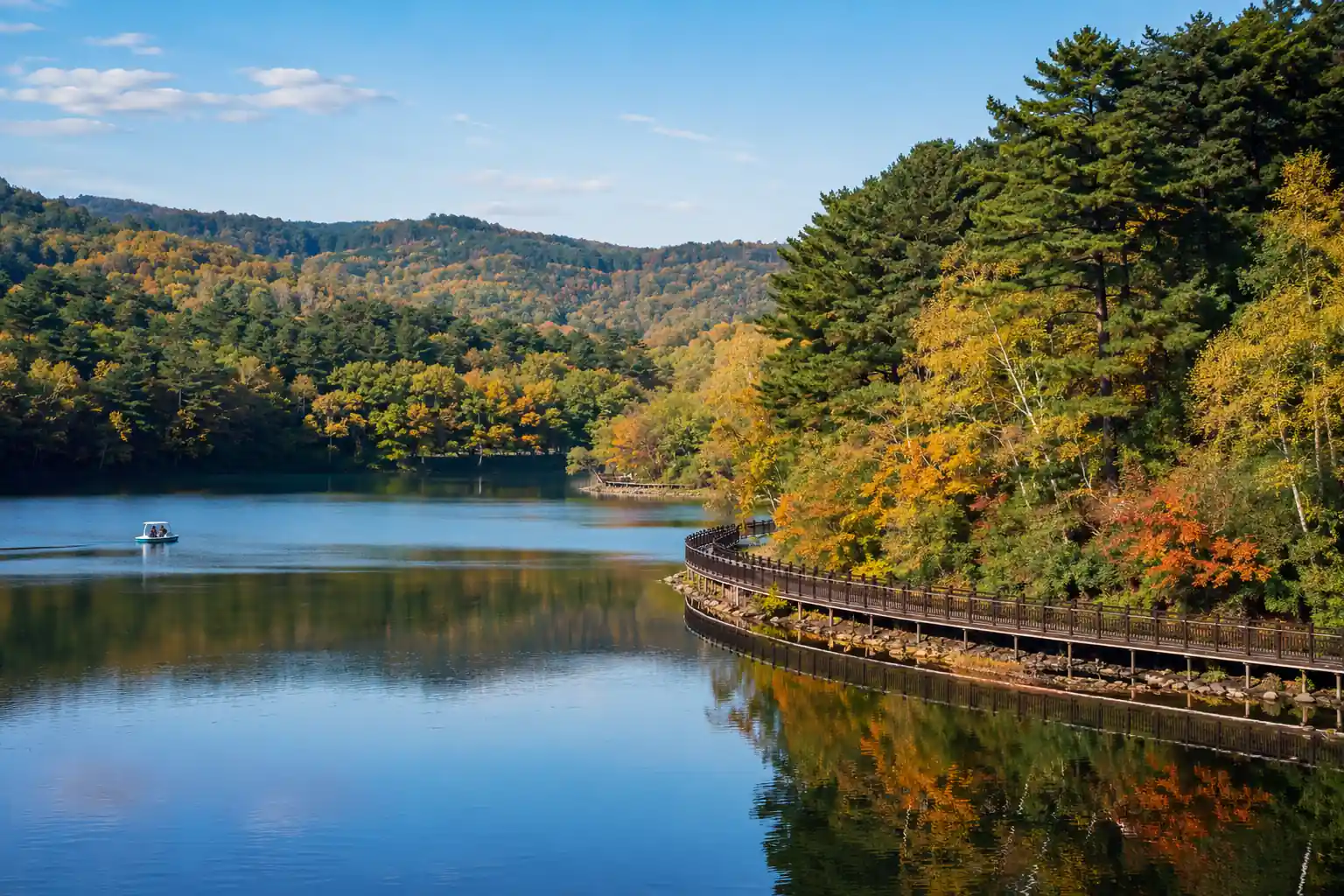
Changchun is a quieter northeast city known for film culture, Manchukuo-era history, parks, and practical train links across the region.
Suggested stay
1-2 days
Travel style
Northeast
Best for
Regional history, film culture, parks
Content confidence
Reviewed for practical travel use
Changchun city overview, suggested stay, highlights, transport notes, nearby trips, and connected planning guides have been reviewed for practical trip planning.
Use this city page as a planning framework. Confirm current opening hours, ticket windows, transport schedules, and local rules before booking.
Check official sources before booking time-sensitive items.
Planning overview
How to Plan Changchun
Changchun works best for travelers who want Northeast China beyond the usual Harbin-Shenyang circuit: broad planned avenues, a dense layer of 20th-century history, solid museums, and greener city blocks than many first-time visitors expect. It is not a checklist-heavy destination, so plan it by clusters: one half-day for Manchukuo-era history, one for film or park time, and evenings around Guilin Road, South Lake, or a central square.
Jingyuetan ParkMuseum of the Imperial PalaceChangchun Film Studio
Best suited for
Modern Northeast China history
Film culture and museums
Parks in a slower big city
Rail-based Northeast itineraries
Best time to visit
Late spring to early autumn is the easiest window, especially from May to October when parks, major avenues, and outdoor squares are comfortable to use between museum visits. Summer is warm and greener than many travelers expect, while winter is long, very cold, and windy but still worthwhile if you want snow-season atmosphere, hearty food, and indoor history-focused days.
Stay around Renmin Square, Culture Square, or Guilin Road if this is your first visit; these areas keep museums, food streets, and station transfers manageable.
Use rail transit for the main stations and for Jingyuetan, then walk once you reach each cluster because the city center is laid out on broad, readable avenues.
In winter, combine outdoor squares or parks with indoor museum stops; the cold is dry but wind can make longer walking stretches less pleasant than they look on a map.
Verify current opening days and ticket rules for the palace museum, film studio site, and any seasonal park facilities before building a full day around them.
Changchun makes more sense when you think in wide avenues, planned squares, and park edges rather than a dense old core.
Suggested routes
Itineraries for Changchun
Guilin Road shows the practical evening side of the city: snacks, casual restaurants, and a younger local crowd.
Wikimedia Commons
1 day
History-first Changchun
Best for a stop between other Northeast cities. Keep the day focused on the city’s strongest historical layer and save the evening for food.
1Museum of the Imperial Palace of Manchukuo in the morning
2Xinmin Avenue, Culture Square, and the Eight Grand Ministries area in the afternoon
3Guilin Road for dinner and casual walking
4Optional short detour to South Lake if weather is good
2 days
History plus city life
This is the most balanced first visit, with one day for historical Changchun and one day for parks, film, or a slower neighborhood pace.
2Day 2: Jingyuetan National Forest Park or Changchun Film Studio, then South Lake and Guilin Road
3Adjust the second day toward parks in warm weather and museums in deep winter
3-4 days
Changchun with a regional extension
Use extra time to avoid overfilling the city itself. Changchun works well as a calm base before moving on by high-speed rail.
1Day 1: Palace museum and the old northern core
2Day 2: Xinmin Avenue, Culture Square, Geological Palace, and a longer South Lake walk
3Day 3: Jingyuetan or film-related stops depending on weather and interest
4Day 4: Continue to Jilin City, Shenyang, or Harbin by rail instead of forcing more city-center sightseeing
Neighborhoods
Best Areas to Explore
Palace Museum and the old northern core
This is the most important history zone for first-time visitors, centered on the former Manchukuo imperial complex and the older railway-facing part of the city. It is less about picturesque street wandering than about understanding how Changchun was planned and used in the 1930s and 1940s.
Museum of the Imperial Palace of ManchukuoChangchun Railway Station areaWeimanhuanggong transit stop
Xinmin Avenue, Culture Square, and Geological Palace
Broad ceremonial streets and large institutional buildings make this the clearest surviving slice of the former planned capital. It works well as a half-day of architecture, political history, and slower walking between squares rather than a rush from one ticketed sight to another.
Eight Grand Ministries areaCulture SquareGeological Palace Museum
Guilin Road and South Lake
This is one of the easiest parts of the city for an evening or a relaxed second half of the day: food streets, younger crowds, and park space that softens Changchun’s otherwise formal layout. It is a good place to let the schedule loosen after museum-heavy sightseeing.
Guilin Road Food StreetSouth LakeCafe and late-evening restaurant strips
Jingyuetan and the southeast leisure zone
When you want to see why locals still describe Changchun as green, head southeast to Jingyuetan. This area is best for a longer outdoor block, especially in good summer weather or on a winter trip that includes snow activities and forest scenery.
Jingyuetan National Forest ParkJingyuetan LakeLine 3 and Line 6 access toward the southeast
What to see
Top Sights
Museum of the Imperial Palace of Manchukuo
This former palace complex was the residence of Puyi during the Manchukuo period and is the single best place to understand Changchun’s role as the wartime capital of a Japanese puppet state. The buildings are not grand in the Beijing-palace sense, but the political and historical weight is what makes the visit worthwhile.
Give it real time rather than treating it as a photo stop, and check the current exhibition and entry rules before you go.
Jingyuetan National Forest Park
About 18 km southeast of the city, Jingyuetan is Changchun’s main outdoor escape, built around a lake and a large man-made forest that has grown far beyond its original 1930s scale. It adds balance to a city trip that might otherwise lean too heavily on 20th-century political history.
Choose this on your clearest weather day, and remember it works better as a half-day or longer outing than as a quick add-on.
Eight Grand Ministries and Xinmin Avenue
These former Manchukuo government ministry buildings still frame one of the city’s most distinctive historical avenues. The value here is architectural and urban: you are reading how the former capital was laid out, not chasing a single museum object.
Pair this with Culture Square or the Geological Palace so the walk has a clear start and end rather than feeling like scattered institutional buildings.
Changchun Film Studio
Changchun Film Studio grew out of the postwar Northeast Film Studio and became one of the foundations of the film industry in the People’s Republic of China. It is the right stop if you want cultural history rather than only wartime history.
Use this as a second-day sight after the palace museum, not before it, unless film history is your main reason for coming.
Culture Square and the Geological Palace area
Culture Square is one of the clearest expressions of Changchun’s planned urban form, and the nearby Geological Palace adds another large-era building to the same walk. Even without going deep into exhibitions, this zone helps explain the city’s scale and formal layout.
This is especially useful in the late afternoon, when the broad streets photograph better and you can continue easily toward dinner districts.
Getting around
Transport Notes
Arriving by air
Changchun Longjia International Airport is about 31 km northeast of the urban area. The airport rail station connects to Changchun in about 14 minutes during the day, while airport coaches take roughly 45 minutes to the center; late-night arrivals may need a taxi instead.
Arriving by train
Changchun Railway Station handles conventional services and sits at the north end of Renmin Avenue, while Changchun West is the main high-speed rail station. Changchun is easy to slot into a Northeast route: Harbin is about 1.5 hours by D train, Shenyang about 1 hour by G train, and Beijing about 4-5 hours by G train.
Getting around
Changchun is compact by big-city standards and easier to read than many Chinese provincial capitals because of its broad avenues and square-based layout. Rail transit is the main visitor tool: as of 2024 the system has six operating lines, with useful links to the main stations and toward the southeast leisure areas.
Taxis and ride-hailing
Taxis are usually inexpensive and practical in cold weather or after dinner, but keep your destination in Chinese. If you do not speak Mandarin, ride-hailing can reduce friction, especially for museum names and station-area pickups.
Food
What to Eat
Lean into hearty Dongbei food
Changchun is a good place to eat the filling, cold-weather food of Northeast China rather than chasing delicate banquet dishes. Look for pot-battered pork (guobao rou), dumplings (jiaozi), sauerkraut hotpot (suan cai huo guo), and other big-portion dishes built for sharing. Meals tend to be straightforward, salty-sour, and practical in the best way.
Use Guilin Road and central commercial strips
Guilin Road is one of the easiest evening food zones for visitors because you can mix snacks, casual restaurants, dessert shops, and late-night walking without complicated transfers. Around Renmin Square, Culture Square, and major mall clusters, you can also eat well without turning the trip into a restaurant hunt across the city.
Plan meals around the season
In winter, Changchun dining works best when you treat meals as warming breaks between shorter outdoor blocks, especially after the palace museum or a square-based walk. In warmer months, you can keep dinners lighter and linger longer outside around food streets and lakefront park edges. Either way, the city rewards flexible, neighborhood-based eating more than pre-booked destination dining.
Go next
Easy Trips from Changchun
Jilin City
The simplest short extension from Changchun, reached in about 2-3 hours by D train, and a sensible add-on if you want another Jilin city without committing to a long transfer.
Shenyang
A strong history-heavy continuation to the south, commonly about 1 hour by G train or 1.5 hours by D train, and easy to combine with a wider Northeast route.
Harbin
Best as the northern counterpart on the same rail corridor, with D trains taking about 1.5 hours; it pairs especially well if you are traveling in winter.
Keep planning
Useful next pages for Changchun
Connect this city page with the practical setup decisions most likely to affect arrival, tickets, transport, and daily movement.