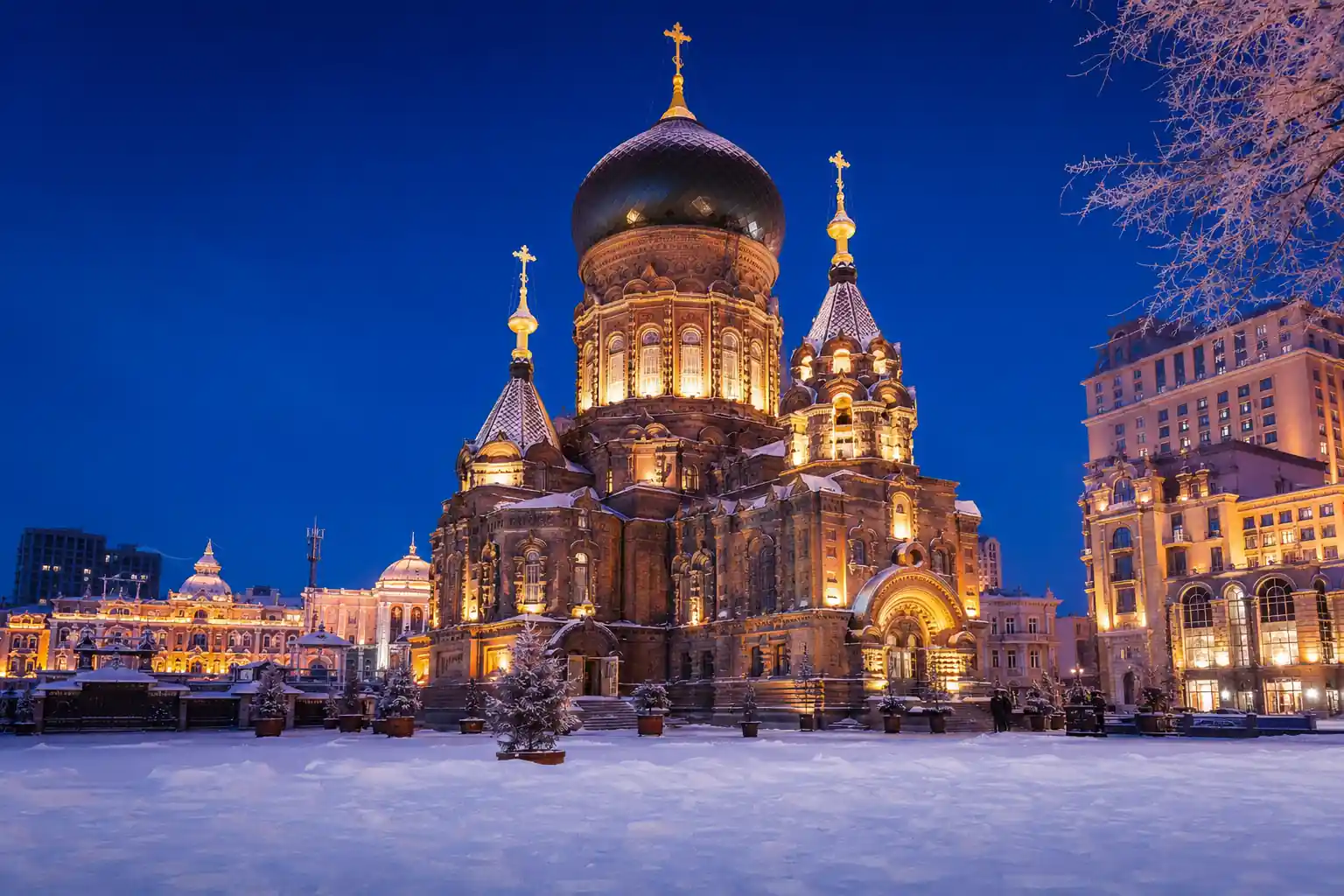
Harbin is China's signature winter city, famous for ice sculptures, snowy streets, Russian-influenced architecture, and hearty northeast cuisine.
Suggested stay
2-4 days
Travel style
Winter
Best for
Winter travel, ice festival, architecture
Content confidence
Reviewed for practical travel use
Harbin city overview, suggested stay, highlights, transport notes, nearby trips, and connected planning guides have been reviewed for practical trip planning.
Use this city page as a planning framework. Confirm current opening hours, ticket windows, transport schedules, and local rules before booking.
Check official sources before booking time-sensitive items.
Planning overview
How to Plan Harbin
Harbin works best when you treat it as two trips in one: a winter festival city built around ice, snow, and long nights, and a heritage city shaped by Russian rail history, broad avenues, and hearty northeast food. Most visitors do well with 2-3 days: one for Central Street and Saint Sophia Cathedral, one for Sun Island or Ice and Snow World, then an extra day for Laodaowai, museums, or a winter side trip.
Ice and Snow WorldSaint Sophia CathedralCentral Street
Best suited for
Winter festival trips
Russian-influenced architecture
Dongbei food and cold-weather street life
Northeast China side trips
Best time to visit
Late December to February is the main season if you are coming for snow sculpture sites and the Ice and Snow World, but it is also when temperatures and wind are most demanding. Summer is greener, cooler than much of eastern China, and better for general city walking. Spring and autumn are short and workable, though they feel more like practical city breaks than peak Harbin trips.
Stay around Central Street or central Daoli for a first visit; it keeps the classic architecture, riverfront, and food streets within easier reach.
In winter, leave one evening flexible for Ice and Snow World because wind, visibility, and queue conditions can change the experience a lot.
Dress for the river wind, not just the forecast. A warm hat, face covering, gloves, and insulated shoes matter more here than in many other Chinese cities.
Use the metro for major cross-city moves, then switch to walking or taxis for the last stretch, especially around Songbei festival sites and older streets.
This photo shows Central Street, the city's main historic walking corridor and the easiest place for visitors to understand Harbin's Russian-era streetscape.
Suggested routes
Itineraries for Harbin
This view shows the large illuminated ice structures that make Harbin a winter destination rather than only a heritage city.
Wikimedia Commons
1 day
Heritage core plus one winter evening
Best for a stopover or a very short winter visit. Keep the daytime route compact, then use the evening for Harbin's signature ice-lit experience.
1Saint Sophia Cathedral and the surrounding central blocks in the morning
2Central Street and the Daoli riverfront in the afternoon
3Early dinner near Central Street
4Harbin Ice and Snow World in the evening if winter conditions are good
2 days
Classic first-time Harbin
This is the most balanced version of the city: one day for architecture and food, one for river-crossing winter sites or slower heritage exploration depending on season.
1Day 1: Saint Sophia Cathedral, Central Street, Stalin Park, evening food walk
2Day 2 in winter: Sun Island by day and Ice and Snow World after dark
3Day 2 outside winter: Laodaowai, museums, and a longer riverside walk instead
3-4 days
Harbin plus a regional extension
Use the extra time to avoid overpacking the city itself. After the core districts and winter sites, Harbin becomes more rewarding when you add a museum day or a cold-region side trip.
1Day 1: Saint Sophia Cathedral, Central Street, Daoli riverfront
2Day 2: Sun Island and Harbin Ice and Snow World, or a full central-city museum day outside winter
3Day 3: Laodaowai and another history-focused stop such as the Unit 731 Museum if appropriate for your trip
4Day 4: Side trip to Yabuli, China Snow Town, or Acheng depending on season and interests
Neighborhoods
Best Areas to Explore
Central Street and the Daoli riverfront
This is the easiest base for a first stay: the pedestrian spine of Central Street, older European-style facades, broad riverside walks, and a large share of the city's visitor-friendly hotels and restaurants. It is strongest in the late afternoon and evening, especially in winter when the street lighting comes on.
Central StreetStalin Park and the Songhua riverfrontFlood Control Memorial Tower area
Saint Sophia Cathedral and the old center
Around Sophia Square and the surrounding central blocks, Harbin feels more like a former railway city than a winter resort. This is the right zone for cathedral views, museums, older commercial streets, and short cross-city transfers without committing the whole day to Songbei.
Saint Sophia CathedralSophia SquareEasy links toward museums and older shopping streets
Laodaowai and the Daowai historic quarter
Laodaowai is the best area to see Harbin's Chinese Baroque streetscape: older merchant blocks, lower-rise lanes, and a more local rhythm than Central Street. It works well for a slower half day built around architecture, snacks, and old commercial history rather than headline landmarks.
Chinese Baroque streetsOlder market and food lanesA more local alternative to Central Street
Songbei, Sun Island, and the winter festival zone
North of the Songhua River, Songbei holds Harbin's largest winter visitor sites, especially Ice and Snow World and Sun Island. Distances are larger here than in the old center, so it is better treated as a focused destination day rather than something to squeeze into a heritage walk.
Sun Island Scenic AreaHarbin Ice and Snow WorldWide river and bridge views back toward the city
What to see
Top Sights
Harbin Ice and Snow World
The city's headline winter attraction: a large seasonal park of illuminated ice buildings and sculpture installations on a scale that is hard to replicate elsewhere in China.
Go after dark for the lighting, but dress for a long exposed evening and check conditions before committing your best night to it.
Saint Sophia Cathedral
Originally built for Harbin's Russian community, Saint Sophia Cathedral is the city's clearest architectural shorthand for the railway-era foreign influence that still shapes its image.
Pair it with nearby central streets rather than treating it as a stand-alone stop; the cathedral itself is brief, but the surrounding heritage route is stronger.
Central Street
Harbin's main pedestrian street is less about a single monument and more about how the city fits together: European-influenced facades, food stops, winter lighting, and an easy connection to the riverfront.
Come once in daylight and once after dark if you have time; the mood changes enough to justify two passes.
Sun Island Scenic Area
Sun Island is the broad park-and-leisure zone across the Songhua River and one of Harbin's major winter event spaces, especially during snow sculpture season.
Treat it as part of a Songbei day with deliberate transport planning instead of assuming it works like a quick central-city stop.
Laodaowai historic quarter
The Chinese Baroque blocks of Laodaowai show a different side of Harbin from the cathedral and Central Street: denser, more local, and tied to merchant life rather than formal monuments.
Go when you want a slower half day with architecture and food, not when you are trying to speed-run the city's most famous photos.
Getting around
Transport Notes
Arriving by air
Harbin Taiping International Airport is the main air gateway for the city and sits well outside the center, so allow time for the airport transfer. Airport buses, taxis, and ride-hailing are the practical choices after arrival.
Arriving by train
Harbin Railway Station is the more central arrival point for many travelers, while Harbin West Railway Station handles many high-speed services. Check your station carefully before departure because switching between them takes time.
Getting around
Harbin Metro has three lines and is useful for major cross-city movements, but older districts and winter festival grounds still often require a final walk or taxi. In snow or deep cold, keep transfer chains simple rather than squeezing in too many stops.
Taxis and ride-hailing
Taxis and ride-hailing are especially useful at night, with luggage, or for crossing between the old center and Songbei. Keep destination names in Chinese, and expect slower traffic during snow, peak festival dates, and around major winter venues.
Food
What to Eat
Start with Dongbei staples
Harbin is a good place to lean into northeastern food rather than chase lighter coastal styles. Look for guo bao rou, dumplings, braised dishes, stews, and other cold-weather plates designed for sharing and larger appetites.
Notice the Russian influence
The city's food identity also carries Russian traces. Harbin red sausage, dalieba bread, Western-style bakeries, and older restaurant menus are part of what makes eating here feel different from most other Chinese provincial capitals.
Use snacks and casual stops well
Central Street and older commercial blocks are good for easy snack grazing between sights. Modern ice lollies, grilled skewers, and other quick cold-weather snacks make sense here, especially if you are walking long stretches outdoors.
Go next
Easy Trips from Harbin
Yabuli
The best-known ski extension from Harbin and the most straightforward winter add-on if you want snow sports rather than only city sightseeing.
China Snow Town
A winter-focused overnight trip for heavy snow scenery and a more staged alpine village atmosphere than urban Harbin can offer.
Acheng and the Jin capital ruins
A stronger history extension than a scenic one, useful if you want to go beyond Russian-era Harbin and look at the region's earlier Jin dynasty legacy.
Keep planning
Useful next pages for Harbin
Connect this city page with the practical setup decisions most likely to affect arrival, tickets, transport, and daily movement.