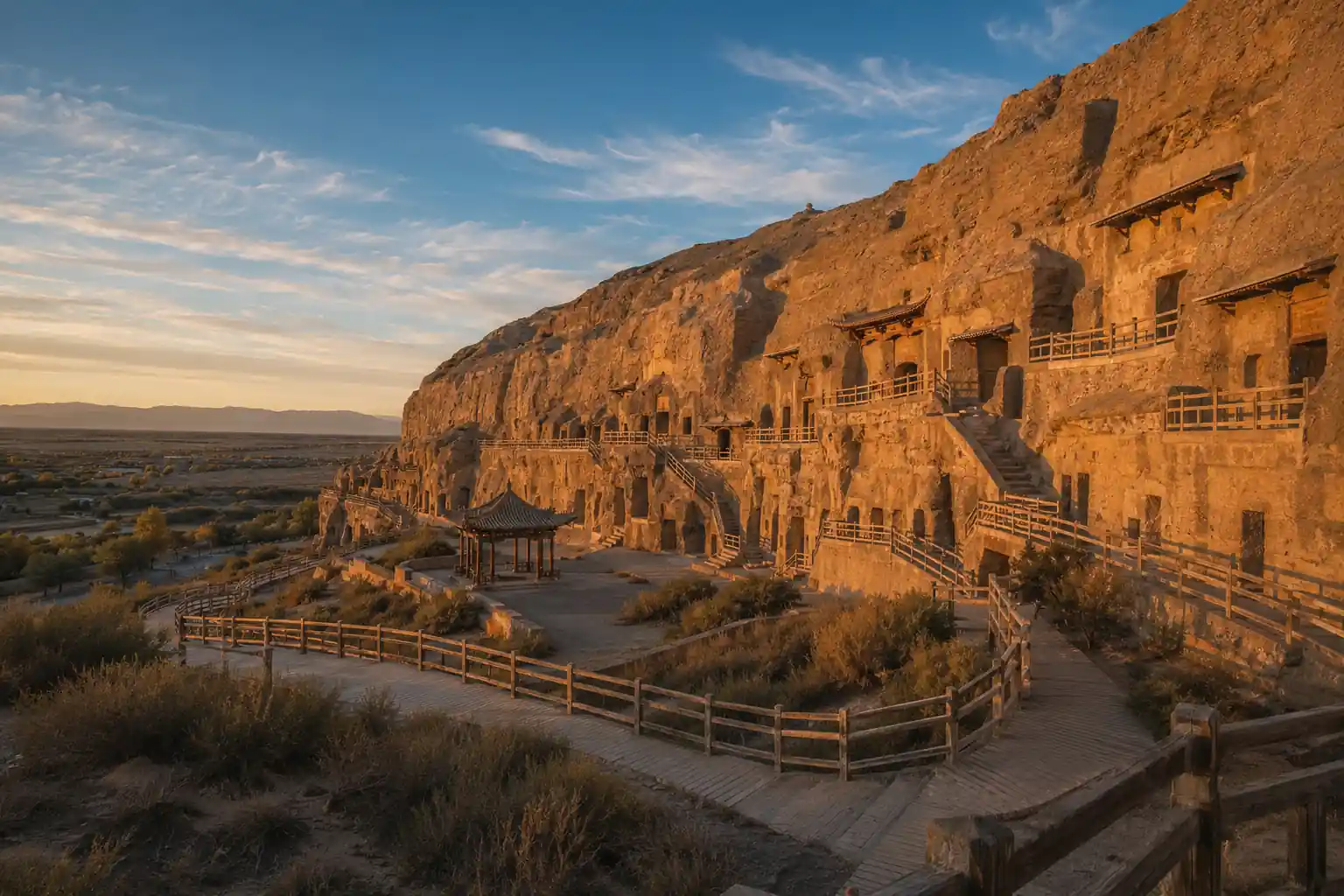
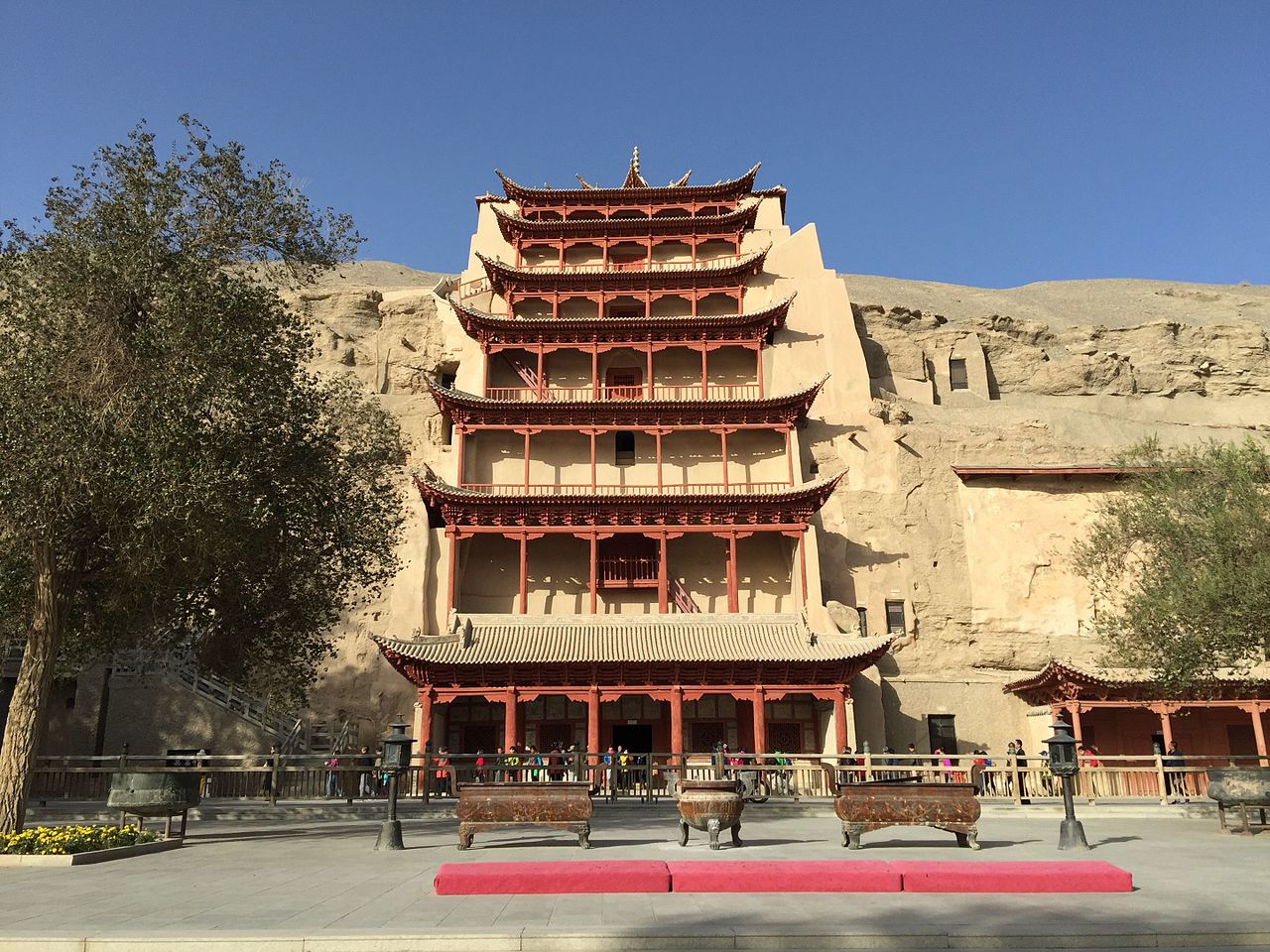
Dunhuang is a compact but unforgettable Silk Road stop with Buddhist cave art, desert dunes, night markets, and oasis scenery.
Suggested stay
2-3 days
Travel style
Desert
Best for
Silk Road history, desert landscapes, cave art
Content confidence
Reviewed for practical travel use
Dunhuang city overview, suggested stay, highlights, transport notes, nearby trips, and connected planning guides have been reviewed for practical trip planning.
Use this city page as a planning framework. Confirm current opening hours, ticket windows, transport schedules, and local rules before booking.
Check official sources before booking time-sensitive items.
Planning overview
How to Plan Dunhuang
Dunhuang is one of the most rewarding Silk Road stops in China, but it works better as a focused two- or three-day plan than as a city break. Come for Buddhist cave art, desert scenery, and frontier history rather than urban variety. The usual rhythm is simple: reserve Mogao Caves ahead, keep one late afternoon for the dunes, and use any extra day for the western passes if long desert drives and Han frontier ruins interest you.
Mogao CavesMingsha MountainCrescent Lake
Best suited for
Silk Road history
Buddhist art and cave sites
Desert sunsets and photography
Compact Gansu route planning
Best time to visit
April to June and September to October are the easiest months for most travelers, with dry weather and more tolerable temperatures for dunes, caves, and long western-route excursions. July and August are workable but hot under strong sun, while winter is cold and quieter; it still works if you care more about Mogao and museum time than outdoor desert activities.
Book Mogao Caves before fixing the rest of your schedule, because entry is guided and same-day flexibility can be limited.
Stay in the city center or along Mingshan Road if you want easy access to the night market, dune area, and tour pickup points.
Keep one sunset slot flexible for Singing Sand Dunes and Crescent Lake, since the site is strongest in softer late-day light.
Carry water, sun protection, and a light layer for the western route, where distances are long and shade is limited.
Start with the desert setting: it explains why Dunhuang feels more like an oasis stop than a conventional city destination.
Suggested routes
Itineraries for Dunhuang
Crescent Lake and the dunes show why visitors usually save one late afternoon for the desert side of Dunhuang.
Wikimedia Commons
1 day
Heritage first, dunes later
Best if you only have one full day and can secure a workable Mogao entry time.
1Mogao Caves in the morning or early afternoon depending on ticketed entry time
2Dunhuang Museum if you have time before or after the caves
3Singing Sand Dunes and Crescent Lake toward late afternoon
4Night market and city-center walk after dark
2 days
Classic Dunhuang balance
Enough time to separate the cave-art day from the desert day instead of rushing both.
1Day 1: Mogao Caves, museum, and a relaxed evening in the city center
2Day 2: White Horse Pagoda or slow city start, then Singing Sand Dunes and Crescent Lake for sunset
3Add the night market or a short camel or dune walk depending on energy
3-4 days
Dunhuang plus the western route
Use the extra time for frontier history and long desert distances rather than repeating the city center.
1Day 1: Mogao Caves and Dunhuang Museum
2Day 2: Singing Sand Dunes, Crescent Lake, and evening in town
3Day 3: Western route to Yang Pass, Yumen Pass, and if operating, other desert sites on the corridor
4Day 4: Western Thousand Buddha Caves, Huyang Forest, or onward travel to Jiayuguan or Zhangye
Neighborhoods
Best Areas to Explore
Shazhou Town and the city center
This is the practical base for almost every Dunhuang stay: hotels, restaurants, the night market, and tour logistics all cluster here. It is not a city for neighborhood-hopping, but staying central makes early cave departures and late returns from the dunes much easier.
Dunhuang Night MarketDunhuang MuseumPlaying Pipa Statue
Mingsha Mountain and Crescent Lake corridor
South of town is the part of Dunhuang most travelers picture first: dunes, camel routes, and the small oasis lake backed by sand hills. It is easy to reach from the city and works best in the late afternoon, when the light softens and the desert heat begins to drop.
East of the city is the core heritage zone built around the Mogao Caves, with the digital display center and transport links along the same corridor. This is the most structured part of a Dunhuang trip: entry is organized, timing matters, and it is best treated as a dedicated half-day or full block.
Mogao CavesMogao Digital Display CenterHuyang Forest
Western passes and frontier desert
West of Dunhuang the landscape opens into long, exposed Silk Road country: ruined passes, beacon towers, and desert landforms rather than a compact sightseeing district. Go here only if you want the frontier context behind Dunhuang, because it turns the trip into a long excursion day rather than an easy city outing.
Yang PassYumen PassWestern Thousand Buddha Caves
What to see
Top Sights
Mogao Caves
The reason most travelers come to Dunhuang: a major Buddhist cave complex on the Silk Road and a UNESCO World Heritage Site with murals, sculpture, and manuscripts. The site is historically central to how Buddhism moved into China and is still the strongest single stop for understanding Dunhuang.
Reserve ahead and expect assigned guided access rather than self-directed wandering inside the caves.
Singing Sand Dunes and Crescent Lake
This is the classic Dunhuang desert outing: a crescent-shaped oasis lake set below the dunes, close enough to town for a half-day visit. The site is busy and commercial in parts, but it still delivers the landscape contrast that defines the oasis setting.
Go in late afternoon if possible, and decide in advance whether you want the scenery itself or the extra paid activities such as camel rides and sandboarding.
Yumen Pass
The Jade Gate is one of the iconic frontier passes of the Han-era Silk Road and lies deep in the desert northwest of Dunhuang. What you see today is ruin and emptiness rather than monumental architecture, but that is exactly why it works for travelers interested in route history and frontier scale.
Treat it as part of a full western-route excursion and bring more water and sun protection than you think you need.
Yang Pass
Southwest of Dunhuang, Yang Pass was the companion frontier pass to Yumen and another crucial checkpoint on the Silk Road. It is especially meaningful if you care about literary and historical China, since Yangguan became a symbol of departure in classical poetry.
Verify current opening rules before committing the western route, especially outside peak season.
Dunhuang Museum
The museum is a useful companion rather than a headline sight, helping visitors understand Dunhuang as an oasis city, frontier garrison, and Buddhist art center. It is especially valuable if you want better context before or after visiting Mogao.
Use it on a dusty afternoon, a slower arrival day, or before Mogao if you want the cave visit to make more sense.
Getting around
Transport Notes
Arriving by air
Dunhuang Mogao International Airport serves the city and sits about 13 km from downtown. It is a practical choice for travelers connecting from cities such as Lanzhou, Xi'an, Beijing, and Urumqi, but airport ground transport can be uneven, so a hotel pickup or pre-arranged transfer is safer than assuming easy taxi availability.
Arriving by train
Dunhuang railway station is northeast of the city center on the Dunhuang railway, with onward links on the Dunhuang-Golmud line as well. High-speed and conventional services make Jiayuguan, Zhangye, Lanzhou, and Guazhou realistic rail connections, while some westbound Xinjiang routes are easier via Liuyuan or a transfer farther east.
Getting around
Within the city, buses can reach places such as the museum and the dunes, but Dunhuang is not a place where public transit covers every major sightseeing need. For the main attractions outside town, the dedicated tourist shuttle network is often the most practical option, with an eastern route for Mogao and the dunes and a western route for the frontier sites.
Taxis and ride-hailing
Taxis and ride-hailing are useful for short urban hops and for reaching sights that do not fit neatly into shuttle timing. Save destination names in Chinese, and if you are flying in, do not assume an effortless airport taxi queue.
Food
What to Eat
Expect Gansu and Hui-influenced staples
Dunhuang food is more about sturdy northwest meals than destination dining. Start with hand-pulled noodles, including Lanzhou-style beef noodles (niurou lamian), then move to grilled lamb or mutton and other halal-friendly dishes that reflect Gansu cuisine. Wheat matters more than rice here, so noodles, buns, dumplings, and flatbreads make more sense than chasing southern-style meals.
Use the night market for snacks and provisions
The night market is useful not only for souvenir browsing but also for dried fruits and nuts such as raisins, apricots, dates, and walnuts. Treat it as a flexible evening stop after the dunes rather than as a precise restaurant destination, and pick up water or snacks there if you have a long western-route day ahead.
Keep meals simple around sightseeing logistics
Because Mogao visits are timed and western excursions are long, the best Dunhuang food planning is usually conservative. Eat well in the city center, keep one easy dinner near your hotel or on Mingshan Road, and use lighter cold dishes such as liangfen when the weather is hot and dry.
Go next
Easy Trips from Dunhuang
Jiayuguan
A logical next stop for fort and frontier history, reached in roughly 2.5 hours by faster train services from Dunhuang.
Guazhou
The easiest short rail extension from Dunhuang, with trains taking under an hour, useful if you are continuing east through the Hexi Corridor.
Zhangye
A longer onward stop rather than a day trip, but still practical by train in about 4 hours if you are continuing deeper through Gansu.
Keep planning
Useful next pages for Dunhuang
Connect this city page with the practical setup decisions most likely to affect arrival, tickets, transport, and daily movement.