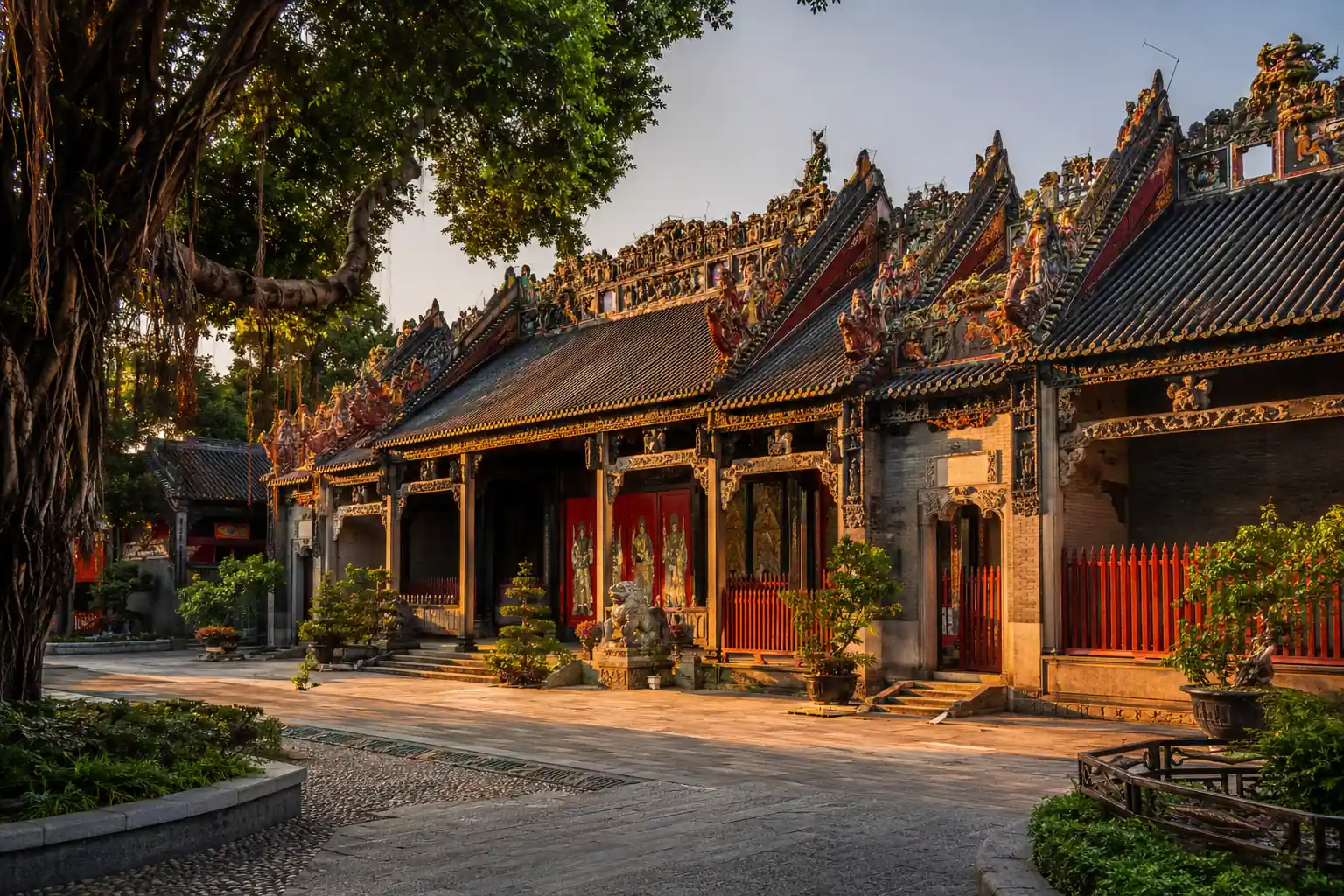
Foshan is an easy Guangzhou-area side trip with Lingnan architecture, ceramics, martial arts heritage, and excellent Cantonese food.
Suggested stay
1-2 days
Travel style
Lingnan
Best for
Cantonese culture, food, Guangzhou side trips
Content confidence
Reviewed for practical travel use
Foshan city overview, suggested stay, highlights, transport notes, nearby trips, and connected planning guides have been reviewed for practical trip planning.
Use this city page as a planning framework. Confirm current opening hours, ticket windows, transport schedules, and local rules before booking.
Check official sources before booking time-sensitive items.
Planning overview
How to Plan Foshan
Foshan works best as a practical Lingnan culture stop rather than a checklist city. It is easy to pair with Guangzhou, but it rewards travelers who want temple architecture, martial arts history, ceramics, and a more local Cantonese urban rhythm. Plan around a compact Chancheng day first, then decide whether your extra time goes to Shiwan ceramics, Xiqiao Mountain, or a food-focused detour into Shunde.
Ancestral TempleLingnan TiandiNanfeng Ancient Kiln
Best suited for
Lingnan culture and architecture
Martial arts history
Ceramics and craft heritage
Food-focused Pearl River Delta trips
Best time to visit
Spring and autumn are the easiest seasons for walking Foshan, especially from roughly October to December and again in March and April. Summer is hot, humid, and rainy, with the wettest period in late spring and early summer; typhoon-season weather can also disrupt plans. Winter is mild and workable, especially for city museums, temple visits, and food-heavy days.
Stay around Zumiao, Lingnan Tiandi, or central Chancheng if this is a short first visit.
Use the Guangfo Line and central metro stations for the historic core, but expect taxis or buses for places farther out such as Xiqiao Mountain.
Leave extra buffer after heavy rain, because Foshan roads are prone to flooding and traffic delays.
Keep destination names in Chinese for taxi or ride-hailing trips, especially outside the main tourist zone.
Foshan is easier to plan by compact urban areas than by isolated sights, especially on a short stay.
Suggested routes
Itineraries for Foshan
Nanfeng Kiln shows why Foshan mattered for ceramics long before it became a modern manufacturing city.
Wikimedia Commons
1 day
Historic core and Lingnan culture
Best for a Guangzhou side trip or a short standalone stop. Keep the day compact and let Foshan feel walkable.
1Start at Foshan Ancestral Temple and the martial arts halls in the morning
2Walk to Liang's Garden or Renshou Temple around midday
3Spend the afternoon in Lingnan Tiandi for slower streets and a meal break
4End with an evening walk around Qiandeng Lake or stay central for dinner
2 days
Foshan essentials plus ceramics
A better fit for first-timers, giving one day to the old core and one to the city's ceramic identity.
1Day 1: Ancestral Temple, Liang's Garden, Lingnan Tiandi, central Chancheng
2Day 2: Nanfeng Kiln, Shiwan ceramics streets, then a relaxed evening in Nanhai or back in the old core
3Add Xiqiao Mountain only if you are comfortable making day two more transit-heavy
3-4 days
Deeper Foshan with food detours
Use the extra time to slow down and split culture, food, and green space instead of rushing the city in one sweep.
2Day 2: Shiwan, Nanfeng Kiln, ceramics shopping or workshop browsing
3Day 3: Mount Xiqiao and the southwest side of Foshan
4Day 4: Shunde food day or an easy Guangzhou extension by metro or rail
Neighborhoods
Best Areas to Explore
Zumiao and Lingnan Tiandi
This is the easiest first-time Foshan base: the Ancestral Temple, martial arts halls, restored Lingnan streets, and plenty of restaurants all sit within a manageable central area. It works especially well if you only have one day and want to do most of it on foot after the metro.
Shiwan is where Foshan's ceramic identity is easiest to understand. The old kiln area, workshops, and ceramic-related shopping make more sense as a half-day focused on craft history rather than as a quick stop between unrelated sights.
Nanfeng KilnShiwan Ceramics StreetCeramic workshops and galleries
Nanhai and Qiandeng Lake
Nanhai shows a more modern Foshan: broad boulevards, lakefront walking, malls, offices, and easy Guangzhou connections. It is a useful contrast to Chancheng if you want a lighter evening, a cleaner hotel base, or a modern Pearl River Delta city feel.
Qiandeng Lake ParkLeigang areaGuangfo Line connections
Xiqiao Mountain and southwest Foshan
This is the right add-on when you want a greener day and more breathing room than the city center offers. Xiqiao is farther out, so it works best as a dedicated half day or full day rather than something squeezed into a short central itinerary.
Mount XiqiaoGuanyin statueBaofeng Temple area
What to see
Top Sights
Foshan Ancestral Temple
The Ancestral Temple is Foshan's clearest anchor sight, combining a major Daoist temple complex with Confucius Temple space, martial arts memorial halls, and strong Lingnan architectural detail. It gives visitors history, folk culture, and city identity in one stop rather than scattering them across separate museums.
Use Zumiao Station, go earlier in the day, and check whether lion dance or Cantonese opera performances are scheduled before you arrive.
Nanfeng Kiln
Built in the Ming period and still associated with more than five centuries of ceramic firing, Nanfeng Kiln is the best place to connect Foshan's industrial reputation with something much older and more tactile. It is worth visiting not only for the kiln itself, but for the surrounding ceramic-making atmosphere in Shiwan.
Pair it with time on Shiwan Ceramics Street instead of treating it as a standalone photo stop.
Liang's Garden
Liang's Garden is one of Guangdong's four famous gardens and offers a quieter counterweight to Foshan's busier temple and commercial areas. Pavilions, water, rockwork, and restored residential spaces make it one of the city's best stops for a slower Lingnan-style architectural read.
Visit after the Ancestral Temple if you want a calmer second stop without leaving central Foshan.
Mount Xiqiao
Mount Xiqiao is a scenic volcanic landform on the southwest side of Foshan, with peaks, springs, caves, waterfalls, temple sites, and the large Guanyin statue drawing most visitors. It feels less like an urban heritage stop and more like a deliberate half-day escape from the Pearl River Delta city grid.
Do this on its own day or half day, because it takes more transit time than the central Chancheng sights.
Lingnan Tiandi
Lingnan Tiandi is a restored historic district rather than a single monument, and it works best as the city's easiest blend of heritage facades, cafes, shopping, and flexible meal planning. It is useful because it lets visitors stay in a historic-looking environment without spending the whole day inside formal sights.
Go after the temple area, then use it for lunch, coffee, or a lighter evening instead of forcing another museum.
Getting around
Transport Notes
Arriving by air
Guangzhou Baiyun International Airport is the main airport for most visitors, with intercity bus connections to Foshan often taking around 50 minutes in normal conditions. Foshan Shadi Airport exists inside the city, but it only serves a limited set of domestic routes.
Arriving by train
Foshan West Railway Station is the main high-speed rail entry point, especially for Pearl River Delta connections. Foshan Railway Station handles conventional regional and intercity services within Guangdong and is more useful if you are staying in the central city.
Getting around
The metro is the easiest way to handle the central city, with the Guangfo Line linking Foshan directly into Guangzhou and other Foshan lines covering more of the urban area. Zumiao Station is the most useful tourist stop for the historic core, but some sights such as Xiqiao Mountain still need a longer bus or taxi transfer.
Taxis and ride-hailing
Taxis are practical and inexpensive by Western standards, especially when you are moving beyond the metro grid or traveling in rain. Rush hour and wet weather slow the city noticeably, and a Chinese destination name helps because English is uncommon.
Food
What to Eat
Treat Foshan as a Cantonese food city, not just a sightseeing stop
Foshan sits inside one of the strongest Cantonese food regions in China, and nearby Shunde is widely known as a training ground for top Cantonese chefs. A practical starting list is morning dim sum, double-skin milk (shuangpi nai), and Shunde-style fish dishes. This is a place to eat lightly and repeatedly through the day rather than saving everything for one formal dinner.
Use geography to simplify meals
Lingnan Tiandi and the Zumiao area are the easiest places to fit food into a short sightseeing day, because restaurants, dessert shops, and coffee stops are concentrated around the historic core. If food is the main point of the trip, give Shunde a dedicated half day or full day instead of trying to squeeze it in between central Foshan attractions.
Keep one meal local and one meal convenient
Foshan rewards a mixed approach: one meal in a classic local Cantonese setting, one in a polished restored district such as Lingnan Tiandi, and maybe a tea or vegetarian break near the temple area. That balance fits the city better than chasing a single famous restaurant across districts.
Go next
Easy Trips from Foshan
Guangzhou
The easiest extension, reached by the Guangfo Line or by rail, usually in about an hour depending on your exact start and end points.
Shunde
A food-focused district trip within greater Foshan, practical as a half-day or full-day detour for Cantonese dining and slower local sightseeing.
Zhaoqing
A reasonable regional rail extension from Foshan West for travelers who want greener scenery and a less urban Pearl River Delta contrast, often around an hour by train.
Keep planning
Useful next pages for Foshan
Connect this city page with the practical setup decisions most likely to affect arrival, tickets, transport, and daily movement.