Hefei is a useful Anhui base for regional trips, with lake parks, museums, and rail connections toward Huangshan or Nanjing.
Suggested stay
1-2 days
Travel style
Regional Base
Best for
Anhui routes, parks, easy rail connections
Content confidence
Reviewed for practical travel use
Hefei city overview, suggested stay, highlights, transport notes, nearby trips, and connected planning guides have been reviewed for practical trip planning.
Use this city page as a planning framework. Confirm current opening hours, ticket windows, transport schedules, and local rules before booking.
Check official sources before booking time-sensitive items.
Planning overview
How to Plan Hefei
Hefei works best as a practical Anhui base rather than a checklist city. It is a provincial capital with a modern skyline, a useful museum, a few older historical stops, and easy rail links to other East China destinations. Plan it in compact blocks: one part of the old core for Bao-related sites and parks, one modern district around Swan Lake and the Anhui Museum, then decide whether your extra time goes to Chao Lake or onward travel deeper into Anhui.
Lord Bao ParkChaohu LakeAnhui Museum
Best suited for
Anhui route planning
Short provincial-capital stopovers
Museum and park days
Rail-based East China trips
Best time to visit
Spring and autumn are the easiest seasons for Hefei, when park walks, museum hopping, and lake outings are comfortable. Summer is hot, humid, and rain-heavy from June to August, while winter is colder and grayer but still workable for urban sightseeing and food-focused stops.
Stay around Swan Lake, the old city core, or near Hefei South Railway Station depending on whether your trip is city-focused or rail-heavy.
Use the metro for movement between the two main railway stations and the newer districts, then walk inside parks and older central blocks.
Keep Chao Lake and other lakeside plans weather-dependent, because haze, rain, or summer heat can make the waterfront less rewarding.
Use only marked taxis or ride-hailing, and save destination names in Chinese; avoid unmarked cars around transport hubs.
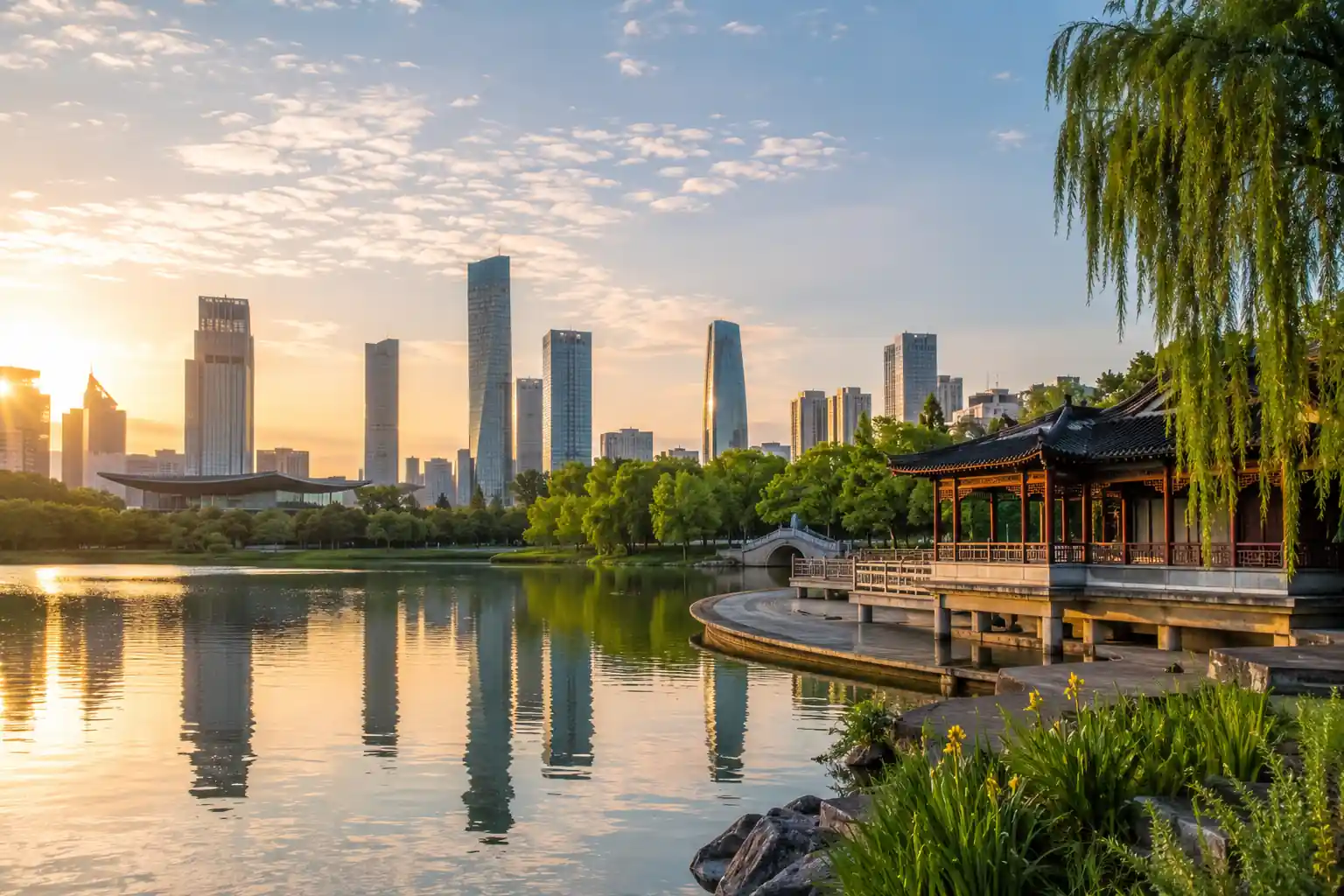
A broad skyline view shows why Hefei feels more like a spread-out provincial capital than a compact historic destination.
Suggested routes
Itineraries for Hefei
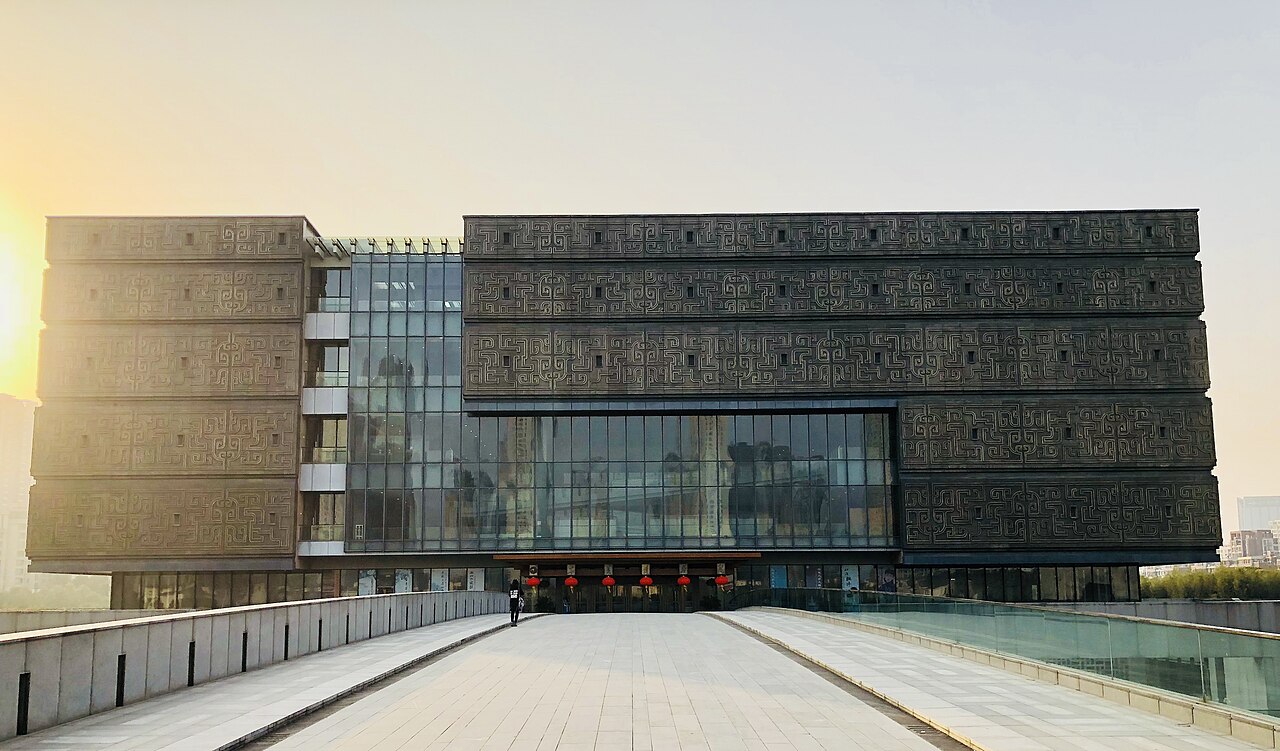
The Anhui Museum is the city's most useful cultural stop when you want context for the province beyond Hefei itself.
Wikimedia Commons
1 day
Useful Hefei first look
Best for a stopover or a short Anhui transit night. Keep the day split between the historical core and one modern district.
1Baogong Park and Lord Bao Memorial Temple in the morning
2Li Hongzhang Former Residence or nearby old-city streets before lunch
3Anhui Museum and Swan Lake area in the afternoon
4Evening walk around Swan Lake or a simple Anhui-style dinner nearby
2 days
City plus one wider excursion
Enough time to understand central Hefei and still add a slower park or lakeside day.
1Day 1: Baogong area, Xiaoyaojin Park, and the Anhui Museum
2Day 2: Chao Lake or the Binhu side of the city depending on weather
3If you prefer heritage over water, swap the lake for Sanhe Ancient Town
3-4 days
Hefei as an Anhui base
Use the extra time for a deeper city rhythm and one or two outward-looking days rather than forcing more central attractions.
1Day 1: Old city core, Bao sites, and Xiaoyaojin Park
2Day 2: Swan Lake CBD, Anhui Museum, and a slower evening in modern Hefei
3Day 3: Chao Lake or Sanhe Ancient Town
4Day 4: Continue by high-speed rail to another Anhui or East China stop instead of staying only inside the city
Neighborhoods
Best Areas to Explore
Old city core and Baogong area
This is the most useful first stop for travelers who want Hefei's historical layer rather than its newer business districts. The Bao-related park and temple complex, older commercial streets, and a few heritage sites are close enough to combine in one half-day without much backtracking.
Baogong ParkLord Bao Memorial TempleLi Hongzhang Former Residence
Swan Lake CBD and Anhui Museum
Modern Hefei shows best around Swan Lake, where government buildings, business towers, malls, and the Anhui Museum make an easy urban circuit. This is the right zone when you want a cleaner, newer, more comfortable city day with indoor backup if the weather turns.
Swan LakeAnhui MuseumModern civic district
Binhu New District and lakeside edge
South and southeast Hefei shift into wide roads, recent development, and routes that point toward Chao Lake. This is less about old-city texture and more about modern planning, waterfront parks, and using Hefei as a launch point for a lake excursion.
This part of the city is useful when you want a park stop tied to the Three Kingdoms story and an older, more everyday urban atmosphere. It also sits closer to Hefei Railway Station, so it works well for short visits built around a train arrival or departure.
Xiaoyaojin ParkOlder commercial streetsHefei Railway Station area
What to see
Top Sights
Baogong Park and Lord Bao Memorial Temple
This is Hefei's best-known historical stop, centered on Bao Zheng, the Song official later remembered as a symbol of integrity and justice. The park, memorial temple, and related grounds are more valuable for cultural context than for monumental scale.
Visit early or late in the day when the park is calmer, then combine it with nearby heritage streets instead of treating it as a stand-alone cross-city trip.
Anhui Museum
For most travelers, this is the city's strongest indoor attraction. It is useful not only for Hefei itself but for understanding the wider province, especially if your trip will continue toward southern Anhui, old villages, or other historical sites.
Use it on a hot, rainy, or hazy day, and pair it with Swan Lake rather than trying to connect it to the old city on foot.
Xiaoyaojin Park
A central city park on the ancient site of the Battle of Xiaoyao Ford, it adds a Three Kingdoms historical layer to an otherwise modern city visit. Even if you are not focused on military history, it is a useful green stop in north-central Hefei.
Treat it as a short city break, not a full sightseeing block, and combine it with nearby central districts or a train-station day.
Chao Lake
Chao Lake is the city's main large-scale natural asset and the largest lake in Anhui. It makes more sense as a half-day or full-day lakeside outing than as a quick stop, especially if you want temple views, open space, or a break from the provincial-capital rhythm.
Choose a clear-weather day and go only if you have enough time to reach the lakeshore properly; otherwise stay in the city and use the museum districts instead.
Sanhe Ancient Town
Although outside the central urban area, Sanhe is one of the most rewarding heritage excursions tied to Hefei municipality. Its old-town core is recognized as a historical and cultural town, making it a better choice than forcing more modern city districts into a longer itinerary.
Go only when you have at least half a day to spare, and treat it as a side trip rather than something to squeeze between central Hefei stops.
Getting around
Transport Notes
Arriving by air
Hefei Xinqiao International Airport (HFE) is the city's main airport. It opened in 2013 and handles Hefei's domestic and wider air connections, but it is not as central to visitor logistics as the rail network, so many travelers arrive by train instead.
Arriving by train
Hefei South Railway Station handles most high-speed G and D trains, while Hefei Railway Station in the north handles conventional trains and a smaller share of high-speed services. Metro Line 1 links the two stations, usually taking around 30 to 40 minutes.
Getting around
Public buses remain extensive, but the metro is the easiest option for most visitors. Hefei Metro has expanded quickly and now covers the main urban corridors, while central districts are still best finished on foot once you arrive in the right zone.
Taxis and ride-hailing
Marked taxis and ride-hailing are useful late at night or for direct trips to outlying districts. Avoid unmarked cars around stations and the airport, and keep destination names ready in Chinese to reduce friction.
Food
What to Eat
Use Hefei to sample Anhui cuisine
Hefei is a practical place to try Anhui cuisine even if many famous dishes come from the wider province rather than the city alone. Anhui cooking is known for braising and stewing, with a strong use of wild herbs and deeper savory flavors. In Hefei restaurants, you may see regional dishes such as Li Hongzhang hotchpotch, bamboo-shoot dishes, and river or lake fish preparations.
Balance banquet dishes with simpler meals
Do not build every meal around heavy provincial-specialty restaurants. Hefei works better when you mix one more formal Anhui dinner with simpler lunches, noodle shops, dumplings, or everyday neighborhood restaurants near the old city or modern commercial districts.
Let neighborhoods guide dinner plans
The easiest food strategy is geographic rather than restaurant-specific. Eat near the old city after Bao-related sightseeing, or use Swan Lake and other newer districts for comfortable evening dining with more choice and easier transit back to your hotel.
Go next
Easy Trips from Hefei
Sanhe Ancient Town
About 35 km south of Hefei, Sanhe is a nationally recognized historical and cultural town and makes the clearest heritage side trip from the city.
Chaohu
The county-level city and wider lakeshore area around Chao Lake give you the easiest water-focused excursion from Hefei, especially if you want temple views and more open scenery.
Huangshan
Hefei is a practical rail jumping-off point for continuing deeper into Anhui toward Huangshan, where the province's most famous mountain and village routes begin.
Keep planning
Useful next pages for Hefei
Connect this city page with the practical setup decisions most likely to affect arrival, tickets, transport, and daily movement.