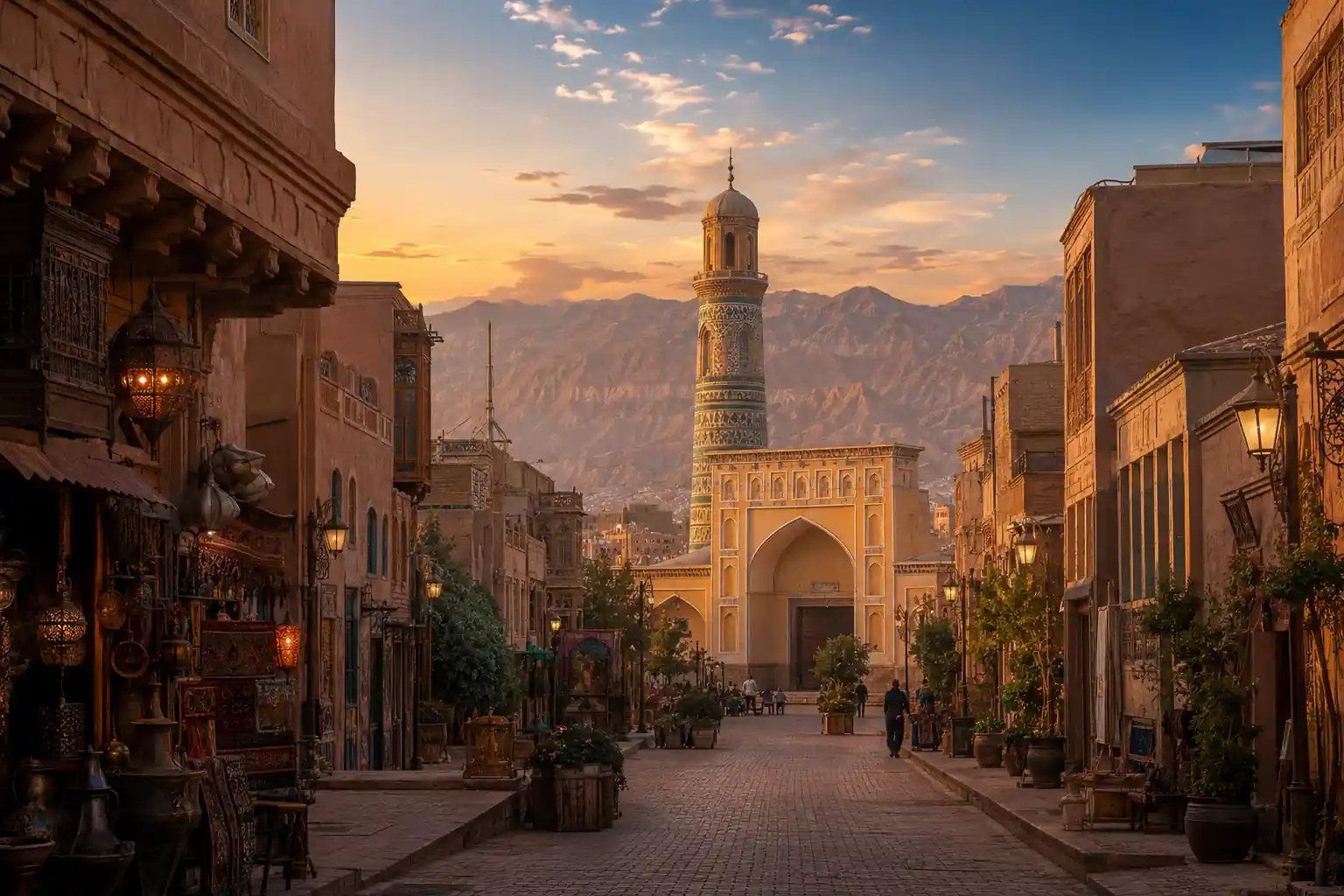
Kashgar is one of China's most distinctive cultural destinations, shaped by Silk Road history, markets, old city lanes, and far-west landscapes.
Suggested stay
2-4 days
Travel style
Silk Road
Best for
Markets, Silk Road culture, far-west routes
Content confidence
Reviewed for practical travel use
Kashgar city overview, suggested stay, highlights, transport notes, nearby trips, and connected planning guides have been reviewed for practical trip planning.
Use this city page as a planning framework. Confirm current opening hours, ticket windows, transport schedules, and local rules before booking.
Check official sources before booking time-sensitive items.
Planning overview
How to Plan Kashgar
Kashgar works best for travelers who want Silk Road atmosphere, market culture, and a very different rhythm from eastern China. Plan it as a compact old-city stay plus a base for deeper southwest Xinjiang, not as a museum-heavy city break. One full day is enough for the old town, Id Kah Mosque, and food markets; a second day lets you slow down or visit Afaq Khoja Mausoleum, while extra time is best used on the Karakoram Highway or onward rail trips.
Kashgar Old CityId Kah MosqueSunday Bazaar
Best suited for
Silk Road history
Markets and street photography
Uyghur food routes
Far-west overland travel
Best time to visit
Spring and autumn are the easiest seasons for walking and day trips, with warm days, cooler evenings, and clearer conditions than midsummer. Summer is hot but dry and still workable if you front-load outdoor time. Winter brings cold nights and shorter days, though the low rainfall can still make city walks and desert-edge routes manageable.
Stay near People's Square or the old-town edge if this is your first visit; it keeps the core walkable and simplifies airport or station transfers.
Save hotel names and destinations in Chinese before arriving, because many drivers and small vendors will not work in English.
Use walking inside the old town, bus 28 for the railway station, and bus 2 or an airport shuttle for budget airport transfers.
If you plan to continue to Tashkurgan, verify current permit and checkpoint rules before you lock in the day.
Start with the old city and its desert-edge setting: it explains why Kashgar feels more like a Silk Road crossroads than a standard Chinese city break.
Suggested routes
Itineraries for Kashgar
The night market shows the food side of Kashgar, which matters because a good evening here is usually as memorable as the daytime sightseeing.
Wikimedia Commons
1 day
Old city and market essentials
Best for a short stay when you want Kashgar's core atmosphere without forcing a long detour outside town.
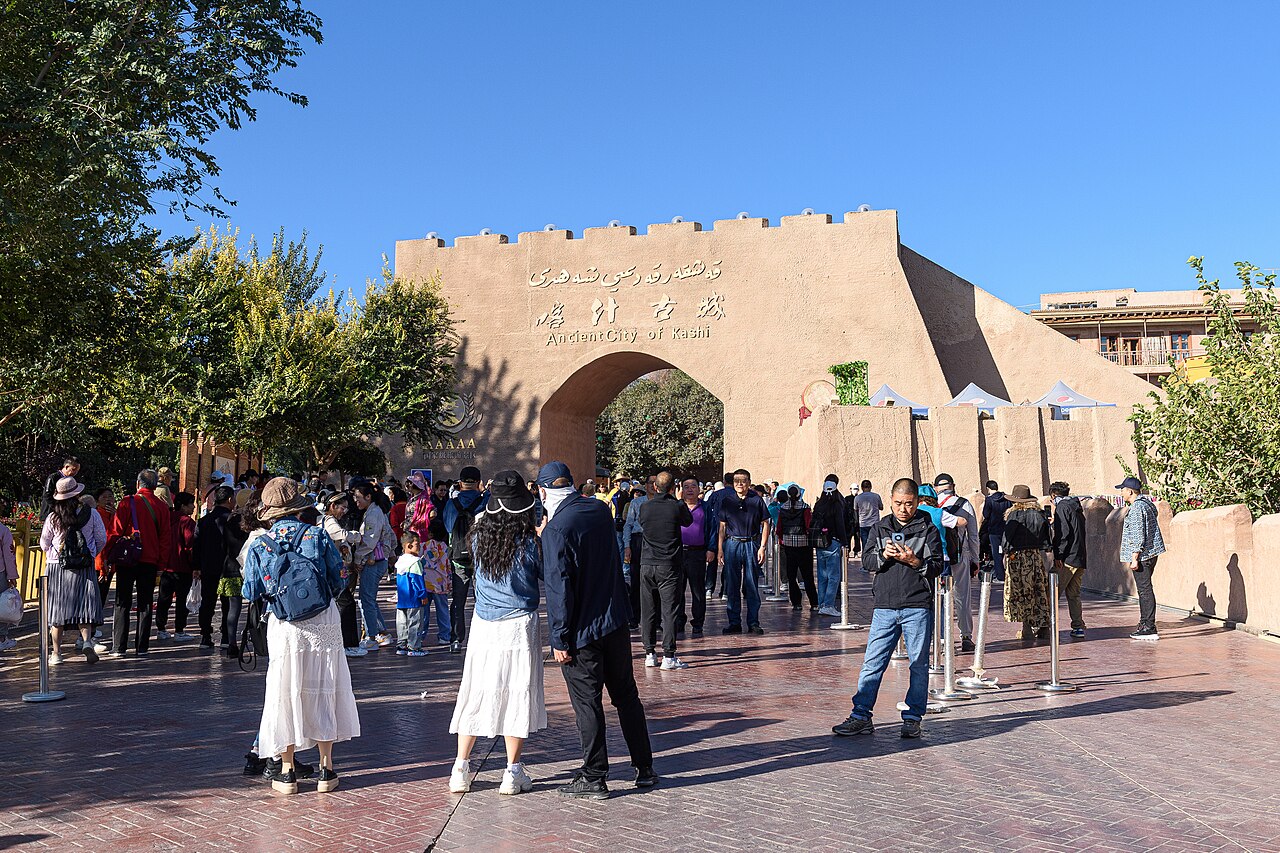
1Old City gate and slow walk through the historic lanes in the morning
2Id Kah Mosque and People's Square around midday
3Bazaar streets or Sunday Bazaar depending on the day
4Night market dinner and evening street walk
2 days
First-time Kashgar
Enough time to cover the core city properly and add one stronger architectural stop beyond the center.
1Day 1: Old City, Id Kah Mosque, People's Square, and the night market
2Day 2: Afaq Khoja Mausoleum, slower bazaar time, and flexible food stops back in town
3If your schedule matches Sunday, place the main bazaar that morning
3-4 days
City plus far-west extension
Use the extra time for the landscape and overland side of Kashgar rather than trying to overfill the city itself.
1Day 1: Old City, Id Kah Mosque, and central market streets
2Day 2: Afaq Khoja Mausoleum and unhurried food-focused wandering
3Day 3: Karakoram Highway toward Karakul or Tashkurgan, subject to current permit rules
4Day 4: Continue onward to Tashkurgan, or use rail time for Yarkand or Hotan
Neighborhoods
Best Areas to Explore
Kashgar Old City
The old town is the main reason most travelers come: mud-brick textures, narrow lanes, workshops, tea stops, and a street pattern that still feels tied to caravan-era Kashgar. It is best explored slowly and on foot rather than as a short photo stop.
Old City east gateResidential lanes and courtyardsSmall craft and food stalls
Id Kah Mosque and People's Square
This is the practical center of a first Kashgar stay: the city's main square, major mosque facade, hotels, shops, and transport bearings all meet here. Even if you are focused on the old town, it is the easiest place to orient yourself and reset between walks.
Id Kah Mosque facadePeople's SquareMain commercial streets
Bazaar quarter and market roads
Kashgar still makes most sense as a trading city, and this part of town is where that identity is easiest to feel. The big Sunday market is the main draw, but smaller market streets and the night market also make this area useful beyond one timed visit.
Sunday BazaarHandicraft and daily-goods stallsNight market food area
Afaq Khoja Mausoleum and eastern outskirts
About 5 km northeast of the center, this area gives Kashgar a calmer half-day outing built around one of Xinjiang's best-known Islamic monuments. It works well when you want architecture and space after the tighter lanes of the old city.
Afaq Khoja MausoleumTiled facade and minaretsShrine complex grounds
What to see
Top Sights
Kashgar Old City
Kashgar's old city remains the clearest expression of the place most travelers come to find: dense lanes, earthen architecture, workshops, and a layout that still feels tied to its trading past. It is strongest as a walking experience rather than a single monument.
Go early or late for softer light and less crowding, then let yourself wander instead of trying to clear it in one straight line.
Id Kah Mosque
The 15th-century mosque is the central landmark of Kashgar and the largest mosque in China by capacity. Even when you treat it mainly as a historic facade and city anchor, it gives useful context for Kashgar's religious and urban history.
Check current visitor access rules before planning around the interior, because entry and worship arrangements have changed over time.
Sunday Bazaar
The bazaar is the trading-city side of Kashgar made visible: livestock, tools, clothing, household goods, and the kind of movement that explains the city better than a museum label would. It is one of the most practical reasons to match your schedule to a specific day.
Confirm the current market day and location locally, because market patterns and access can shift.
Afaq Khoja Mausoleum
About 5 km northeast of the center, this 17th-century shrine complex is one of Xinjiang's best-known Islamic monuments and a useful contrast to the compressed fabric of the old town. The tiled facade, dome, and minarets make it one of Kashgar's strongest architectural stops.
Treat it as a half-day outing and pair it with a slower return through town instead of trying to combine it with every central sight.
Karakoram Highway route out of Kashgar
Kashgar is the northern terminus of the Karakoram Highway, and even a partial day out toward Karakul or Tashkurgan shows why the city matters as a gateway, not only as an urban stop. This is where the far-west landscape starts to compete with the city itself.
Use this only if weather, permits, and road conditions line up; otherwise keep the extra day inside Kashgar or move it to a rail side trip.
Getting around
Transport Notes
Arriving by air
Kashgar Laining International Airport (KHG) is about 18 km north of the town center. Airport shuttles, public bus line 2, and taxis into town make air arrivals practical even for budget travelers.
Arriving by train
Kashgar Railway Station is east of the center on Renmin East Road and is too far to walk for most travelers. Bus 28 links the station with Renmin Square, and the station also connects Kashgar westward with the Southern Xinjiang line and southward with the Kashgar-Hotan railway.
Getting around
Much of central Kashgar is manageable on foot, with many core sights roughly 15-20 minutes apart if you are not carrying luggage. The old town is best explored only on foot, while buses help for the railway station and outer areas.
Taxis and ride-hailing
DiDi and regular taxis are the easiest choice for the airport, Afaq Khoja Mausoleum, or late returns after dinner. Keep destination names written in Chinese, because English communication can be limited.
Food
What to Eat
Start with Uyghur staples
A useful first food day in Kashgar is built around rice pilaf (polo), hand-pulled noodles (laghman), kebabs (kawap), naan, and baked meat pastries such as samsa. These are not side snacks to local culture; they are the basic rhythm of eating in the city. Add tea, yoghurt, and seasonal fruit instead of over-planning one heavy restaurant meal.
Use markets for flexible eating
The night market is the easiest place to sample several dishes without committing to one formal stop, especially if you want skewers, soups, breads, and small plates in one evening. Around the old town and bazaar streets, bakeries and simple local places are often more useful than destination dining.
Follow the city's daily rhythm
Kashgar rewards eating by time of day: bread and tea in the morning, noodles or rice at midday, then grilled meat and market food after dark. Compared with many eastern Chinese cities, the experience is less about polished restaurant hopping and more about small, repeated stops while you move through the old city and markets.
Go next
Easy Trips from Kashgar
Tashkurgan
The classic extension from Kashgar, reached by road along the Karakoram Highway in about 8 hours by bus; go for high-altitude scenery and verify current permit rules first.
Yarkand
A logical southern Tarim Basin side trip, reachable in about 4 hours by train on the Kashgar-Hotan line.
Hotan
Best for travelers continuing deeper into southwest Xinjiang; the roughly 10-12-hour train ride from Kashgar makes it more realistic as an onward stop than a same-day return.
Keep planning
Useful next pages for Kashgar
Connect this city page with the practical setup decisions most likely to affect arrival, tickets, transport, and daily movement.