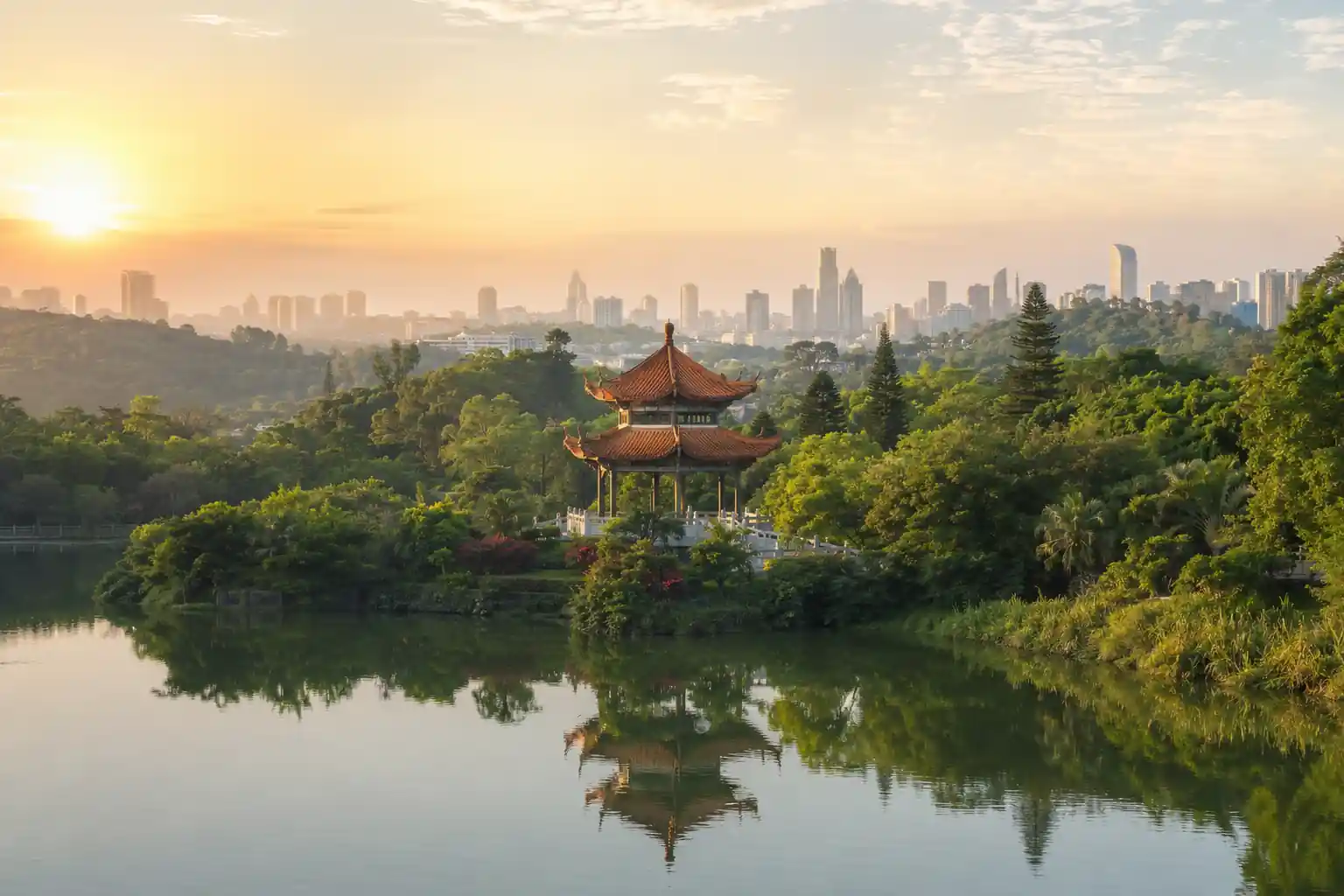
Nanning is a leafy Guangxi capital useful for southern routes, local food, regional museums, and onward travel toward Detian or Vietnam-facing borders.
Suggested stay
1-2 days
Travel style
Gateway
Best for
Guangxi routes, parks, southern food
Content confidence
Reviewed for practical travel use
Nanning city overview, suggested stay, highlights, transport notes, nearby trips, and connected planning guides have been reviewed for practical trip planning.
Use this city page as a planning framework. Confirm current opening hours, ticket windows, transport schedules, and local rules before booking.
Check official sources before booking time-sensitive items.
Planning overview
How to Plan Nanning
Nanning is less about headline landmarks than about ease, greenery, and regional logistics. It works well for travelers moving through Guangxi who want a comfortable city base with parks, a growing metro, and food that already hints at the sour-spicy flavors of the south. Plan it as a compact 1-2 day stop: one day for Qingxiu Mountain and the greener eastern districts, another for the central city, local museums, and a flexible food-focused evening.
Qingxiu MountainNanning Night MarketGuangxi Museum
Best suited for
Guangxi route planning
Park-heavy city breaks
Food-first short stays
Vietnam-facing south China routes
Best time to visit
Autumn through early spring is the easiest period for walking, park visits, and day-to-day comfort. Late spring and summer are much hotter, wetter, and more humid, so indoor museums and flexible evening plans matter more; winter is mild by northern China standards and still works well for a short stop.
Stay around Nanhu, Jinhu Square, or eastern Qingxiu if you want the easiest first base for parks, newer hotels, and Line 1 access.
Use Nanning East Railway Station for most high-speed rail connections, and treat Nanning Railway Station as the more central backup for older rail routes.
Keep summer plans light in the afternoon: Nanning is hot, humid, and rain-prone from late spring into summer.
Do not overfill the city itself; Nanning works best as a calm Guangxi base paired with one or two onward trips.
Start with the green-city feel: Nanning makes the most sense when you treat it as a livable southern base rather than a checklist city.
Suggested routes
Itineraries for Nanning
The newer southern districts show how much of Nanning is about urban expansion, wide roads, and practical modern infrastructure.
Wikimedia Commons
1 day
Green city snapshot
Best for a transfer stop or a short Guangxi base day. Keep it simple and do not spend too much time crossing the city.
1Qingxiu Mountain in the morning
2Nanhu or Jinhu Square area in the afternoon
3People's Park or the central city before dinner
4Finish with a flexible noodle or night-snack evening
2 days
City core plus Guangxi context
Enough time to combine the green eastern side with central Nanning and one museum stop.
2Day 2: People's Park, Chaoyang Square, and the Guangxi Museum of Nationalities
3Leave spare time for weather, shopping, or an early train onward
3-4 days
Base for wider Guangxi travel
Use the extra days less for city sightseeing and more for recovery time, food, and one or two onward routes by rail or road.
1Day 1: Qingxiu District and Qingxiu Mountain
2Day 2: Central Nanning, People's Park, and museum time
3Day 3: Explore Wuxiang New Area or keep a slower food-and-cafe day
4Day 4: Use Nanning East for an onward trip to Guilin, Beihai, or Liuzhou
Neighborhoods
Best Areas to Explore
Qingxiu District and Qingxiu Mountain
This is the most visitor-friendly part of Nanning: greener, more spacious, and easier for a first stay than the denser old core. It combines the city's best-known scenic area with lakes, newer hotels, and practical metro access.
Qingxiu MountainNanhu Lake areaJinhu Square
Chaoyang Square and the central city
The old commercial core is busier, less polished, and more useful than pretty. Come here for central transport, older shopping streets, People's Park, and a better sense of everyday Nanning than the newer eastern districts give you.
Chaoyang SquarePeople's ParkNanning Railway Station area
Nanning East station and eastern Qingxiu
If you are using Nanning as a transport hub, this area is the most efficient. It is less atmospheric than central Nanning, but it is practical for late arrivals, rail departures, and short overnights between Guangxi city pairs.
Nanning East Railway StationLine 1 metro accessBusiness-style hotels
Liangqing District and Wuxiang New Area
South of the older core, Liangqing shows Nanning's newer planned face: broad roads, newer civic districts, and expanding riverside development. It is more useful for repeat visitors, architecture-minded travelers, or anyone curious about newer Chinese urban growth.
Wuxiang New AreaNew civic districtModern riverside boulevards
What to see
Top Sights
Qingxiu Mountain
Qingxiu Mountain is the city's clearest sightseeing anchor and the reason many visitors remember Nanning as a green city. It combines walking paths, subtropical planting, and the Longxiang Pagoda rather than one single blockbuster monument.
Go in the morning or later afternoon, especially in hotter months, and allow more time for walking than the map first suggests.
People's Park
In central Nanning, People's Park is the most useful urban green stop because it combines White Dragon Lake, Wangxian Hill, and a straightforward central location. It is more practical than grand, but that is exactly why it fits a short Nanning stay.
Pair it with Chaoyang Square and central shopping streets, then climb to Zhenning Fort only if the weather is comfortable.
Guangxi Museum of Nationalities
If you only do one museum in Nanning, this is the most useful choice for understanding Guangxi beyond the capital itself. It adds ethnic culture, regional history, and bronze-drum context that help the rest of a Guangxi trip make more sense.
Use it on a hot or rainy day, and treat it as regional orientation rather than a rushed checklist stop.
Chaoyang Square and central commercial streets
This is not a monument-heavy sightseeing zone, but it is the best place to understand the city's older commercial center and daily rhythm. It works for food, transport, casual shopping, and seeing how central Nanning functions away from scenic branding.
Visit late afternoon into evening, when the area feels livelier and works better for a flexible meal stop.
Wuxiang New Area
Wuxiang New Area is worth a look if you are interested in newer Chinese urban development rather than only older districts. It shows the planned, broad-avenue side of today's Nanning and gives a different sense of scale from the older central neighborhoods.
Do this only after the core sights, or when you have extra time and want a slower, more contemporary city read.
Getting around
Transport Notes
Arriving by air
Nanning Wuxu International Airport (NNG) is the city's main airport and sits about 32 km southwest of central Nanning. Airport buses run into the city, including routes toward Nanning Railway Station, Chaoyang Square, Nanhu, and Jinhu Square, so you do not always need a taxi if your hotel is on those corridors.
Arriving by train
Nanning East Railway Station is the key high-speed rail hub and links directly to Metro Line 1. It connects Nanning with major Guangxi cities and longer-distance routes toward Guangzhou, Shenzhen, Hong Kong, Shanghai, Hangzhou, Wuhan, Chengdu, and other major hubs.
Getting around
The metro is the easiest way to move across the city, with five lines and a broad enough network for most visitor needs. Line 1 is the most useful spine because it links Nanning East Railway Station with the eastern city and central districts.
Taxis and ride-hailing
Taxis and ride-hailing are useful for hotter days, airport transfers, or the first and last kilometer around large parks and newer districts. Keep your destination saved in Chinese, especially for museums, parks, and transport hubs.
Food
What to Eat
Start with laoyoufen
Laoyou rice noodles (laoyoufen) are the signature Nanning dish and the most sensible first order in the city. The bowl usually combines rice noodles with sour bamboo shoots, black beans, garlic, pork, and chili, so the flavor lands in that hot-sour-savory Guangxi zone immediately. It is local, practical, and easy to try without building an entire day around one restaurant.
Look for Guangxi sourness, not only heat
Nanning sits inside southern Guangxi food culture, so preserved sour ingredients matter as much as chili. Lemon duck (ningmeng ya), a specialty associated with Nanning's Wuming area, is a good example: duck cooked with preserved lemon peel, garlic, and chili for a sharper hot-sour profile than many first-time visitors expect.
Use central districts for flexible eating
For short stays, the easiest food strategy is to eat around Chaoyang Square, the older central city, or your hotel district in Qingxiu rather than chasing one famous place across town. Noodles are a safe baseline, but Nanning also works well for broader Guangxi dishes, late snacks, fruit drinks, and informal evening eating.
Go next
Easy Trips from Nanning
Guilin
The classic scenery extension from Nanning, best reached by high-speed rail when you want karst landscapes, river views, and a more overtly scenic Guangxi stop.
Beihai
A practical coastal contrast to inland Guangxi, reachable by high-speed rail from Nanning East when you want sea air, island access, and a slower southern rhythm.
Liuzhou
A strong food-focused onward stop and an easy rail pairing if you want to go deeper into Guangxi noodle culture beyond Nanning.
Keep planning
Useful next pages for Nanning
Connect this city page with the practical setup decisions most likely to affect arrival, tickets, transport, and daily movement.