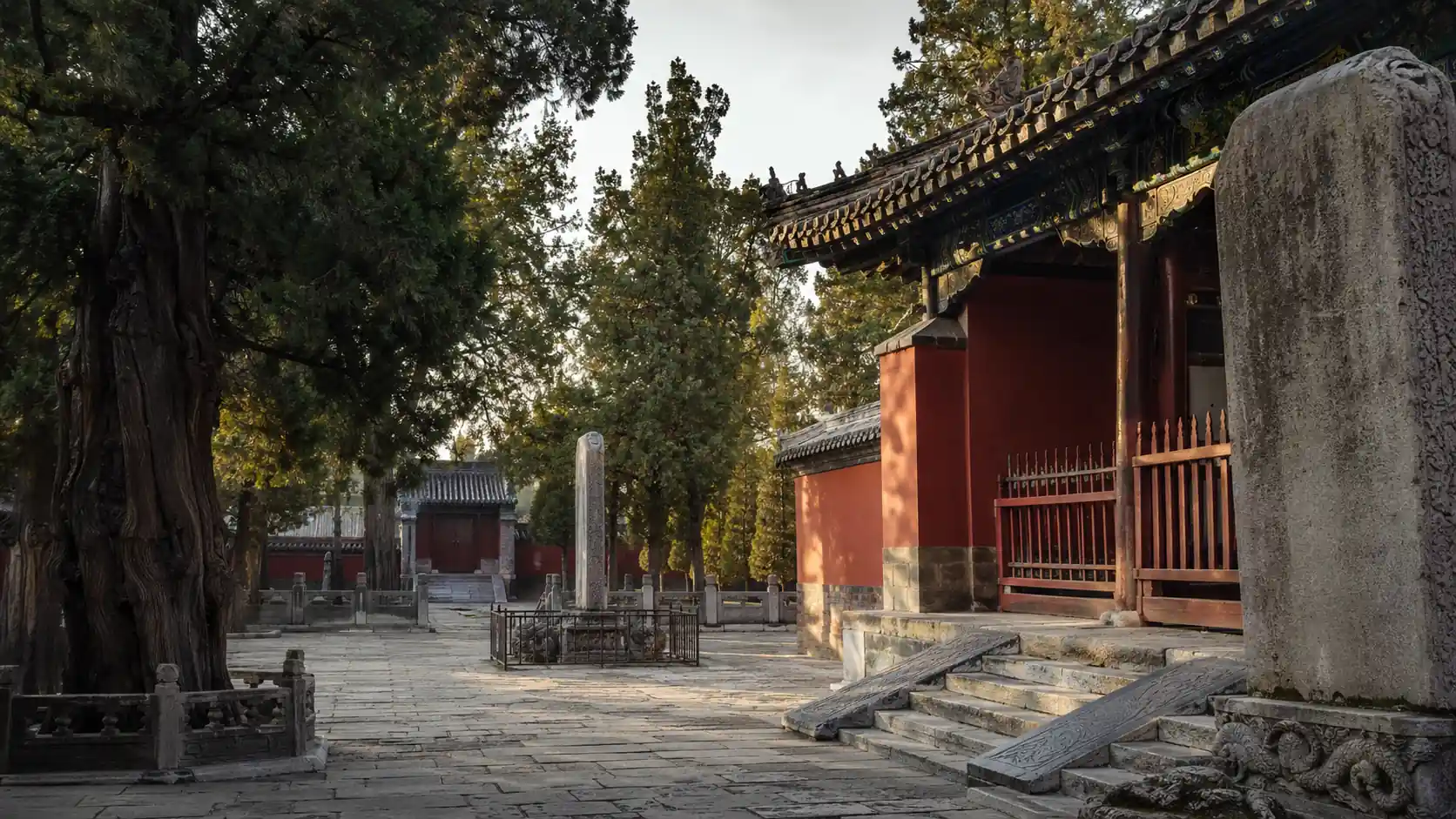
Qufu is a focused heritage destination for Confucius sites, old city walks, and a compact cultural stop in Shandong.
Suggested stay
1 day
Travel style
Heritage
Best for
Confucian culture, history, Shandong side trips
Content confidence
Reviewed for practical travel use
Qufu city overview, suggested stay, highlights, transport notes, nearby trips, and connected planning guides have been reviewed for practical trip planning.
Use this city page as a planning framework. Confirm current opening hours, ticket windows, transport schedules, and local rules before booking.
Check official sources before booking time-sensitive items.
Planning overview
How to Plan Qufu
Qufu is a compact heritage stop built around Confucius rather than around urban energy. It works best for travelers who want one focused day of temples, ritual architecture, stone inscriptions, and a clearer sense of how Confucian culture shaped imperial China. Plan the visit as a walk through the walled center and then decide whether to add Kong Lin, a quieter extra temple, or an outlying site by taxi or local bus.
Temple of ConfuciusKong Family MansionConfucius Cemetery
Best suited for
Confucian culture and history
Compact one-day heritage stops
Temple architecture and steles
Shandong route planning
Best time to visit
Spring and autumn are the easiest seasons for Qufu, when long outdoor walks between the city wall, temple complex, and Kong Lin feel comfortable. Summer is hot and humid, with most rainfall concentrated then, while winter is cold and dry but still workable if you mainly want clear, quieter visits to the main historical sites.
Stay inside the historic walled center or just south of the south gate if you only have one night.
Check San Kong ticketing and any current reservation rules before arrival, especially on weekends and holidays.
From Qufu East Railway Station, bus K01 is the simplest transfer to the main Confucius sites in the city center.
Leave Kong Lin for the cooler part of the day: it is much larger than the temple-mansion core and is easier by taxi if time is tight.
Qufu makes the most sense when you treat it as a compact heritage zone rather than a city of separate long-distance attractions.
Suggested routes
Itineraries for Qufu
The city wall helps visitors understand the scale of the old center and where to base a short stay.
Wikimedia Commons
1 day
San Kong essentials
Best for a day trip or a deliberate one-night stop focused on the city's core heritage.
1Temple of Confucius in the morning
2Kong Family Mansion before lunch
3Temple of Yan Hui or old city walk in the afternoon
4Kong Lin late in the day if energy and weather are still good
2 days
Core heritage without rushing
Enough time to separate the big-ticket sites and add one quieter or farther-out stop.
1Day 1: Temple of Confucius, Kong Family Mansion, evening walk around the city wall
2Day 2: Kong Lin, Temple of Yan Hui, then Shou Qiu and Shaohao Tomb if you want an outlying site
3Use Xiguan or the south gate area for a slower meal instead of trying to add too many monuments
3-4 days
Qufu plus nearby Shandong culture
Use extra time for context rather than repeating similar temple courtyards inside Qufu itself.
1Day 1: Temple of Confucius, Kong Family Mansion, city wall walks
2Day 2: Kong Lin, Temple of Yan Hui, Xiguan district
3Day 3: Zoucheng for Mencius sites or Mount Ni if you want broader philosophical context
4Day 4: Tai'an or Jinan as the next stop on a Shandong route
Neighborhoods
Best Areas to Explore
Historic walled center
This is the practical base for most visitors: a compact old core framed by the restored Ming-era wall and moat, with the main Confucius sites clustered inside or just beyond the gates. If you only have a day, most of your time should stay here.
South gate and visitor approachDrum Tower axisEasy access to San Kong
Temple and mansion core
The Temple of Confucius and Kong Family Mansion form the intellectual and ceremonial center of Qufu. This is where the city feels most monumental, with courtyards, halls, steles, and the administrative-residential world of Confucius' descendants laid out at close range.
Temple of ConfuciusKong Family MansionMain courtyards and steles
North gate and Kong Lin approach
North of the main core, the route toward Kong Lin shifts from dense monumentality to a broader, greener procession. It is the right part of Qufu for slower walking, tree-lined views, and a better sense of how ancestor worship and lineage shaped the city.
North gate boulevardKong Lin entranceTree-lined ceremonial route
West gate and outer sites
Outside the tight historic center, Qufu opens into two useful extensions: the Xiguan district by the west gate, known for its Hui community, and the outlying heritage sites reached by bus or taxi. Use this zone when you have half a day more and want something beyond the standard San Kong circuit.
Xiguan districtShou Qiu and Shaohao TombRoad out toward Mount Ni
What to see
Top Sights
Temple of Confucius
Qufu's main monument is the oldest, largest, and most important Confucian temple in East Asia. The complex stretches through nine courtyards and hundreds of rooms, with Dacheng Hall, the Apricot Platform, and the dense field of imperial steles giving it far more depth than a simple birthplace memorial.
Go early and give it proper time; this is the site that justifies the trip, and it works best before larger tour groups fill the central axis.
Kong Family Mansion
Immediately east of the temple, the mansion shows how the direct descendants of Confucius lived and governed their affairs. The layout separates official, yamen-like functions in the front from residential quarters in the rear, which makes it more revealing than many visitors expect.
Visit it on the same ticket and the same day as the temple, but do not treat it as an afterthought; it explains the social power behind the ritual complex.
Cemetery of Confucius (Kong Lin)
North of the old city, Kong Lin is less about one structure than about scale, lineage, and ritual landscape. Confucius and many of his descendants are buried here, and the grounds contain more than 100,000 descendant burials within a broad, tree-filled enclosure.
Do not underestimate distances inside and around the site; if your schedule is short, taxi there and save the long walk back.
Temple of Yan Hui
Dedicated to Confucius' favorite disciple, this smaller temple adds welcome quiet after the main San Kong complex. It is a useful stop when you want one more meaningful site without the crowd density of the main temple.
Add it only after the main three sites are covered; it is a good second-day or half-day extension, not a substitute for the core monuments.
Shou Qiu and Shaohao Tomb
This outlying site lies beyond the historic center and gives a different flavor from the dense Confucian core. It suits travelers who have already done San Kong and want a more peripheral ritual-historical stop tied to older legendary and commemorative traditions.
Use a local bus or a short taxi ride rather than trying to force it into a tight walking day inside the walled city.
Getting around
Transport Notes
Arriving by air
Most visitors do not fly directly into Qufu. The nearest airport commonly used for the area is Jining Qufu Airport, over 90 km away by road, so air arrivals usually require a follow-up road transfer and are less convenient than high-speed rail.
Arriving by train
Qufu East Railway Station is the practical gateway for most travelers, with direct daytime high-speed service from Beijing, Tianjin, Jinan, Nanjing, Shanghai, Qingdao, and other cities on the corridor. The fastest trains take about 2 hours from Beijing and about 3 hours from Shanghai.
Getting around
The historic center is small enough to walk, and the main temple-mansion core is very compact once you are inside the walled city. Local buses reach outlying points such as the bus station, Qufu Railway Station, and Shou Qiu, while K01 links Qufu East Station to the main tourist area.
Taxis and ride-hailing
Taxis are useful for Kong Lin when you are short on time and for farther sites such as Shou Qiu or Mount Ni. Keep the Chinese names of your destination ready, because walking is ideal in the center but less efficient once you move beyond the main heritage core.
Food
What to Eat
Start with Kongfu cuisine
Qufu is one of the places where Kongfu cuisine, or Confucian cuisine, is part of the city's identity rather than just a menu label. Representative dishes often include braised tofu, roasted pork belly, and ginkgo nuts, while the broader Shandong style is formal, technique-heavy, and tied to the special status of the Confucius family.
Look for everyday local staples too
Not every meal needs to be banquet food. Braised pork belly rice is a common everyday local meal, and Qufu pancakes are thin, mostly multigrain pancakes that work well as a simple Shandong-style staple alongside other small dishes.
Choose area and budget carefully
Use the walled center and the south gate area for the easiest one-day meals between sights, then move up to mid-range or higher-end restaurants if you specifically want Kongfu cuisine. The west-gate Xiguan area also adds a different local food atmosphere because of Qufu's Hui community.
Go next
Easy Trips from Qufu
Zoucheng
The most logical companion stop for Qufu, thanks to the Mencius sites; buses between Zoucheng and Qufu usually take about 30 minutes.
Tai'an
A good next stop if you want Mount Tai after Qufu's philosophical and historical sites; regular buses are about 1 hour.
Jinan
Useful as both a transport hub and a change of pace, with springs, lake walks, and broader city services; Qufu is commonly linked with Jinan on Shandong routes.
Keep planning
Useful next pages for Qufu
Connect this city page with the practical setup decisions most likely to affect arrival, tickets, transport, and daily movement.