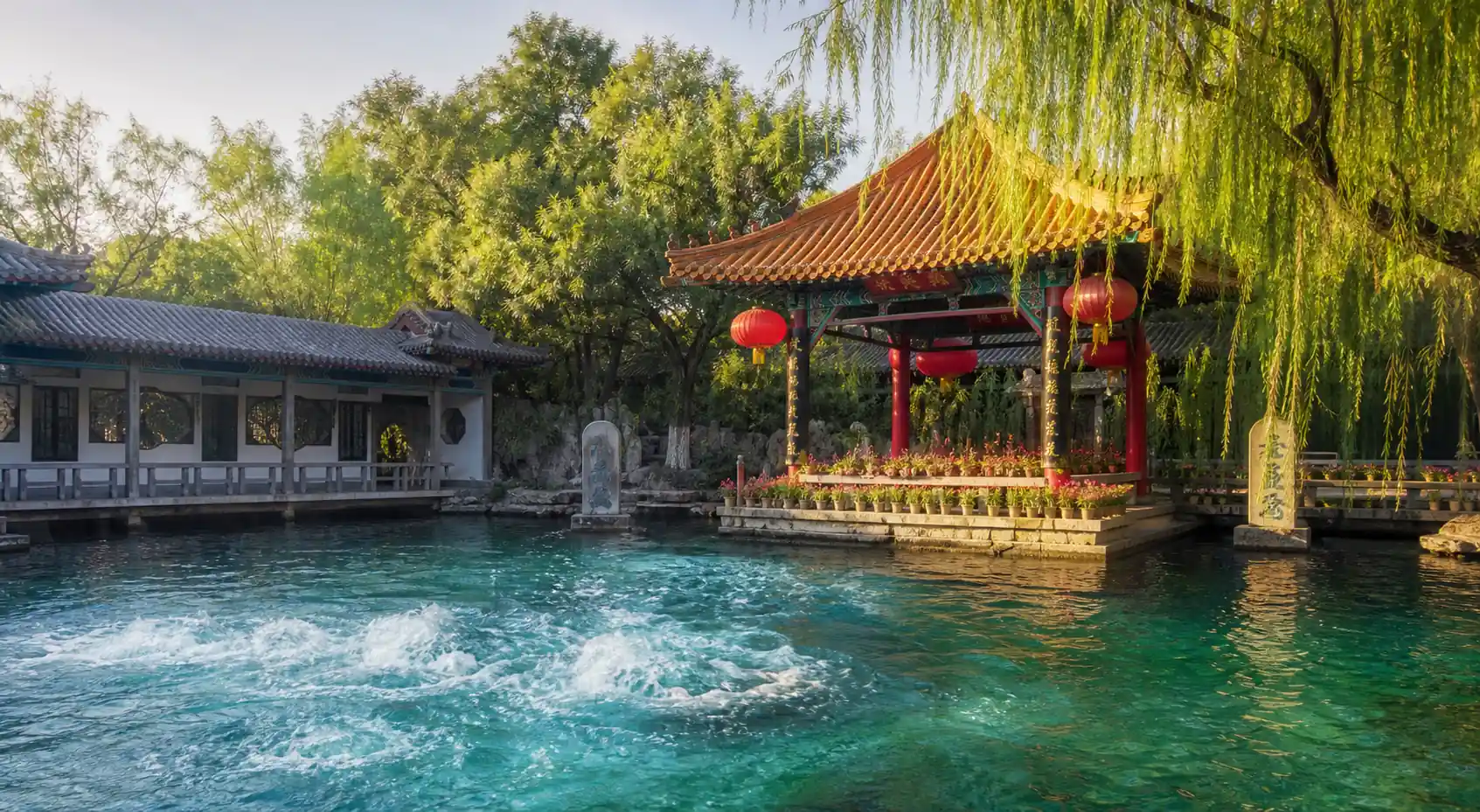
Jinan is known as the City of Springs, with historic water features, lakeside walks, Shandong cuisine, and useful access to Qufu or Tai'an.
Suggested stay
1-2 days
Travel style
Springs
Best for
Springs, Shandong routes, relaxed walks
Content confidence
Reviewed for practical travel use
Jinan city overview, suggested stay, highlights, transport notes, nearby trips, and connected planning guides have been reviewed for practical trip planning.
Use this city page as a planning framework. Confirm current opening hours, ticket windows, transport schedules, and local rules before booking.
Check official sources before booking time-sensitive items.
Planning overview
How to Plan Jinan
Jinan works best for travelers who want a slower China city break built around parks, springs, local food, and easy regional rail links. The city is not about one giant landmark. Instead, plan it as a connected spring-and-lake route: Baotu Spring, the moat and Black Tiger Spring area, Daming Lake, then one higher view from Thousand Buddha Mountain. One to two days is usually enough, with extra time best used for Tai'an or Qufu.
Baotu SpringDaming LakeThousand Buddha Mountain
Best suited for
Spring and park walks
Relaxed one-night stops
Shandong food routes
Tai'an and Qufu side trips
Best time to visit
Spring and autumn are the easiest seasons for walking the springs, lakeside parkland, and Thousand Buddha Mountain. Summer is hot and wet, with July and August seeing the heaviest rain, while winter is dry and cold but still manageable for a short city break if you focus on central sights and food.
Stay around Quancheng Square, Baotu Spring, or Daming Lake if you want the easiest first visit without relying heavily on taxis.
Group the central springs and lake on foot: Baotu Spring, Quancheng Square, Black Tiger Spring, and Daming Lake connect more naturally than they look on a map.
Use a clear-weather slot for Thousand Buddha Mountain, because the city view matters more than rushing there in haze or rain.
Keep one meal for Shandong classics and one for local snacks such as sweet foam and youxuan instead of defaulting to generic mall food.
Quancheng Square shows the modern center of Jinan and helps visitors understand how the main spring sights connect on foot.
Suggested routes
Itineraries for Jinan
Baotu Spring Park shows the spring-city identity at close range, which is why most visitors should treat it as the core stop rather than an optional detour.
Wikimedia Commons
1 day
Classic springs and lake day
Best for a stop between bigger cities. Keep the route compact and let the city's spring system define the day.
1Baotu Spring Park in the morning
2Quancheng Square and Black Tiger Spring around midday
3Furong Street or Wangfu Pool lanes for snacks and slow walking
4Daming Lake in the late afternoon or early evening
2 days
First-timer Jinan
Enough time to cover the core water sights without turning the city into a checklist.
1Day 1: Baotu Spring, Quancheng Square, Black Tiger Spring, and the old lanes around Furong Street
2Day 2: Daming Lake, then Thousand Buddha Mountain if the weather is clear
3Add Shandong Museum or a slower food-focused evening if you want less walking
3-4 days
Jinan plus Shandong side trips
Use the extra days on the region rather than forcing too many minor city sights into central Jinan.
1Day 1: Central spring belt from Baotu Spring to Black Tiger Spring
2Day 2: Daming Lake, old lanes, and Thousand Buddha Mountain
3Day 3: Tai'an for Mount Tai or a lighter city-and-food day in Jinan
4Day 4: Qufu for the Confucius sites if you want a stronger history extension
Neighborhoods
Best Areas to Explore
Daming Lake and the old north city
This is the calmest way into Jinan: a broad lake, causeways, pavilions, and older city texture just beyond the water. It works especially well in the morning or late afternoon, and it gives the clearest sense of why Jinan is called the City of Springs.
Daming LakeLixia Pavilion areaOld city lanes north of the center
Baotu Spring, Quancheng Square, and the spring belt
The practical heart of a first visit lies here: major springs, the central square, shopping streets, and easy links to the moat walk. If you only have one day in Jinan, this is the part of the city to organize most carefully.
Baotu Spring ParkQuancheng SquareBlack Tiger Spring
Furong Street and Wangfu Pool lanes
These older lanes between the main lake and square area are useful when you want a tighter, more local walking section instead of another formal park. Come for snacks, small courtyards, and spring-fed corners, but expect crowds around meal times and holidays.
Furong StreetWangfu PoolNarrow spring-fed alleys
Thousand Buddha Mountain and the southern edge
South of the central springs, the city rises toward a hill zone that gives Jinan a different rhythm: temple precincts, carved Buddhas, and broad views back over the urban plain. It pairs well with a lighter central day because the point here is the climb and viewpoint, not rushing between indoor sights.
Thousand Buddha MountainXingguochan TempleCity viewpoints
What to see
Top Sights
Baotu Spring Park
Baotu Spring is Jinan's best-known spring group and the clearest expression of the city's identity. The park combines spring pools, pavilions, and garden-style walking rather than a single monument, so it works best when you move slowly and notice how the water shapes the whole site.
Go earlier in the day if you want a calmer visit, then continue on foot toward Quancheng Square instead of treating it as a stand-alone stop.
Daming Lake
Fed by the city's spring system, Daming Lake is the broad landscape counterweight to the tighter spring parks downtown. It is more than a photo stop: the islands, pavilions, and long edges make it the easiest place in Jinan for an unhurried half day.
Use this as a morning or late-day block, and do not try to rush the full circuit between other timed attractions.
Thousand Buddha Mountain
This hill southeast of the center adds relief to an otherwise low, water-based city itinerary. Its carved Buddhas, temple areas, and elevated viewpoints make it less about one specific building and more about seeing how Jinan sits between hill country to the south and the plain to the north.
Choose a clear day and pair it with a lighter downtown schedule, because the climb and the city view are the main reasons to go.
Black Tiger Spring and the moat walk
The spring outlets and waterside path near the old moat show Jinan in a more everyday way than the formal ticketed parks. It is one of the best places to see residents using the spring environment as part of daily city life, not just as a scenic backdrop.
Walk this section between Quancheng Square and the old lanes rather than making a separate taxi trip just for one spring.
Shandong Museum
If you want one major indoor stop, the provincial museum is the most practical choice because it adds archaeological and regional context to what you see around Jinan. It makes the most sense on a hot, rainy, or winter day, or when you want more depth before continuing through Shandong.
Use it as an indoor counterweight to the spring parks, not as a substitute for them on a first visit.
Getting around
Transport Notes
Arriving by air
Jinan Yaoqiang International Airport (TNA) is the city's main airport and sits about 33 km northeast of the center. It is practical for domestic arrivals and some international links, but you should expect a transfer into town rather than an airport that feels central.
Arriving by train
Jinan works well by rail. Jinan Railway Station is closer to the older center, while Jinan West is the main high-speed station for many long-distance routes, and Jinan East also serves newer high-speed services.
Getting around
Central Jinan is more walkable than many Chinese provincial capitals if you plan by clusters: spring belt, old lanes, Daming Lake, then Thousand Buddha Mountain. The metro exists and is growing, but for most short visitor stays you will combine walking with occasional taxis or ride-hailing rather than depend on rail for every movement.
Taxis and ride-hailing
Taxis and ride-hailing are useful for station transfers, airport runs, and Thousand Buddha Mountain. Save destinations in Chinese and be prepared for slower traffic around the center at peak hours.
Food
What to Eat
Start with Lu cuisine and Jinan signatures
Jinan is a good place to try Shandong's Lu cuisine without turning the meal into a formal banquet. Look for sweet and sour Yellow River carp (tangcu liyu), braised sea cucumber with scallions (congshao haishen), and jiuzhuan large intestine (jiuzhuan dachang) if you want classic banquet-style dishes. For something more local and casual, try youxuan, the spiral sesame flatbread or pastry often associated with Jinan.
Use the old lanes for snacks, not your only serious meal
Furong Street and the lanes around Wangfu Pool are the easiest areas for a grazing-style stop between sights. They are useful for local snacks and atmosphere, but crowds can be heavy, so many travelers do better treating them as a snack walk before or after a more focused meal elsewhere.
Do one Jinan breakfast
A short stay becomes more specific if you leave room for breakfast instead of only dinner. Look for sweet foam (tianmo), a thick savory millet porridge with vegetables and peanuts, plus youtiao or other simple morning staples. It is a practical way to feel the local rhythm before the park and spring areas get busier.
Go next
Easy Trips from Jinan
Tai'an and Mount Tai
The strongest side trip from Jinan, especially if you want mountain scenery or a bigger historical landmark; express trains from Jinan to Tai'an can take about 15 minutes.
Qufu
Go here for Confucius-related heritage rather than scenery; it is about 2 hours by bus from Jinan and makes sense as a history-focused extension.
Qingdao
Best as the next stop on a broader Shandong route when you want the coast after inland parks and springs; rail connections from Jinan make it a practical onward city rather than just a separate flight destination.
Keep planning
Useful next pages for Jinan
Connect this city page with the practical setup decisions most likely to affect arrival, tickets, transport, and daily movement.