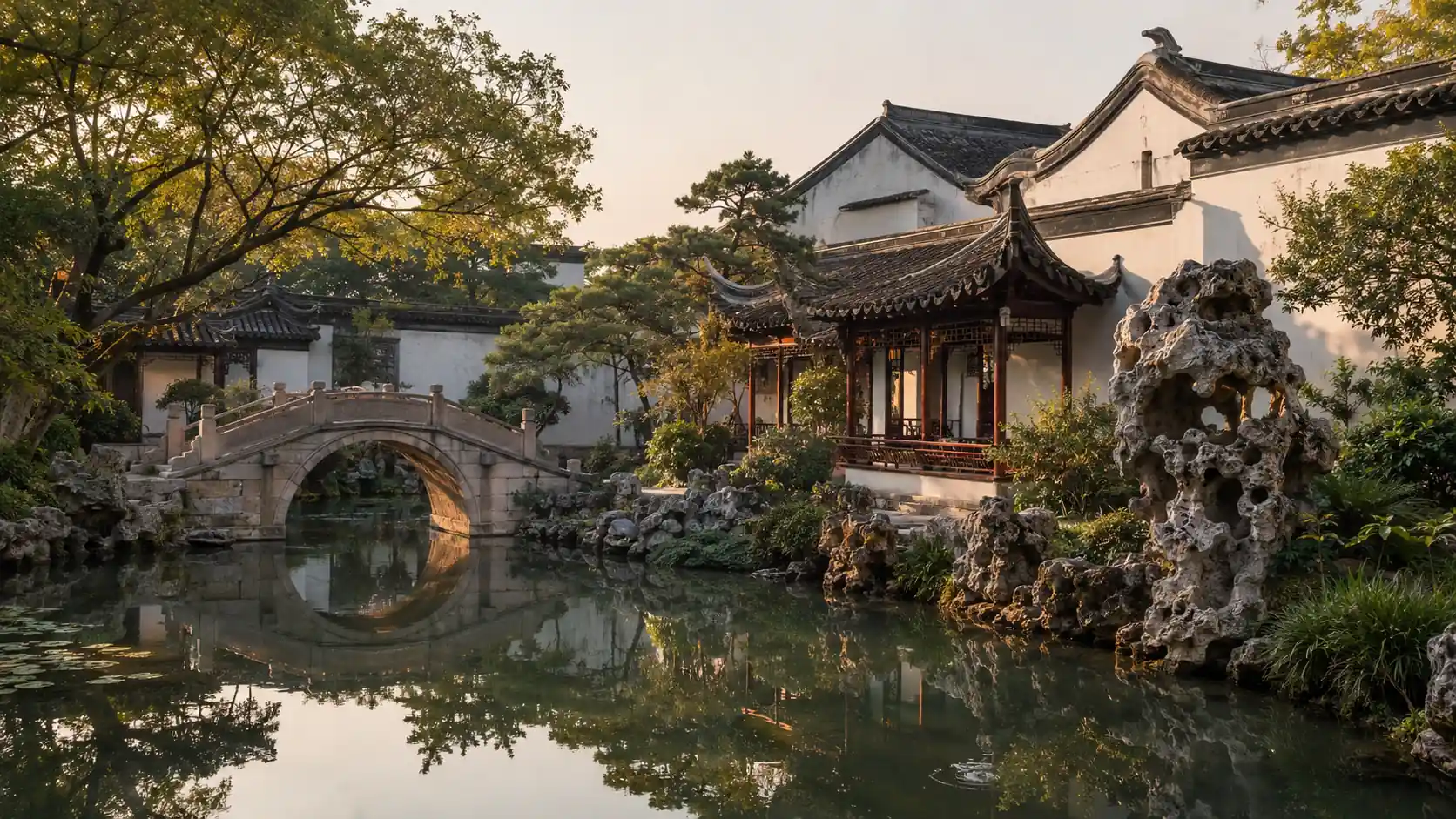
Suzhou is a graceful East China stop for classical gardens, canal lanes, silk history, and easy day trips from Shanghai by high-speed rail.
Suggested stay
1-2 days
Travel style
Gardens
Best for
Gardens, canals, day trips from Shanghai
Content confidence
Reviewed for practical travel use
Suzhou city overview, suggested stay, highlights, transport notes, nearby trips, and connected planning guides have been reviewed for practical trip planning.
Use this city page as a planning framework. Confirm current opening hours, ticket windows, transport schedules, and local rules before booking.
Check official sources before booking time-sensitive items.
Planning overview
How to Plan Suzhou
Suzhou works best for travelers who want a calmer Jiangnan stop rather than another giant skyline city. Come for classical gardens, canal lanes, white-walled old neighborhoods, and the contrast between the historic core and the newer Jinji Lake district. For a first visit, keep most of your time in Gusu, add one major garden or museum each day, and treat nearby water towns or Shanghai as optional extensions instead of trying to cram everything into one rushed day.
Humble Administrator's GardenPingjiang RoadTiger Hill
Best suited for
Classical gardens and architecture
Canal walks and slower city breaks
Jiangnan culture and crafts
Easy rail add-ons from Shanghai
Best time to visit
Spring and autumn are the easiest seasons for Suzhou: gardens read well, canal walks are comfortable, and the city feels less heavy than in midsummer. June is notably wetter, while July and August are hot and humid. Winter is quieter and still workable for gardens, museums, and food, but it can feel damp rather than sharply cold.
Stay in Gusu or near Line 1 or Line 4 if your focus is gardens, canal walks, and easy station access.
Do the most famous gardens early in the day; crowding builds quickly, especially on weekends and public holidays.
Use the metro for longer hops, then walk once you are inside the old city, where short canal-side stretches matter more than raw distance.
Keep destination names in Chinese for taxis and ride-hailing, and verify current ticket rules for major gardens and museums before going.
Start with the canal city image: it explains why Suzhou is best planned as a slow walk between gardens, lanes, and waterways.
Suggested routes
Itineraries for Suzhou
Shantang Street shows the canal-street texture visitors usually come for, especially in the late afternoon and evening.
Wikimedia Commons
1 day
Gardens and canals first
Best for a Shanghai day trip or a short Jiangnan stop. Keep the route compact and let the old city do most of the work.
1Humble Administrator's Garden and Suzhou Museum in the morning
2Pingjiang Road and nearby canal lanes in the afternoon
3Shantang Street toward late afternoon or evening
4Optional short stop at Tiger Hill if you start early
2 days
Balanced first visit
Enough time to combine the best-known garden, a second major sight, and one slower neighborhood block without rushing.
2Day 2: Lingering Garden or Tiger Hill, then Shantang Street or Pan Gate area
3Use the evening for Guanqian Street, Shiquan Street, or a quieter canal walk
3-4 days
Deeper Jiangnan pace
Use extra time for smaller gardens, craft and food stops, and one nearby water town instead of overloading central ticketed sights.
1Day 1: Core old city, Pingjiang Road, and one major garden
2Day 2: Tiger Hill, Shantang Street, and a second garden or Pan Gate
3Day 3: SIP and Jinji Lake, or a slower museum and teahouse day
4Day 4: Tongli or Zhouzhuang, or a rail hop to Shanghai or Wuxi
Neighborhoods
Best Areas to Explore
Gusu old city and Pingjiang Road
This is the Suzhou most visitors are actually looking for: canals inside the old city grid, stone bridges, traditional houses, temples, and narrow lanes that still hold together as a walkable area. It is the best base for a first trip because many of the city's classic stops sit within the old canal rectangle.
Pingjiang RoadGuanqian StreetTemple of Mystery area
Garden quarter around Northeast Street
The cluster around Humble Administrator's Garden and Suzhou Museum is where Suzhou's scholarly image becomes concrete. This area works best when you pair one major garden with the museum and keep time for slower walking instead of trying to collect too many ticketed sights in one block.
Humble Administrator's GardenSuzhou MuseumLion Grove Garden
Shantang Street and Tiger Hill
West and northwest of the old center, this pair works well as a half-day or evening extension. Shantang Street gives you canal scenery and food-oriented walking, while Tiger Hill adds one of the city's strongest historic landmarks and a broader sense of Suzhou beyond the flat canal grid.
Shantang StreetTiger HillHuqiu area
Suzhou Industrial Park and Jinji Lake
East of downtown, the SIP shows Suzhou's modern side: broad avenues, malls, lakefront promenades, office towers, and planned residential districts around Jinji Lake. It is not the reason most travelers come first, but it is useful if you want a cleaner evening walk, international dining, or a break from old-city crowds.
Jinji LakeGate to the EastLakefront promenades and malls
What to see
Top Sights
Humble Administrator's Garden
Suzhou's best-known classical garden and the clearest single introduction to the city's garden tradition. Pavilions, rockeries, water, and planted views are arranged to feel larger and more layered than the site really is.
Go as early as you can, especially on weekends, and pair it with nearby Suzhou Museum rather than trying to add too many other gardens the same day.
Lingering Garden
Another major classical garden, often appreciated for its rockeries, framed courtyards, and stronger sense of enclosed composition. It complements Humble Administrator's Garden well because the mood and spatial rhythm feel different rather than repetitive.
Choose this as your second big garden if you want depth, but skip it on a very short trip if one major garden is enough.
Tiger Hill
A historic hill complex associated with earlier Suzhou history and known for its leaning pagoda. It gives a different visual rhythm from the flat canal city and is one of the better places to connect garden-focused sightseeing with older political and military history.
Use it with Shantang Street or the west side of the city rather than trying to fit it between tightly packed old-town stops.
Pingjiang Road
One of the easiest stretches for seeing old Suzhou in practice: canal-edge houses, bridges, small shops, teahouses, and side lanes that still reward slow walking. It is less about a single monument than about reading the texture of the city.
Come in the morning for a calmer walk, or return in the evening if you want atmosphere and lights instead of photos.
Suzhou Museum
The museum is worth visiting both for its collection and for I. M. Pei's building, which reworks Suzhou forms into a clean modern composition. It is one of the best ways to connect the city's garden culture, craft history, and built environment in one stop.
Reserve or verify entry rules in advance, then pair it with the nearby garden cluster while you are already in that part of Gusu.
Getting around
Transport Notes
Arriving by air
Suzhou does not have a civilian airport, so most international arrivals come via Shanghai. Hongqiao Airport is the easiest fit for rail connections, while Pudong is more useful for long-haul flights. Wuxi Shuofang Airport is closer, but it is more limited and mainly practical for some domestic or regional routes.
Arriving by train
High-speed rail is the simplest way in for most travelers. Suzhou is well tied to Shanghai, Nanjing, Hangzhou, and the wider Yangtze Delta, and the city's main stations usually make rail far easier than flying for regional movement.
Getting around
The metro is the main tool for longer hops and now reaches the old city, Jinji Lake, and farther districts including Tongli on the network edge. Inside Gusu, walking usually matters more than transit because many worthwhile streets and canals are short, irregular, and best read on foot.
Taxis and ride-hailing
Taxis are useful for station transfers, late evenings, or moving between areas that do not connect neatly on foot. Traffic is usually less punishing than Shanghai, but old-city street patterns can still slow short rides, so keep Chinese destination names ready.
Food
What to Eat
Expect a refined Jiangnan profile
Suzhou cooking often leans sweeter and more delicate than what many visitors first expect from Chinese food. Look for freshwater fish and shrimp dishes, Suzhou-style noodles, and seasonal crab when it is available. A good meal here is usually about balance, texture, and careful saucing rather than heat.
Use old-city streets for flexible eating
Pingjiang Road, Shiquan Street, Guanqian Street, and the lanes around the old center are practical for casual meals, snacks, tea, and dessert stops between sights. They work better than chasing a single famous restaurant across town, especially on a short stay.
Let the season shape the meal
Autumn is the obvious time to look for hairy crab linked with the Yangcheng Lake area, while cooler weather also suits slower restaurant meals after garden visits. In warmer months, lighter noodle lunches, tea breaks, and short evening food walks usually fit the city better than heavy banquet-style planning.
Go next
Easy Trips from Suzhou
Tongli
A classic water-town extension with canals, bridges, and the Retreat and Reflection Garden, reachable in under an hour from central Suzhou with metro and local transfer.
Zhouzhuang
The best-known Jiangnan water town near Suzhou, useful if you want a more fully preserved canal-town atmosphere; it is usually easiest as a road trip of about an hour.
Wuxi
A straightforward westbound add-on for Taihu Lake scenery and a different Jiangnan city feel, commonly reached by high-speed rail in around 20 minutes.
Keep planning
Useful next pages for Suzhou
Connect this city page with the practical setup decisions most likely to affect arrival, tickets, transport, and daily movement.