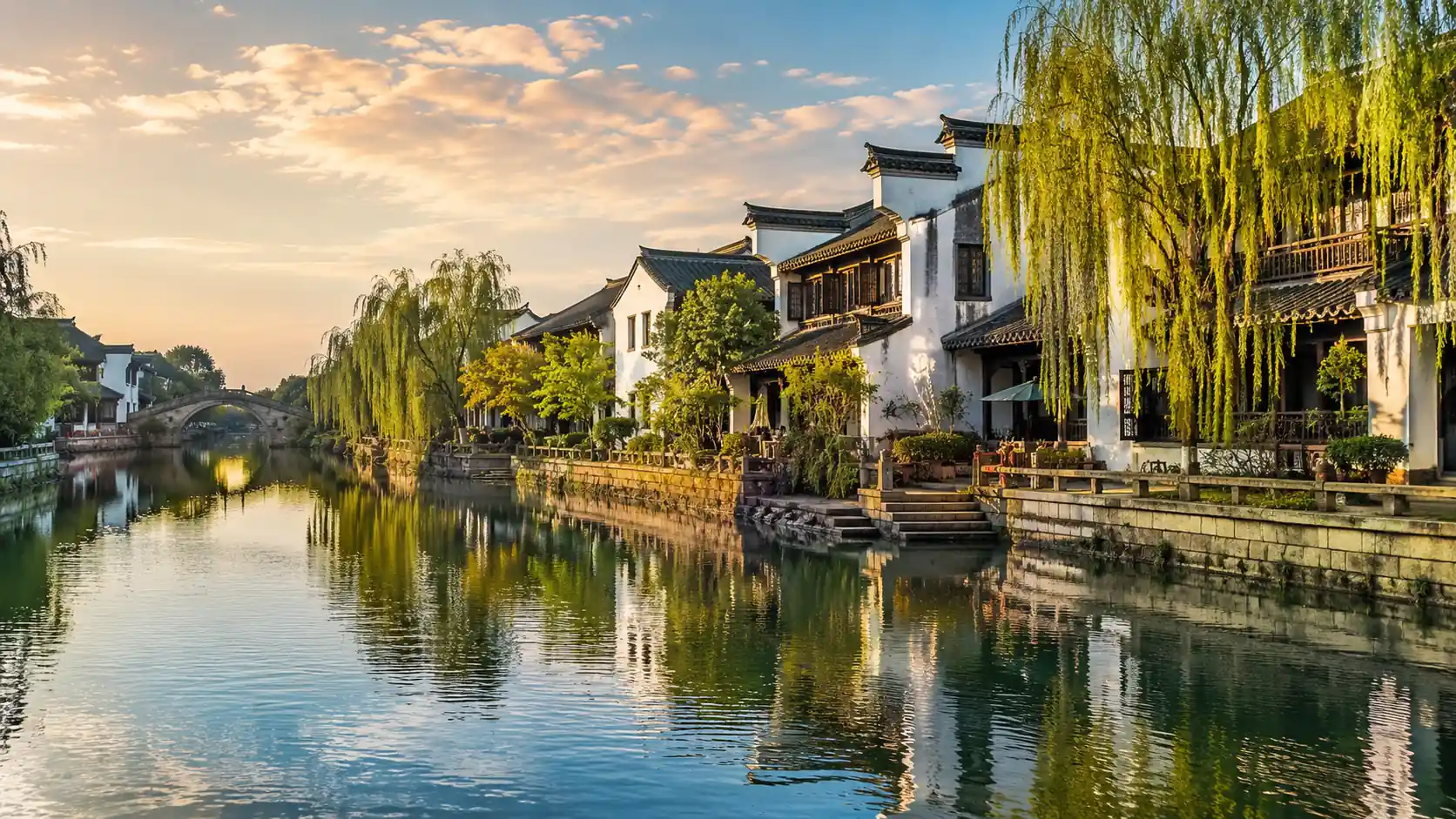
Wuxi is an easy East China stop near Suzhou and Shanghai, offering lake scenery, gardens, old canals, and family-friendly attractions.
Suggested stay
1-2 days
Travel style
Lake City
Best for
Lake views, day trips, Jiangnan routes
Content confidence
Reviewed for practical travel use
Wuxi city overview, suggested stay, highlights, transport notes, nearby trips, and connected planning guides have been reviewed for practical trip planning.
Use this city page as a planning framework. Confirm current opening hours, ticket windows, transport schedules, and local rules before booking.
Check official sources before booking time-sensitive items.
Planning overview
How to Plan Wuxi
Wuxi works best as a calm Jiangnan break rather than a checklist city. Come for Lake Tai views, gardens, canal walks, and one or two large scenic sites such as Yuantouzhu or Lingshan, then leave room for slower meals and an evening on Nanchang Street. It suits travelers moving between Shanghai and Nanjing who want something greener and less compressed than Shanghai, especially if they enjoy water landscapes, spring blossom season, or family-friendly sightseeing.
Taihu LakeNanchang StreetLingshan Grand Buddha
Best suited for
Jiangnan lake scenery
Cherry blossom trips
Families and slower city breaks
Shanghai-Nanjing rail itineraries
Best time to visit
Spring and autumn are the easiest seasons for most travelers, with the clearest balance of temperature, walking weather, and lake views. March to April is the key window for cherry blossoms at Yuantouzhu, while June through August is hot, humid, and rainy. Winter is cold but still workable for museums, old-town walks, and shorter food-focused trips.
Stay in Liangxi for the easiest access to the main railway station, canal quarter, and older city sights; stay in Binhu if Lake Tai is your priority.
Combine one large scenic area with one compact urban area each day, because moving between lakefront sites can take longer than the map suggests.
Go early for Yuantouzhu in March and April, when cherry blossom season brings the city's heaviest sightseeing crowds.
Use the metro for city transfers, then switch to taxis or ride-hailing for Lingshan, Nianhua Bay, and late returns from the lakefront.
This Lake Tai panorama shows why Wuxi is better planned around water views and open space than around dense urban sightseeing.
Suggested routes
Itineraries for Wuxi
Wuxi Museum gives a useful indoor anchor in the central city, especially when weather is poor or you want historical context between outdoor stops.
Wikimedia Commons
1 day
Lake view plus canal evening
Best for a stop between Shanghai and Nanjing when you want one signature landscape and one easy urban evening.
1Yuantouzhu in the morning for Lake Tai views
2Wuxi Museum or Donglin Academy in the afternoon depending on weather
3Nanchang Street and Qingming Bridge in the early evening
4Optional canal-side dinner instead of adding another scenic area
2 days
First Wuxi trip
Enough time to balance the central canal city with the lakefront without turning the trip into a transport-heavy rush.
1Day 1: Xihui Park or Huishan Ancient Town, Wuxi Museum, Nanchang Street at night
2Day 2: Yuantouzhu and the Binhu lakefront, with Lihu or Taihu views depending on energy
3Swap Day 2 for Lingshan and Nianhua Bay if you prefer a full scenic-area excursion
3-4 days
Deeper Wuxi and one side trip
Use the extra time to avoid overloading a single day and to add one nearby rail extension.
2Day 2: Yuantouzhu, Lake Tai viewpoints, and slower time on the Binhu side
3Day 3: Grand Buddha at Ling Shan and Nianhua Bay
4Day 4: Side trip to Suzhou or Shanghai, or a lighter heritage day around Xihui and Huishan
Neighborhoods
Best Areas to Explore
Liangxi old city and canal quarter
This is the most practical base for a first stay, with the main railway station, canal scenery, and several historical stops within a manageable part of the city. It is where Wuxi feels most like a Jiangnan canal town rather than a resort-style lake destination.
Nanchang StreetQingming Bridge areaDonglin Academy
Binhu lakefront and Yuantouzhu
The southwestern side of the city is where Wuxi opens onto Lake Tai. Come here for the city's classic landscape views, spring blossom season, ferries, and the greener side of the trip rather than dense sightseeing blocks.
YuantouzhuLake Tai viewpointsLihu waterfront
Lingshan and Nianhua Bay
West of the main urban core, this is the city's largest scenic excursion zone. It works best as a full day when you want monumental Buddhist architecture, broad resort-style grounds, and an evening extension at Nianhua Bay rather than a museum-and-neighborhood day.
Grand Buddha at Ling ShanBrahma PalaceNianhua Bay
Xihui and Huishan area
This side of Wuxi is strongest for gardens, hills, temples, and a more traditional sightseeing rhythm. It is the best contrast to the lakefront if you want a day built around heritage spaces, old-town lanes, and slower walking.
Xihui ParkJichang GardenHuishan Ancient Town
What to see
Top Sights
Yuantouzhu
Yuantouzhu, or Turtle Head Isle, is the classic Wuxi landscape stop on the northwestern shore of Lake Tai. It is the city's clearest expression of why people come here at all: broad water views, ferries, seasonal blossom scenery, and a sense of space that is hard to find in bigger Jiangnan cities.
Go early in spring, especially from March to April, when cherry blossom season brings the area's biggest crowds.
Grand Buddha at Ling Shan
The 88-meter Grand Buddha is Wuxi's most conspicuous large-scale attraction and the anchor of the wider Lingshan scenic area. It is less about old urban texture and more about monumental religious architecture, show-style staging, and a full scenic-zone outing.
Treat Lingshan as a dedicated half-day or full-day trip rather than something you can squeeze between city-center stops.
Nanchang Street and Qingming Bridge
This is the best canal-side walk in central Wuxi, with restored lanes, bridges, snack stops, and an evening atmosphere that feels closer to the city's Jiangnan identity than its newer commercial districts. It is a good place to end the day rather than a destination that needs heavy scheduling.
Come in the late afternoon and stay into the evening, when the canal area is livelier and better lit.
Xihui Park and Jichang Garden
Xihui Park combines hillside scenery, temple spaces, and one of southeast China's notable classical gardens in Jichang Garden. It is the strongest choice when you want a more traditional garden-and-heritage day instead of a lake excursion.
Pair it with Huishan Ancient Town or a return to central Liangxi, rather than trying to cross town again to Lingshan on the same day.
Wuxi Museum
Wuxi Museum is a useful free stop for history, regional culture, and a weather-proof block in the middle of a longer day. It is especially practical if you want context for the city's older Wu heritage and canal-era development without committing to a heavier academic stop.
Use it on a hot, rainy, or winter afternoon, or combine it with the nearby canal quarter rather than as a standalone journey.
Getting around
Transport Notes
Arriving by air
Wuxi Shuofang Airport (WUX) serves the wider Wuxi-Suzhou area and has domestic links plus a smaller set of regional international routes. It is east of the main sightseeing core, and Metro Line 3 makes it more usable than a pure taxi-only airport.
Arriving by train
Wuxi Railway Station is the most useful arrival point for central stays, on the Beijing-Shanghai Railway and Shanghai-Nanjing intercity corridor. Wuxi East Railway Station handles Beijing-Shanghai high-speed rail, and Shanghai is about 50 minutes by G-train or about 60 minutes by D-train.
Getting around
The metro now has five operating lines and reaches major urban districts, the airport, and Jiangyin via Line S1. Central sights in Liangxi can be combined on foot, but the big lake and western scenic zones are spread out enough that you should budget transfer time.
Taxis and ride-hailing
Taxis or ride-hailing are often the simplest option for Yuantouzhu, Lingshan, and late evening returns from the canal or lakeside. Save destination names in Chinese, because English support becomes less reliable once you leave the central city.
Food
What to Eat
Expect a sweeter Jiangnan style
Wuxi cooking is known for adding sugar and soy sauce to savory dishes, especially in red-braised preparations. The most recognizable local dish is Wuxi fried spare ribs (Wuxi tangcu paigu), which are glossy, sweet, and caramelized rather than sharply sour. If you normally prefer lighter Jiangnan flavors, order one sweet signature dish rather than making every course follow the same profile.
Use Lake Tai specialties well
Wuxi's proximity to Lake Tai shows up clearly in freshwater dishes, especially the local "Three Whites": white bait (yinyu), white fish (baiyu), and white shrimp (baixia). These are a better reason to eat locally than chasing generic chain restaurants. A good meal often balances one lake dish with one richer Wuxi-style braise.
Build meals around neighborhoods
Nanchang Street is the easiest evening food zone for visitors who want canal scenery, snacks, and flexible restaurant choices in one walkable area. Around the central city and major malls, you can also find Wuxi-style xiaolongbao and other Jiangnan breakfast foods without crossing town. This city rewards casual meal planning more than destination dining.
Go next
Easy Trips from Wuxi
Suzhou
The simplest classic extension from Wuxi, Suzhou adds bigger canal districts and major gardens, and is often under half an hour away by road.
Shanghai
Use Shanghai for a larger-city contrast, international flights, or a final shopping and museum stop; G-trains take about 50 minutes and D-trains about 60 minutes.
Jiangyin
For something quieter, head north within greater Wuxi to Jiangyin, now linked by Metro Line S1, for Yangtze-side views and a different industrial-river setting.
Keep planning
Useful next pages for Wuxi
Connect this city page with the practical setup decisions most likely to affect arrival, tickets, transport, and daily movement.