Tianjin is a convenient North China side trip with European-style streets, river walks, local snacks, and quick train access from Beijing.
Suggested stay
1-2 days
Travel style
City Break
Best for
Architecture, food, Beijing add-ons
Content confidence
Reviewed for practical travel use
Tianjin city overview, suggested stay, highlights, transport notes, nearby trips, and connected planning guides have been reviewed for practical trip planning.
Use this city page as a planning framework. Confirm current opening hours, ticket windows, transport schedules, and local rules before booking.
Check official sources before booking time-sensitive items.
Planning overview
How to Plan Tianjin
Tianjin works best as a compact North China city break rather than a checklist of major landmarks. Come for concession-era architecture, river walks, breakfast snacks, and an easier pace than Beijing, then plan by walkable zones: one day for Five Great Avenues and the Haihe, another for Ancient Culture Street, Italian-style blocks, and food. It is especially useful if you want a first look at northern urban China without committing to a long stay.
Five Great AvenuesHaihe RiverAncient Culture Street
Best suited for
Architecture walks
Beijing side trips
Northern China food breaks
Lower-pressure city weekends
Best time to visit
Spring and autumn are the easiest seasons for walking, with the most comfortable temperatures for concession districts and riverfront routes. Summer is hot and humid, while winter is cold, dry, and sometimes windy, but still workable if your trip leans more toward food, museums, and shorter outdoor stretches.
Stay in Heping District, near Tianjin Railway Station, or close to the Haihe if you only have one or two nights.
Use the metro for cross-city hops, then walk within compact areas such as Five Great Avenues, Ancient Culture Street, and Italian Style Town.
Keep one evening flexible for the Haihe and Tianjin Eye, because river views are much better in clear weather.
Do not overbuild your plan around every former concession site; pick one or two strong architecture areas and leave room for food stops.
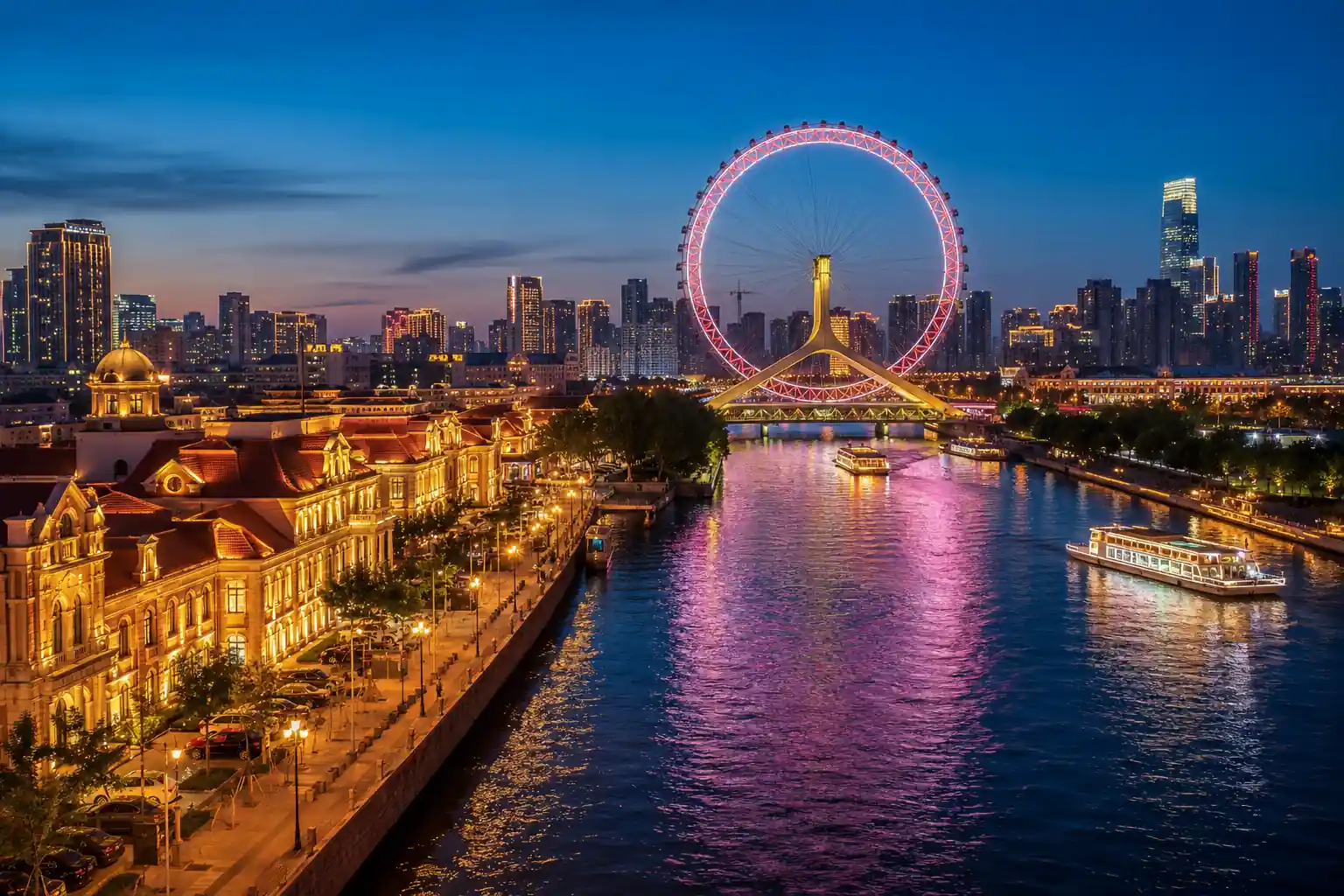
The riverfront gives the quickest sense of Tianjin: a treaty-port skyline, broad river views, and an evening city-break rhythm.
Suggested routes
Itineraries for Tianjin
Italian Style Town is useful for a second-day walk when you want restored concession architecture, cafes, and an easy evening area.
Wikimedia Commons
1 day
Architecture and river snapshot
Best for a Beijing side trip or a short standalone stop. Keep the route central and finish on the Haihe after dark.
1Five Great Avenues in the morning
2Porcelain House and central Heping streets around midday
3Ancient Culture Street in the afternoon
4Haihe river walk and Tianjin Eye viewpoints in the evening
2 days
First-timer Tianjin
Enough time to balance concession architecture, traditional-style streets, and a more relaxed food pace.
1Day 1: Five Great Avenues, Porcelain House, Haihe riverfront, Tianjin Eye after dark
2Day 2: Ancient Culture Street, Queen of Heaven Palace, Italian Style Town, slow dinner or drinks by the river
3Add Tianjin Museum or a longer cafe break if weather turns poor
3-4 days
Tianjin plus a side extension
Use the extra time for breakfast culture, slower neighborhood walking, and one deliberate side trip instead of forcing more central landmarks.
1Day 1: Five Great Avenues and Heping architecture loop
2Day 2: Ancient Culture Street, Haihe riverfront, Italian Style Town
3Day 3: Choose Binhai New Area for a modern contrast or stay central for museums and food
4Day 4: Take a side trip to Beijing or Jizhou rather than repeating central river walks
Neighborhoods
Best Areas to Explore
Five Great Avenues
This is Tianjin's strongest architecture district: a leafy former concession grid in Heping District with villas, former residences, and a slower pace than the main commercial center. It is best treated as a walking neighborhood rather than a single attraction, with time for side streets and short cafe stops.
Munan RoadMachang RoadMinyuan Stadium area
Haihe riverfront and central station area
The Haihe is the city's main visual spine, tying together bridges, railway-era landmarks, newer riverfront blocks, and night views. This is the easiest part of Tianjin to use for a first evening, especially if you arrive by train and want a simple route with skyline payoff.
Jiefang BridgeJinwan PlazaTianjin Eye viewpoints
Ancient Culture Street and old Nankai quarter
This is the clearest traditional-style stop in central Tianjin, built around a pedestrian street, temple gates, souvenir lanes, and the historic Queen of Heaven Palace. It is more useful for texture, snacks, and a short heritage walk than for half-day museum-style depth.
Ancient Culture StreetQueen of Heaven PalaceHaihe-side old quarter lanes
Italian Style Town and Hebei riverbank
The former Italian concession has been remade into a compact restaurant, cafe, and nightlife district, but the main value for travelers is still the street pattern and European-style facades. It pairs well with the river and central station area, especially late in the day.
Marco Polo SquareItalian concession streetsRiver walks toward Jiefang Bridge
What to see
Top Sights
Five Great Avenues
Tianjin's best-known former concession district, with more than two hundred preserved buildings across a grid of wide, tree-lined streets. It is the clearest place to understand the city's treaty-port history without needing to enter many individual museums.
Go in mild weather and treat it as a walk, not a checklist. One or two streets done well are better than racing the whole district.
Ancient Culture Street
A pedestrian heritage street on the west bank of the Hai River, built in Qing-style form around temple gates, kiosks, and the Queen of Heaven Palace. It works best as Tianjin's traditional-texture stop rather than as a shopping destination alone.
Arrive earlier in the day, look inside the temple complex, and treat the souvenir strip as secondary.
Tianjin Eye and the Haihe
The 120 m ferris wheel mounted on Yongle Bridge is the city's best-known modern landmark and a strong anchor for riverfront night views. Even if you do not ride it, the structure helps frame one of Tianjin's most rewarding evening walks.
Check current operating and ticket rules before going, and remember that a riverbank view can be more rewarding than queueing in poor visibility.
Italian Style Town
A restored cluster of streets in the former Italian concession, now filled with restaurants, bars, and photogenic facades. It is less about deep historical interpretation than about seeing how Tianjin's concession landscape has been reworked for present-day city leisure.
Come in late afternoon and stay into the evening if you want the area at its most lively, but choose weekday mornings if architecture matters more than atmosphere.
Porcelain House
A former colonial-era building turned museum and covered in porcelain fragments, ceramics, and decorative mosaics by its current owner. It is unusual, visually dense, and easy to pair with a wider Heping District architecture walk.
Treat it as a short stop rather than the centerpiece of the day; for many travelers, the exterior is the main reason to come.
Getting around
Transport Notes
Arriving by air
Tianjin Binhai International Airport is about 15 km east of the urban area. Metro Line 2 links the airport directly with Tianjin Railway Station, and Beijing Daxing can also work as an alternative arrival airport if flight options are better.
Arriving by train
Tianjin Railway Station is the most convenient arrival point for many visitors and sits directly on the Beijing-Tianjin intercity line. Tianjin West is also useful for wider high-speed rail routes, while Beijing South to Tianjin can be as fast as about 30 minutes.
Getting around
The metro is the easiest way to make cross-city jumps, especially between the airport, railway station, and major sightseeing districts. Once you reach areas like Five Great Avenues, Ancient Culture Street, or the Haihe, walking is usually the better use of time.
Taxis and ride-hailing
Taxis and ride-hailing are helpful for late evenings, short weather-dependent hops, or luggage days. Save destinations in Chinese, and avoid unnecessary cross-river car trips during heavier traffic periods.
Food
What to Eat
Start with breakfast specialties
Tianjin is one of the best cities in China for a practical breakfast round. Look for jianbing guozi, the local style of pancake folded around egg, sauce, and crisp dough, and guobacai, a salty breakfast bowl that is strongly tied to the city. These are better as ordinary local breakfasts than as polished tourist meals.
Build in classic snacks, but keep expectations grounded
Mahua, especially the Tianjin style of fried dough twists, is the city's easiest edible souvenir. Goubuli baozi also belongs to Tianjin's food identity, but brand-name versions can feel more historical than essential, so it is better to treat it as one option rather than the meal to organize a day around.
Use neighborhoods for meals
Ancient Culture Street, the old city side of Nankai, and central Heping all work for flexible snack grazing and casual meals. Italian Style Town is more useful for a convenient evening setting, while the best food moments in Tianjin often come from small breakfast shops and ordinary local stops rather than destination dining rooms.
Go next
Easy Trips from Tianjin
Beijing
The easiest extension, reached by the Beijing-Tianjin intercity railway in about 30 minutes from Beijing South to Tianjin, so the pairing works in either direction.
Binhai New Area
A modern contrast to old Tianjin, with newer waterfront development and rail access from Tianjin Railway Station to Binhai in about 23 minutes on the intercity extension.
Jizhou
Best for a fuller heritage and countryside day, especially if you want Dule Temple and the northern Tianjin side of Great Wall country rather than another urban district.
Keep planning
Useful next pages for Tianjin
Connect this city page with the practical setup decisions most likely to affect arrival, tickets, transport, and daily movement.