Xining is the main gateway to Qinghai Lake and plateau scenery, with Tibetan Buddhist sites, regional food, and rail links toward Tibet.
Suggested stay
1-3 days
Travel style
Plateau Gateway
Best for
Qinghai Lake, temples, plateau routes
Content confidence
Reviewed for practical travel use
Xining city overview, suggested stay, highlights, transport notes, nearby trips, and connected planning guides have been reviewed for practical trip planning.
Use this city page as a planning framework. Confirm current opening hours, ticket windows, transport schedules, and local rules before booking.
Check official sources before booking time-sensitive items.
Planning overview
How to Plan Xining
Xining works best as a practical plateau gateway rather than a checklist city. Come for one or two nights if you want a measured introduction to Qinghai: Hui Muslim food, a major Tibetan Buddhist monastery nearby, and reliable rail or road links toward the lake country and Tibet. Plan lightly on arrival because the city sits above 2,200 m, then use your second day for Kumbum Monastery or a longer regional outing.
Kumbum MonasteryQinghai Lake routeDongguan Mosque
Best suited for
Qinghai and Tibet gateways
Hui and Tibetan cultural overlap
Rail travelers heading west
Low-key museum and food stops
Best time to visit
Late spring to early autumn is the easiest window, with cool to mild temperatures and the strongest conditions for regional side trips. July and August are comfortable in the city but also the wettest months, while winter is dry, sunny, and sharply cold, better for a short stop than for a sightseeing-heavy stay.
Stay near Xiguan Street, Xinning Square, or the railway station depending on whether you prioritize museums and food or an early departure.
Treat your first half day as an acclimatization block: Xining is high enough that a slow start is often smarter than forcing a long outing.
Use public buses for cheap cross-town moves and taxis for short hops; there is no metro, and most central trips are not far.
Do not combine Kumbum Monastery, Qinghai Lake, and a full city day into one rush plan unless you are on an organized day tour.
The city sits in a river valley at the edge of the plateau, which helps explain why it works so well as a transport and acclimatization base.
Suggested routes
Itineraries for Xining
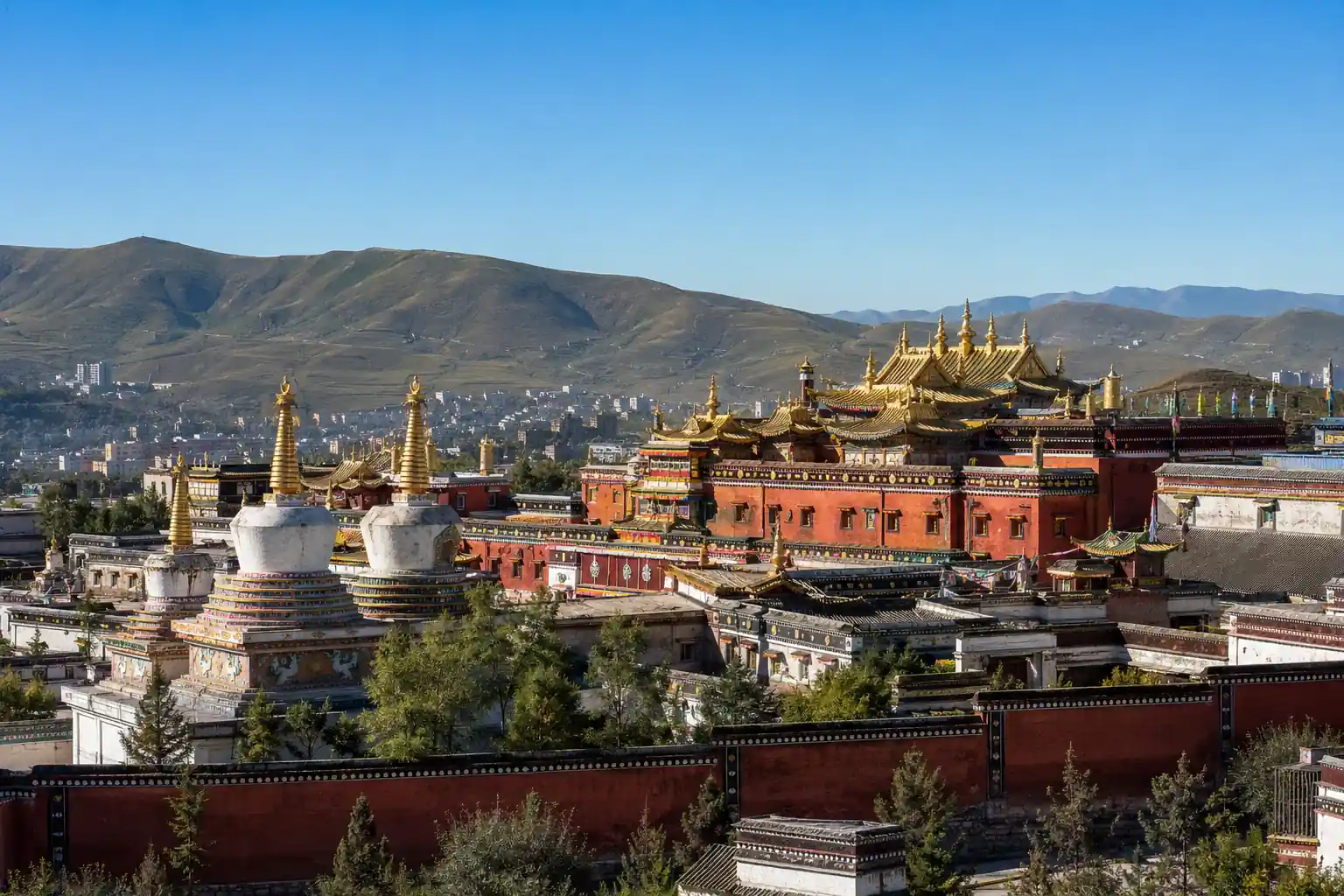
A hillside view makes it easier to understand Xining's compact core, surrounding slopes, and why many visitors use it as a staging city rather than a sprawling urban break.
Wikimedia Commons
1 day
Acclimatization and city essentials
Best if Xining is a transit stop and you want one balanced day before moving on to the plateau or lake country.
1Qinghai Provincial Museum in the morning
2Xinning Square and a slow lunch nearby
3Dongguan Mosque area in the afternoon
4Hui food dinner around the eastern core
2 days
City plus monastery
The most useful first-timer plan: one day inside Xining, one day for the city's major cultural excursion.
1Day 1: Qinghai Provincial Museum, Ma Bufang Mansion, Dongguan Mosque, evening food walk
2Day 2: Kumbum Monastery with a slower return to the city
3Add Beishan or a tea break instead of trying to force another long excursion
3-4 days
Regional gateway plan
Use the extra time for one serious Qinghai side trip instead of overloading the city center itself.
1Day 1: Central Xining, museum district, and Dongguan Mosque quarter
2Day 2: Kumbum Monastery and an easier evening back in town
3Day 3: Qinghai Lake, Guide, or Tongren depending on weather and interests
4Day 4: Buffer day for altitude, rail departure, or another regional road trip
Neighborhoods
Best Areas to Explore
Xiguan Street and Xinning Square
This is the most convenient central base for first-time visitors who want museums, straightforward bus links, and easy restaurant choices without depending on long taxi rides. It is the practical side of Xining rather than the most atmospheric side, but that usually makes for a better first day.
Qinghai Provincial MuseumQinghai Art MuseumXinning Square
Dongguan Mosque and the eastern core
The city's strongest street-level character is around Dongguan Mosque, where Xining's Hui Muslim identity becomes most visible. This is the right part of town for mosque views, everyday food, and a more local feel than the museum district.
When you need air, views, and a break from traffic, the hills north of the center give Xining some breathing room. This area works best as a short morning or late-afternoon add-on rather than a full-day destination.
Technically outside the central city, this is the area most visitors mean when they talk about Xining sightseeing. It deserves its own half day or more, because the monastery is the clearest cultural reason to spend extra time here.
Kumbum MonasteryHuangzhong district approachMonastery forecourts and halls
What to see
Top Sights
Kumbum Monastery
Founded in 1560 on the site associated with Tsongkhapa's birthplace, Kumbum is one of the major Gelug monasteries outside the Tibet Autonomous Region. For many travelers, it is the clearest reason to give Xining a full extra day rather than treating it as only a transport stop.
Go with enough time to move slowly through the complex; this works better as a dedicated half-day or day trip than as a rushed add-on.
Dongguan Mosque
Dongguan Mosque is one of the city's key historic religious landmarks and the most direct expression of Xining's Hui Muslim character. The surrounding streets matter almost as much as the mosque itself, because they connect architecture with everyday eating and local movement.
Combine it with a food-focused walk rather than treating it as a stand-alone stop.
Qinghai Provincial Museum
This is the best first indoor stop if you need historical and ethnic context before moving deeper into Qinghai. It gives useful background on the Silk Road, regional trade, and the province's relationship with Tibetan and Muslim communities.
Use it on arrival day or poor-weather mornings, and check Monday closure rules before you go.
Ma Bufang Mansion
The former residence of Ma Bufang adds a very different layer to Xining: Republican-era power, the Ma clique, and the city's modern political history. It is less visually grand than Kumbum, but more useful if you want context for Qinghai in the first half of the 20th century.
Pair it with Dongguan Mosque or the museum district rather than making a separate cross-town journey just for this stop.
Getting around
Transport Notes
Arriving by air
Xining Caojiapu International Airport serves Xining and Haidong, about 15 km south-southeast of the city. The airport bus runs to the long-distance bus station next to the railway station, with the ride taking about 30 minutes.
Arriving by train
Xining Railway Station is the key rail arrival point and the start of the Qinghai-Tibet Railway. It handles both conventional and high-speed traffic, making the city a practical gateway for routes deeper into Qinghai and onward toward Lhasa.
Getting around
There is no metro, so buses and taxis do most of the work. Bus no. 1 is especially useful through the center and to the train and bus station area, and standard city bus fares are low.
Taxis and ride-hailing
Taxis are straightforward for short hops, especially when you do not want to decode bus routes after a long train ride. Metered fares usually start around ¥8, though some drivers may negotiate late at night.
Food
What to Eat
Start with Hui Muslim staples
Xining's main minority groups shape much of the local food scene, especially the Hui. In practical terms, that means spicy noodles, lamb kebabs, and flatbread show up everywhere and usually make the safest first meal after arrival. The Dongguan Mosque area and the streets around Shuijing Xiang Bazaar are better hunting grounds than trying to chase one famous restaurant.
Use the city to sample plateau comfort food
Gan ban noodles, momos, and simple Tibetan-style noodle shops are all useful Xining staples. This is a good city for simple, warming meals rather than polished destination dining. If you want something sweet or cooling, local yogurt is a common regional note worth trying.
Keep expectations practical, not ceremonial
More formal local specialties include dishes such as Feng'er Liji, Danbai Chongcao Ji, and Jinyu Facai, but many travelers will encounter Xining first through everyday noodle shops and Muslim grills. That is usually the right approach. Eat locally in the neighborhoods you are already visiting instead of crossing town for a banquet-style dish you may only see on a menu.
Go next
Easy Trips from Xining
Qinghai Lake
The region's classic outing, best for big sky, open grassland feeling, and birdlife in season. Tourist buses from Xining can cover Qinghai Lake as part of a one-day route.
Guide
A manageable Yellow River side trip south of Xining, reached by buses from Xining West Bus Station in about 1.5 hours. It works well when you want scenery and a smaller county-town pace rather than another monastery stop.
Tongren
A stronger cultural extension if you want Tibetan monastery atmosphere and thangka traditions beyond Xining itself. Buses from Xining usually take about 4 hours.
Keep planning
Useful next pages for Xining
Connect this city page with the practical setup decisions most likely to affect arrival, tickets, transport, and daily movement.

.jpg?width=1280)

