Yinchuan is a compact northwest city with Western Xia history, desert-edge landscapes, Helan Mountain sites, and emerging wine tourism.
Suggested stay
1-2 days
Travel style
Desert Edge
Best for
History, desert scenery, Ningxia routes
Content confidence
Reviewed for practical travel use
Yinchuan city overview, suggested stay, highlights, transport notes, nearby trips, and connected planning guides have been reviewed for practical trip planning.
Use this city page as a planning framework. Confirm current opening hours, ticket windows, transport schedules, and local rules before booking.
Check official sources before booking time-sensitive items.
Planning overview
How to Plan Yinchuan
Yinchuan works best for travelers who want northwest China without committing to a long overland trip. The city combines Western Xia history, Hui Muslim influences, dry-climate urban ease, and quick access to archaeological or desert-edge sites west and east of town. Do not plan it as a dense big-city checklist. One day usually covers the old city and museum core; a second day is what makes the trip worthwhile, whether you choose the Western Xia mausoleums, Helan Mountain rock art, or Shuidonggou.
Western Xia TombsHelan MountainShuidonggou
Best suited for
Western Xia history
Hui Muslim food culture
Dry-climate city breaks
Archaeology and edge-of-desert routes
Best time to visit
Spring and autumn are the easiest seasons for most travelers, with clearer conditions for outer sites and more comfortable walking in the city. Summer is hot, sunny, and relatively dry rather than humid, so it still works well if you start western excursions early. Winter is cold and exposed, but clear days can still suit museums, pagodas, and shorter urban sightseeing.
Stay in Jinfeng or between the old city and new town if this is your first visit; outer sights are spread out enough that a central-but-modern base helps.
Confirm transport for western and eastern excursion sites the day before, especially if you are relying on tourist buses instead of a car or ride-hailing.
Expect strong sun, dry air, and bigger day-night temperature swings than in eastern China, even outside peak summer.
Keep one indoor fallback such as Ningxia Museum in reserve for windy or dusty weather, because Helan-side outings are less rewarding when visibility drops.
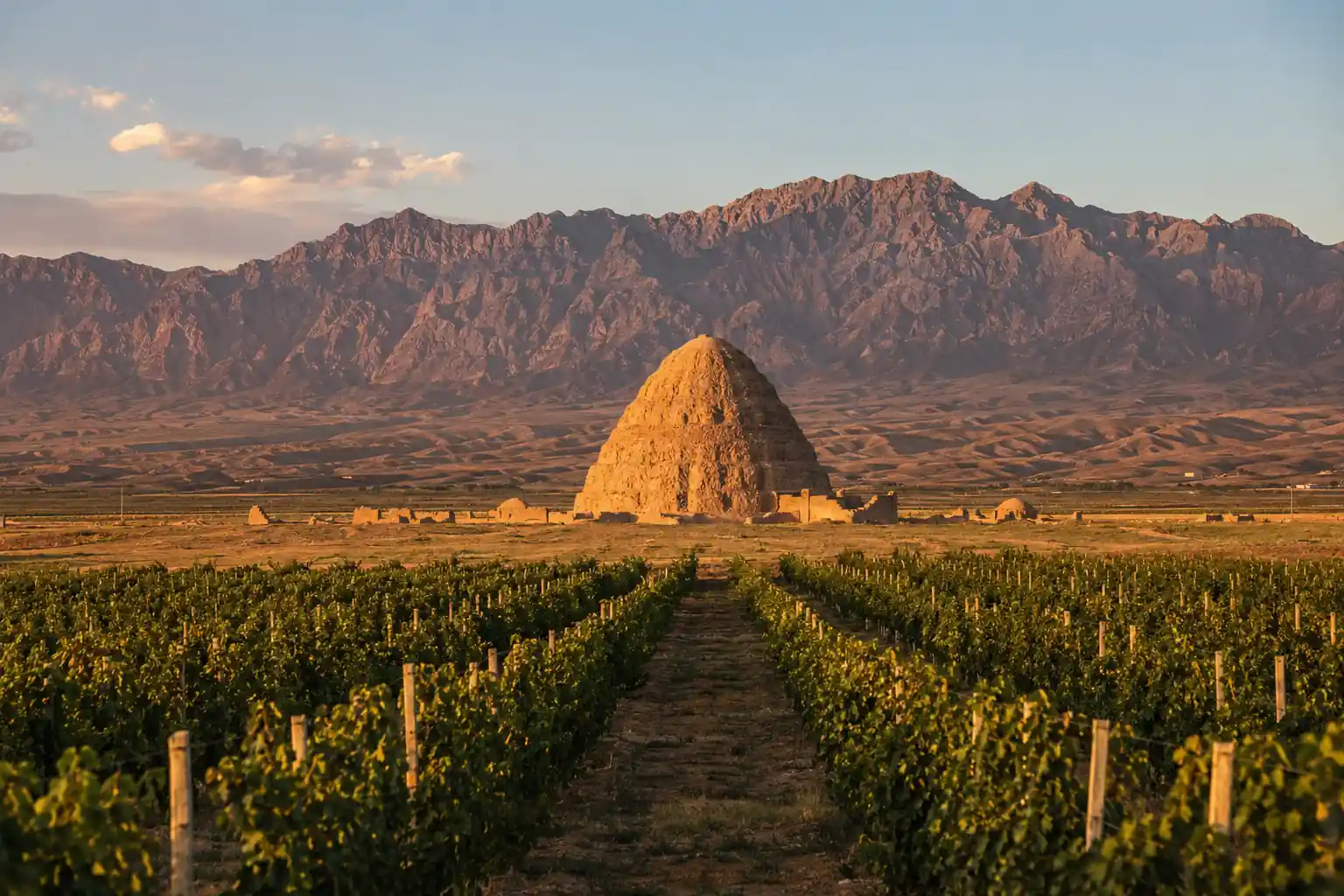
This photo shows the Western Xia mausoleums against the Helan foothills, the clearest reason many travelers make time for Yinchuan beyond the city center.
Suggested routes
Itineraries for Yinchuan
This photo shows how quickly Yinchuan opens into older landscapes once you leave the built-up districts for the Helan Mountain side.
Wikimedia Commons
1 day
City history without long transfers
Best if you only have one full day and do not want to spend too much of it on outer-site logistics.
1Chengtian Temple Pagoda and the old-city core in the morning
2Yuhuang Pavilion area and a relaxed old-city lunch
3Ningxia Museum in the afternoon
4Haibao Pagoda Temple or a Hui dinner district in the evening
2 days
City plus the western essentials
The most balanced first visit: one day for urban context, one day for the historical landscape that makes Yinchuan distinctive.
1Day 1: Old City, Chengtian Temple Pagoda, Ningxia Museum, and an evening food walk
2Day 2: Western Xia mausoleums and Helan Mountain rock art, with transport arranged in advance
3If weather is poor, keep the museum and pagodas, then postpone the western side
3-4 days
Yinchuan as a Ningxia base
Use the extra time for both major excursion belts instead of stretching the urban core too thin.
1Day 1: Old City, Chengtian Temple Pagoda, Yuhuang Pavilion, and a Hui-style dinner
2Day 2: Western Xia mausoleums and Helan Mountain side sites
3Day 3: Shuidonggou and the eastern corridor
4Day 4: Add a Helan foothill wine route, a slower museum day, or continue onward deeper into Ningxia
Neighborhoods
Best Areas to Explore
Old City and Xingqing core
This is the part of Yinchuan that feels most anchored in the city's older rhythm, with pagodas, civic landmarks, mosque areas, and easier street-level wandering. It is not a preserved old town in the Jiangnan sense, but it is still the most useful place for understanding Yinchuan as a historical regional capital.
The newer western side around wider roads, newer hotels, malls, and Ningxia Museum is the easiest base for many first-time visitors. It does not carry the same heritage weight as the old city, but it is efficient, comfortable, and well placed for rail arrivals and westbound day trips.
Ningxia MuseumModern hotel districtsEasy access toward Yinchuan Railway Station
Western excursion belt toward the Helan Mountains
West of the built-up city is where Yinchuan becomes a serious history and landscape stop. The route toward the Helan foothills holds the Western Xia mausoleums, prehistoric rock art, and some of Ningxia's wine-country roads, so this is the side to prioritize if you have a second day.
Western Xia mausoleumsHelan Mountain rock artHelan foothill routes
Eastern corridor toward Lingwu and Shuidonggou
The eastern side is less about urban atmosphere and more about archaeology, airport access, and longer half-day excursions. Go here when you want Shuidonggou or when your Yinchuan stay is really part of a wider Ningxia route rather than a city-only break.
ShuidonggouHedong airport sideLingwu connections
What to see
Top Sights
Western Xia mausoleums
This royal necropolis west of Yinchuan is the city's most important historical site and the clearest reminder that Yinchuan was once the capital of the Western Xia. It is less about ornate surviving buildings than about scale, setting, and historical imagination, with the Helan Mountains in the background.
Treat it as a dedicated half-day stop and pair it with other western-side sites rather than trying to squeeze it into a city-only morning.
Chengtian Temple Pagoda
The old central pagoda is the easiest heritage stop to fit into a short Yinchuan stay. It gives you architecture, a manageable garden setting, and one of the most useful overview points for understanding how the old city sits within the wider urban plain.
Go on a clear day if possible, because the climb matters most for the city view rather than for a large temple complex.
Haibao Pagoda Temple
North of the city center, Haibao Pagoda Temple is a calmer Buddhist stop with a longer religious history than its current Qing-era reconstruction suggests. It works well when you want a second pagoda without repeating exactly the same old-city feel as Chengtian Temple.
Use it as a lighter urban half-day, especially if you want something historical without committing to a long western excursion.
Helan Mountain rock art
These petroglyphs on the Helan Mountain side push Yinchuan's story far beyond dynastic city history and into much older human presence in the region. The site is most rewarding for travelers who like archaeology, landscape context, and the feeling of leaving the city behind quickly.
Arrange transport in advance and give it enough time; it is better as part of a western-side route than as an improvised add-on.
Shuidonggou
Shuidonggou is known as China's earliest Paleolithic site and makes sense as Yinchuan's eastern counterweight to the Tangut-heavy western monuments. It is both an archaeological site and a managed excursion area, so it suits travelers who want something broader than a single temple or museum stop.
Keep it for a separate half day or full day on the eastern side rather than trying to combine it with too much urban sightseeing.
Getting around
Transport Notes
Arriving by air
Yinchuan Hedong International Airport sits about 25 km southeast of the city. It is practical for domestic arrivals, and the airport area also has rail access, but most travelers still finish the last stretch into town by airport bus, taxi, or ride-hailing.
Arriving by train
Yinchuan Railway Station is on the newer western side of the city rather than in the old center. Pick a hotel with easy taxi access if you are arriving by train, because the old city and outer excursion routes sit in different directions.
Getting around
City buses are cheap and useful for straightforward urban hops, but most visitors will combine short taxi or ride-hailing trips with walking. The main issue is not inner-city distance so much as the fact that Yinchuan's most important sights are split between the old city, the new town, and outer excursion corridors.
Taxis and ride-hailing
Taxis and ride-hailing are the simplest way to bridge gaps between pagodas, museum stops, and your hotel. For remote sites such as the western mausoleums or eastern archaeology parks, make sure you have a clear return plan instead of assuming an easy ride back.
Food
What to Eat
Start with Hui and northwest staples
Yinchuan is a good place to focus on the overlap between Hui Muslim food culture and broader northwest wheat-and-lamb cooking. Look for hand-pulled noodles (lamian), roast lamb skewers (yangrou chuan), flatbreads, and simple mutton soups rather than expecting a refined banquet city. The flavors are usually direct, savory, and shaped more by grain, meat, and dry climate than by heavy sauces.
Use old-city streets for flexible meals
The most useful eating strategy is to stay around the older urban core and Hui-majority food streets, where you can build a meal from noodles, grilled items, cold dishes, and snacks without overplanning. This works better than crossing modern districts for one named restaurant, especially on a short stay.
Add one modern Ningxia angle
Yinchuan is also a reasonable place to sample the newer side of Ningxia, especially wine from the Helan foothills and more polished dining in modern districts. A balanced food day here can move from a very plain Hui lunch to a modern dinner list that reflects how the region has been repositioning itself in recent years.
Go next
Easy Trips from Yinchuan
Helan foothills route
The easiest non-urban extension from Yinchuan, combining the Western Xia mausoleums, rock art, and some of Ningxia's wine-country roads on the city's western side.
Lingwu and Shuidonggou
An eastern-side day trip focused on archaeology and open landscapes rather than city life, and a natural fit if your Yinchuan stay is history-first.
Zhongwei
A stronger onward extension deeper into Ningxia, better as an overnight or committed long day if you want bigger desert-and-Yellow River scenery beyond Yinchuan.
Keep planning
Useful next pages for Yinchuan
Connect this city page with the practical setup decisions most likely to affect arrival, tickets, transport, and daily movement.