01
Choose by friction, not habit
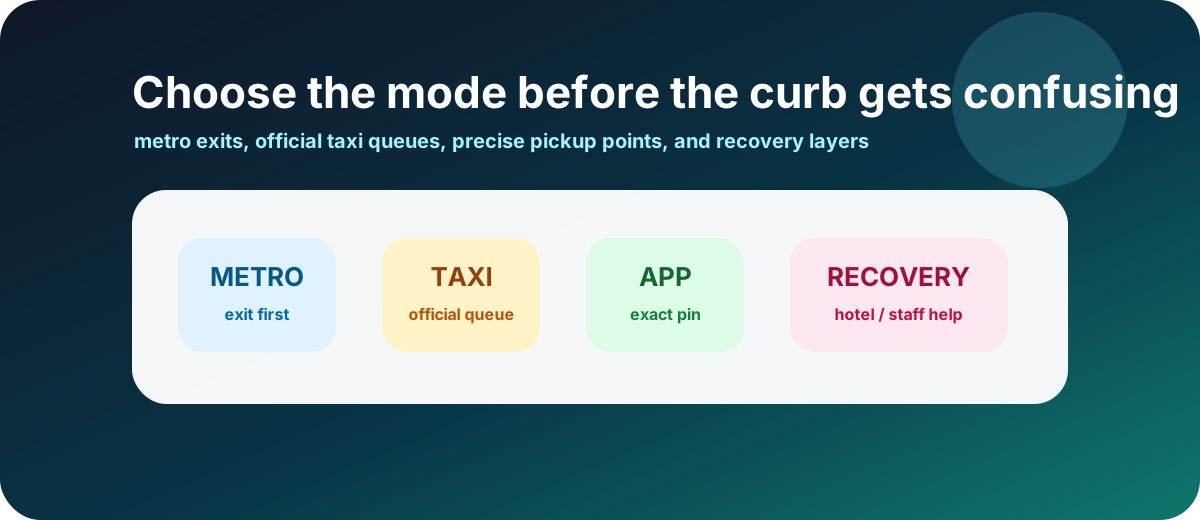
Metro is usually the cleanest cross-city option; taxis help with luggage, late nights, heat, rain, children, and final-door convenience; ride-hailing helps when you can pin the exact pickup and destination.
City transport guide
Moving around Chinese cities is easy when the system is matched to the moment. Use metro for predictable cross-city movement, taxis for official door-to-door recovery, and ride-hailing when you can control the pickup point, destination, and payment.
Page map
01
Metro is usually the cleanest cross-city option; taxis help with luggage, late nights, heat, rain, children, and final-door convenience; ride-hailing helps when you can pin the exact pickup and destination.
02
A correct metro line can still fail if you leave from the wrong exit. Chinese stations can be huge, and the last 500 metres can involve underpasses, malls, overhead roads, or the wrong side of an avenue.
03
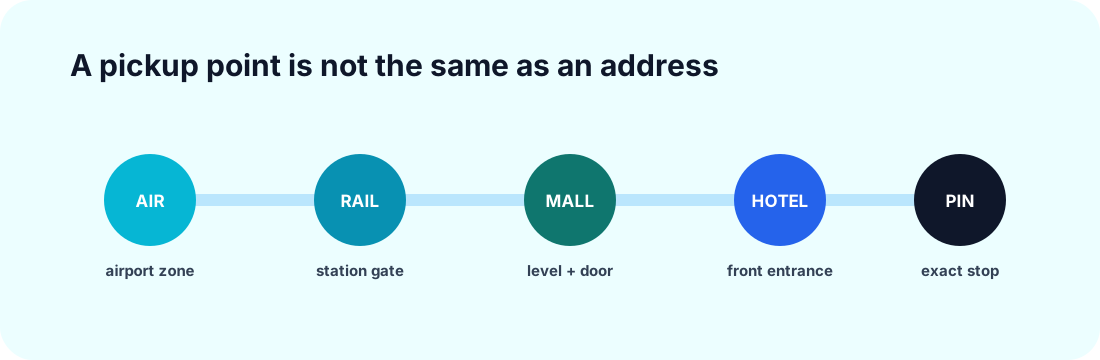
Airports, railway stations, malls, and attractions often have designated pickup zones. A broad address is less useful than a precise pickup point, map pin, and Chinese destination.
04
When apps, data, payment, or language fail, use the official taxi queue, hotel front desk, metro service desk, or a staffed venue instead of improvising at the curb.
Mode decision
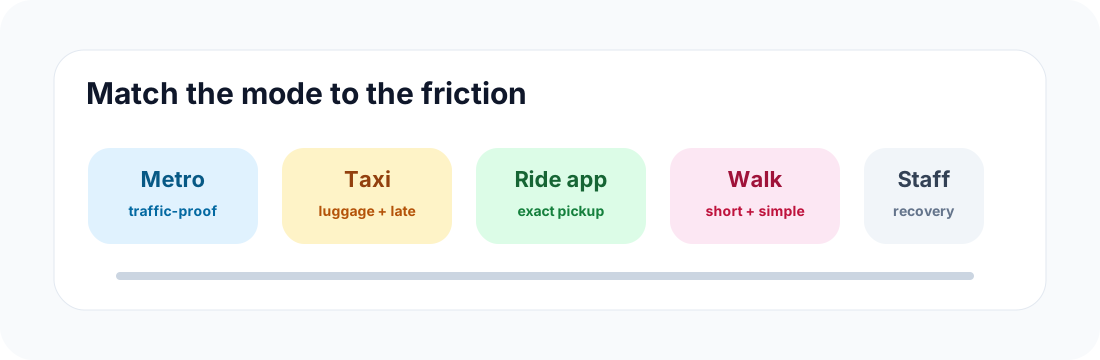
Use for: Long cross-city rides, rush-hour traffic avoidance, budget trips, predictable tourist routes, airport lines when luggage is manageable.
Avoid when: Very late arrivals, heavy luggage with many transfers, mobility needs without confirmed lifts, or trips where the final exit is unclear.
Use for: Airport and railway station arrival, bad weather, luggage, children, seniors, late night, hotel-to-door trips, or when ride-hailing pickup is confusing.
Avoid when: Unmarked cars, touts near transport hubs, drivers who refuse the meter or cannot confirm the destination clearly.
Use for: Door-to-door city trips with a saved destination, hotel pickups, restaurant departures, off-metro areas, and routes where you can follow a live map.
Avoid when: Complex airport or station pickup zones you cannot find, weak data, payment problems, or places where traffic rules prevent stopping.
Use for: Neighbourhood exploration, short hutong or old-town routes, riverside areas, and the final leg after metro.
Avoid when: Wide road crossings, extreme heat, heavy rain, large intersections, luggage days, or map routes that hide stairs and underpasses.
Use for: When you need a taxi called, a Chinese address written, a pickup point explained, or a driver contacted in Chinese.
Avoid when: Leaving without the hotel card, phone number, and Chinese address when you know you may return late.
Metro setup
Many city metro systems support app-based QR rides, local transport cards, ticket machines, and sometimes foreign-card visitor options depending on city and station. Do not discover the payment flow during a morning rush.
Use the exact station and exit letter or number. The exit can decide whether the walk is five minutes or an unpleasant detour across a major road.
Metro systems are reliable, but not 24-hour. Late dinners, concerts, airports, and train arrivals need a taxi or ride-hailing backup after the final train.
Bag checks are normal in many systems. Peak-hour platforms, transfer corridors, and airport lines can slow you down more than the route planner suggests.
If ticketing, QR entry, a station name, or a transfer is confusing, ask at the service desk before you enter the wrong gate or exit the paid area.
Save the station name, line color, transfer station, exit, and hotel return route so a weak signal underground does not strand you.
Station exits
Check the target exit on the map, not just the station. If the destination is a hotel, mall, museum, or old street, look for the exit closest to the entrance you actually need.
Follow line numbers, colours, and direction signs calmly. Large interchanges can involve long walks; do not assume every transfer is a two-minute platform hop.
Confirm the exit letter or number again. If you exit the wrong side of a major road, the fix can be stairs, overpasses, underpasses, or another ticketed entry.
Pause and let the map settle. Tall buildings, malls, and underground exits can make your phone direction spin for the first few seconds.
Show the Chinese place name to station staff, security, or a nearby shop. A simple written address beats repeated English explanations.
Ride-hailing
Set up the ride-hailing app, payment method, phone access, and language settings while you still have stable Wi-Fi. Test a simple ride before relying on it after midnight.
Pin the hotel entrance, mall gate, airport pickup zone, or restaurant frontage. Do not rely on a broad street address when cars cannot legally stop everywhere.
Airports, railway stations, and large malls may route ride-hailing cars to specific floors, gates, parking areas, or zones. The app pin is not always the curb in front of you.
If the driver calls or messages, send the Chinese pickup point, hotel name, or a simple “I am at Gate 3” style message. Long translated paragraphs make confusion worse.
Check plate number, car model, driver name, and pickup point before entering. If something does not match, cancel or ask venue staff for help.
If the pickup zone is too confusing, the driver cannot stop, or mobile data fails, walk to the official taxi queue or hotel desk instead of chasing the car across roads.
Official taxis
Follow signed taxi ranks inside the transport hub. Avoid people who approach you offering a ride before the queue, especially if the price is negotiated before you see the car.
Use the hotel name, full Chinese address, phone number, and map pin. English hotel names, attraction nicknames, and neighbourhood names can be ambiguous.
In a normal taxi, the meter should be used. If a driver refuses or offers a vague fixed price, step back and use the official queue, hotel help, or ride-hailing instead.
For lost items, disputes, or reimbursement, a receipt, car plate, ride time, pickup point, and payment record matter more than memory.
Confirm the destination and basic pricing method before luggage goes into the trunk. It is calmer to decline before the ride starts.
Airports, stations, old towns
First move: If metro or airport rail reaches your hotel area directly and luggage is manageable, it can be predictable. If you are tired, late, or carrying heavy bags, use the official taxi queue or pre-planned ride-hailing pickup.
Backup: Save the hotel address in Chinese before landing. Airport Wi-Fi, roaming, payment verification, and pickup-zone signs are not the moment to improvise.
First move: Large rail stations often connect to metro, taxi queues, buses, and ride-hailing areas. Follow the signed exit for the mode you chose before leaving the building.
Backup: If a ride-hailing driver cannot find you, do not keep moving randomly. Stand at a signed gate, taxi zone, or service desk and send that exact location.
First move: Cars may not reach the exact door. Use metro plus walking, a nearby drop-off point, or a taxi to the closest vehicle-accessible gate.
Backup: Ask the hotel or venue for the best Chinese drop-off point, not just the postal address.
First move: Metro exits, underground levels, taxi ranks, and ride-hailing zones can be separated by floors. Use entrance names, gate numbers, and photos when available.
Backup: If lost, go back to a staffed information desk rather than trying to meet a driver from a moving escalator or parking ramp.
First move: Check metro last-train times before dinner. If the metro is closed, use ride-hailing from a well-lit pickup point or ask the restaurant or hotel to help with a taxi.
Backup: Keep the hotel card, phone number, Chinese address, and a backup payment method ready before leaving the venue.
Payment and access
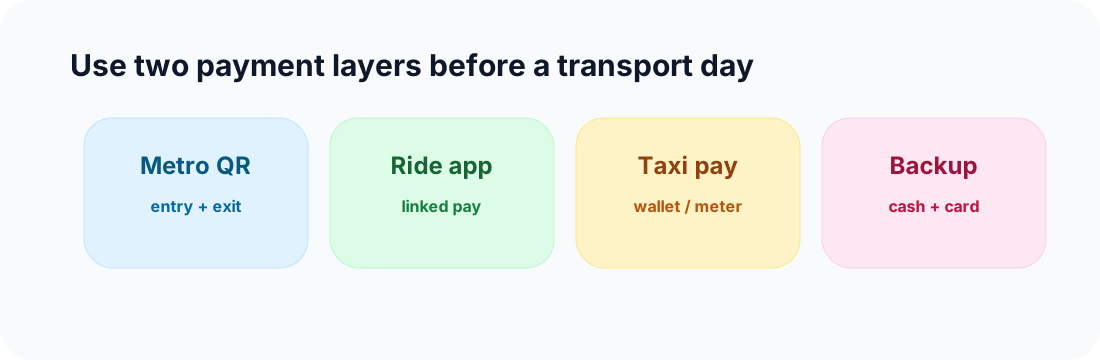
Good when set up correctly, but city systems differ. Keep a screenshot of the destination and enough phone battery to exit the station.
Useful fallback if app payment fails. Machines and service counters vary in language support, so keep station names written down.
Commonly useful, but keep a second wallet, card, or small RMB cash backup for verification failures or small operators.
Usually smoother than paying in the car. Confirm the linked payment works before relying on it for airport or late-night rides.
Carry modest small-denomination RMB as a contingency. It is not the primary system, but it can rescue app, battery, or card problems.
Safety habits
Official taxi ranks, app-confirmed ride-hailing cars, metro service desks, and hotel help are boring in the best possible way.
Match plate, car model, destination, and pickup point. A few seconds of checking is easier than fixing the wrong car later.
You need your phone for maps and payment, but you also need passport and hotel details if the phone dies. Keep offline backups.
If the driver cannot stop legally or safely, move to a signed pickup area, hotel entrance, or taxi queue rather than crossing traffic.
Follow your map during taxis or ride-hailing, especially from airports, stations, or at night. If the route looks wrong, ask calmly or call the hotel.
Station staff, hotel desks, mall information counters, and airport service desks are better helpers than random curbside advice.
Useful phrases
请问地铁站在哪里?
Qingwen ditie zhan zai nali?
Where is the metro station?
请问几号出口最近?
Qingwen ji hao chukou zui jin?
Which exit is closest?
请带我去这个地址。
Qing dai wo qu zhe ge dizhi.
Please take me to this address.
请打表。
Qing dabiao.
Please use the meter.
我在这个上车点。
Wo zai zhe ge shangche dian.
I am at this pickup point.
请帮我叫出租车。
Qing bang wo jiao chuzuche.
Please help me call a taxi.
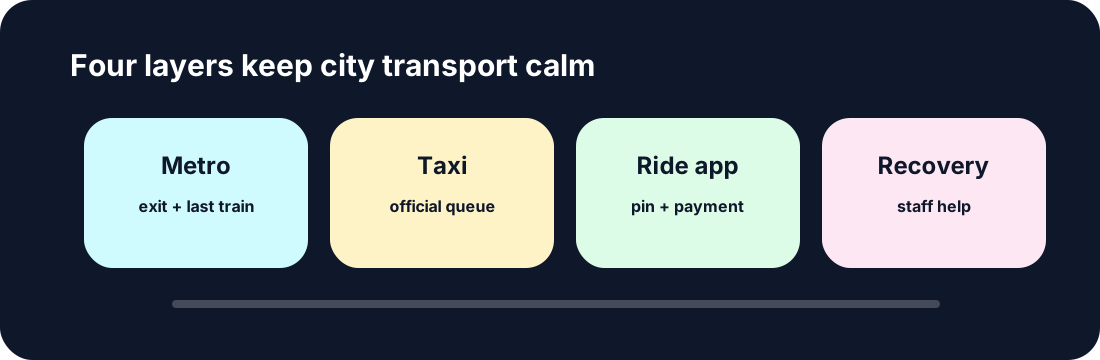
Backup stack
You do not need to master every local transport app. You need enough layers that one failed payment, one closed metro, or one confusing pickup zone does not stop the day.
QR or ticket fallback, station names, line colours, transfer points, first and last train checks, and the exact exit saved before riding.
Official queue, Chinese address, meter expectation, receipt habit, hotel phone number, and enough small cash or second payment option.
App setup, linked payment, precise pickup pin, driver-message phrases, plate check, and a plan for airport or station pickup zones.
Hotel desk, service counter, mall information desk, staffed station gate, offline screenshots, and a calm rule: stop moving before solving confusion.
Troubleshooting
Do not walk blindly across major roads. Check whether there is an underpass, overpass, mall connection, or a safer re-entry route.
Send the pickup point in Chinese, a gate number, or a short translated message. If still stuck, ask nearby staff to answer briefly.
Move to a legal stopping area: hotel entrance, side street, signed ride-hailing zone, or taxi rank. Update the driver with the new point.
Stay calm, try the second wallet or cash backup, and ask for the amount written down. Keep the ride record or receipt.
Use the hotel card and official taxi or ride-hailing from a staffed, well-lit place. Do not negotiate with random drivers outside nightlife or transport hubs.
Follow official signs to the taxi queue or designated ride-hailing zone. If you cannot find it quickly with luggage, the taxi queue is often the safer fallback.
Keep planning
Pick one connected topic and finish the practical setup before adding more places to the itinerary.
Browse all guides ->Important disclaimer
This guide is for general trip-planning information, not legal, medical, financial, or immigration advice. Rules, availability, and provider policies can change—verify time-sensitive details with the relevant official source before you travel or book.
Content confidence
Metro, Taxis & Ride-Hailing has been reviewed for practical visitor use, internal links, route relevance, and clear action steps.
Rules for entry, payment products, bookings, transport, and attractions can change. Verify official or provider sources before relying on time-sensitive details.
Check official sources before booking time-sensitive items.
Plan with cities
Use these city guides to turn the topic into a route, hotel choice, transfer day, or first-stop decision.

Modern, vibrant, and full of surprises.
Open city guide ->
History, culture, and iconic landmarks.
Open city guide ->
Mountain city energy, hotpot, bridges, and dramatic night views.
Open city guide ->
Technology, innovation, and modern vibes.
Open city guide ->