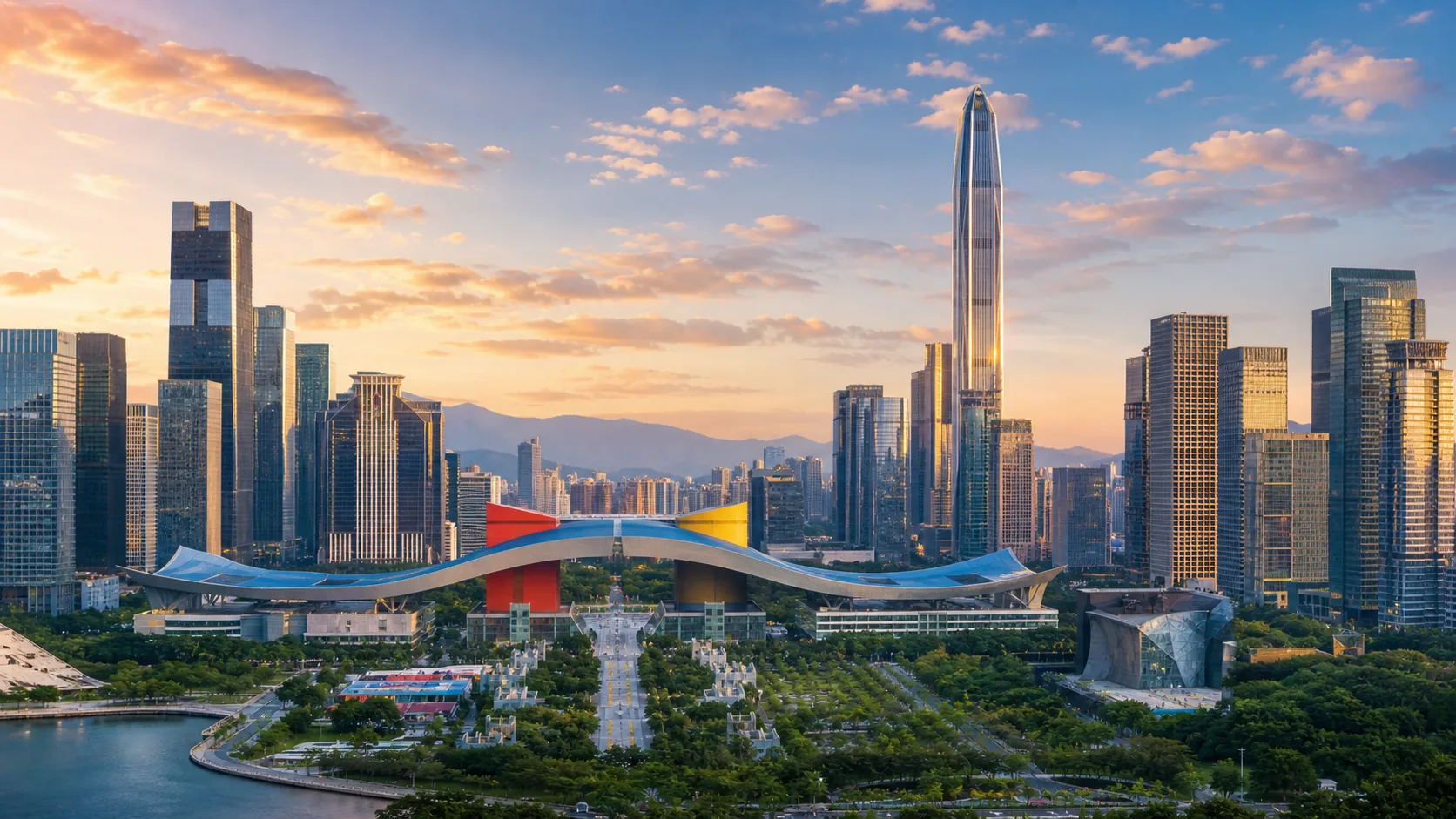
Shenzhen is a clean, modern, fast-moving city that pairs well with Hong Kong or Guangzhou and shows a newer side of urban China.
Suggested stay
1-3 days
Travel style
Rising Star
Best for
Modern China, design, tech, easy Hong Kong pairing
Content confidence
Reviewed for practical travel use
Shenzhen city overview, suggested stay, highlights, transport notes, nearby trips, and connected planning guides have been reviewed for practical trip planning.
Use this city page as a planning framework. Confirm current opening hours, ticket windows, transport schedules, and local rules before booking.
Check official sources before booking time-sensitive items.
Planning overview
How to Plan Shenzhen
Shenzhen works best when you want to see a newer side of urban China: efficient metro lines, young neighborhoods, waterfront parks, design districts, and fast links to Hong Kong and Guangzhou. It is less about one historic core than about contrasting districts, so plan by zones rather than trying to zigzag across the city. For most visitors, one to three days is enough to combine Futian, Nanshan, and either an art stop or an older historic quarter.
Talent ParkOCT LoftNanshan skyline
Best suited for
Hong Kong add-on trips
Contemporary China cityscapes
Design and art districts
Waterfront walks and light hikes
Best time to visit
October to December is usually the easiest stretch, with lower humidity and better conditions for waterfront walks, skyline views, and park time. Spring is workable but damper, while summer is very hot, wet, and typhoon-prone. Winter is mild by northern China standards and still good for city walking unless a cold rain front moves through.
Stay in Futian or Nanshan for a first visit; use Luohu mainly if your trip revolves around Hong Kong border crossings.
Plan each day by district because Shenzhen is long east-west, and cross-city transfers can eat more time than the map suggests.
Keep one evening flexible for a waterfront or skyline walk, since haze, rain, and summer storms change the value of viewpoints.
Choose your Hong Kong crossing before you book trains or hotels, because Luohu, Futian Checkpoint, and Shenzhen Bay serve very different routes.
A skyline view explains Shenzhen quickly: the city is best read through its business districts, evening light, and broad modern corridors.
Suggested routes
Itineraries for Shenzhen
The theme-park side of Shenzhen matters because many domestic travelers still build family trips around OCT and its attractions.
Wikimedia Commons
1 day
Modern Shenzhen snapshot
Best for a Hong Kong add-on or a fast business-trip extension. Keep the route tight and focus on one skyline district plus one cultural stop.
1Lianhuashan Park and Civic Center in the morning
2Lunch and a short walk in Futian or OCT
3OCT-LOFT or Nantou Ancient Town in the afternoon
4Shenzhen Bay or Futian skyline walk in the evening
2 days
First-time essentials
Enough time to combine the civic core, Nanshan, and one older or more local-feeling district without rushing every transfer.
1Day 1: Futian CBD, Lianhuashan Park, evening around Civic Center or Shenzhen Bay
2Day 2: OCT-LOFT, Window of the World area or Nantou Ancient Town, then dinner in Nanshan or Shekou
3Add Luohu or Dafen if you want shopping, studio streets, or a Hong Kong-facing arrival district
3-4 days
Shenzhen with a deeper east-west contrast
Use the extra time to see both the polished SEZ core and the city's older or more peripheral edges instead of repeating malls and towers.
1Day 1: Futian CBD, museums or civic axis, Lianhuashan Park
2Day 2: Nanshan, OCT-LOFT, Shenzhen Bay waterfront
3Day 3: Nantou Ancient Town, Dafen Oil Painting Village, or Luohu depending on your interests
4Day 4: Day trip to Hong Kong or Guangzhou, or go east for coast, beaches, and Hakka-linked areas
Neighborhoods
Best Areas to Explore
Futian CBD and Lianhuashan Park
This is the clearest first introduction to Shenzhen: government axis, major towers, concert halls, malls, and broad avenues that show the city's Special Economic Zone identity. Lianhuashan Park softens the district with a hilltop perspective and gives you a better sense of scale than street level alone.
Lianhuashan ParkCivic CenterPing An Finance Centre
Nanshan, OCT, and Shenzhen Bay
Nanshan is where Shenzhen feels most current: tech campuses, art spaces, family attractions, expat-oriented corners, and long waterfront promenades. It is also one of the easiest districts to turn into a full day because OCT, Shekou, and the bayfront all link well by metro.
OCT-LOFTWindow of the WorldTalent Park and Shenzhen Bay waterfront
Luohu and the older commercial core
Luohu is the classic arrival zone from Hong Kong and still one of the most practical places for rail access, older shopping streets, and dense city energy. It feels less polished than Futian, but that is part of its value if you want a more lived-in contrast to Shenzhen's newer business districts.
Luohu border areaDongmen shopping streetsShenzhen Railway Station zone
East Shenzhen and the older edge of the city
The eastern side gives Shenzhen a different texture: art workshops, old Hakka-linked settlements, beaches, and mountain routes farther from the central skyline. This area is better for repeat visitors or for anyone who wants to see that Shenzhen is more than Futian towers and Nanshan tech offices.
Dafen Oil Painting VillageYantian coastDapeng and eastern hiking or beach routes
What to see
Top Sights
Lianhuashan Park
Lianhuashan Park is one of the easiest places to understand Shenzhen's civic center and skyline in a single visit. The park opened in 1997, covers a large hill-and-garden area in Futian, and is closely tied to the city's reform-era story through the Deng Xiaoping statue on the summit.
Go in the late afternoon if you want both a comfortable uphill walk and a better transition into evening views around Civic Center.
Window of the World
Window of the World is a 1993 theme park in OCT with miniature global landmarks and a distinctly Chinese big-park style of sightseeing. It is not essential for every traveler, but it remains one of Shenzhen's signature visitor draws and explains why the city became a domestic tourism favorite long before many foreign travelers noticed it.
Choose it deliberately: it works best for families, theme-park fans, or travelers curious about Shenzhen's early tourism identity.
OCT-LOFT
OCT-LOFT is Shenzhen's best-known design and creative district, with converted industrial buildings, galleries, cafes, and event spaces in Nanshan. It is one of the most convincing counters to the idea that Shenzhen is only about hardware markets and corporate towers.
Treat it as a slow walk rather than a checklist stop, and pair it with OCT or Shenzhen Bay instead of forcing a same-day cross-city detour.
Nantou Ancient Town
Nantou preserves part of the pre-boom history that most first-time Shenzhen itineraries miss. The town was historically tied to Xin'an County and the older administrative world that existed here long before the Special Economic Zone turned Shenzhen into a modern metropolis.
Visit when you want context rather than spectacle, and combine it with Nanshan stops instead of making a dedicated long journey from the east side of the city.
Shenzhen Bay waterfront and Talent Park
The waterfront in western Shenzhen is one of the city's most useful non-ticketed experiences: broad walking routes, open views toward the bay, and a softer counterpoint to the business skyline. Talent Park is especially practical because it lets visitors combine public space, architecture, and evening light without much logistical effort.
Go near sunset or after dark, and do not over-plan it as a landmark hunt; the value is the walk itself and the changing skyline perspective.
Getting around
Transport Notes
Arriving by air
Shenzhen Bao'an International Airport is on the western side of the city in Bao'an District. It connects into the metro and wider ground transport network, so it works well for both central Shenzhen stays and onward travel across the Pearl River Delta.
Arriving by train
Shenzhen North Railway Station and Futian Railway Station are the main high-speed rail gateways for most visitors. Shenzhen Railway Station in Luohu is still important if you are linking with the Hong Kong border area or older rail corridors.
Getting around
The metro is the default way to cross Shenzhen, and the network is extensive enough that most first-time itineraries can stay metro-first. Line coverage is especially useful between Futian, Luohu, Nanshan, airport corridors, and several Hong Kong border crossings, but walking is still the best tool once you are inside compact areas such as OCT or the waterfront parks.
Taxis and ride-hailing
Taxis and ride-hailing are useful late at night, for luggage, or for awkward last-mile moves in the east and west outer districts. Keep your destination names in Chinese and expect road time to vary sharply during commuter peaks.
Food
What to Eat
Think regional, not only local
Shenzhen is not a classic single-cuisine city in the way Chengdu or Guangzhou is. Its food strength comes from migration: Cantonese soups and roast meats, Chaoshan beef hotpot and seafood, Hakka dishes, and an unusually wide spread of restaurants from across China. A good Shenzhen food day is often about range rather than one canonical signature dish.
Use districts for flexible meals
Futian and Nanshan are the easiest districts for visitors who want reliable restaurant density without losing time in transit. OCT, Shekou, large mall food floors, and commercial blocks around Civic Center all make practical sense when you want to combine sightseeing with simple meal planning.
Seafood and late meals make sense here
Because Shenzhen faces the Pearl River estuary and absorbs so much Guangdong dining culture, seafood is a natural choice, especially when paired with a Nanshan or Shekou evening. The city also suits late dinners better than many heritage-heavy destinations: after a skyline walk, it is easy to move into hotpot, barbecue, Cantonese seafood, or tea-and-dessert stops.
Go next
Easy Trips from Shenzhen
Hong Kong
The most obvious extension: border crossings at Luohu and Futian Checkpoint connect directly into Hong Kong's MTR system, making the two cities easy to pair.
Guangzhou
A natural high-speed rail companion if you want an older southern metropolis, stronger Cantonese heritage, and a deeper food-focused contrast to Shenzhen.
Dongguan
Best for travelers interested in the wider Pearl River Delta manufacturing belt rather than classic sightseeing, and easy to add by rail or road.
Keep planning
Useful next pages for Shenzhen
Connect this city page with the practical setup decisions most likely to affect arrival, tickets, transport, and daily movement.