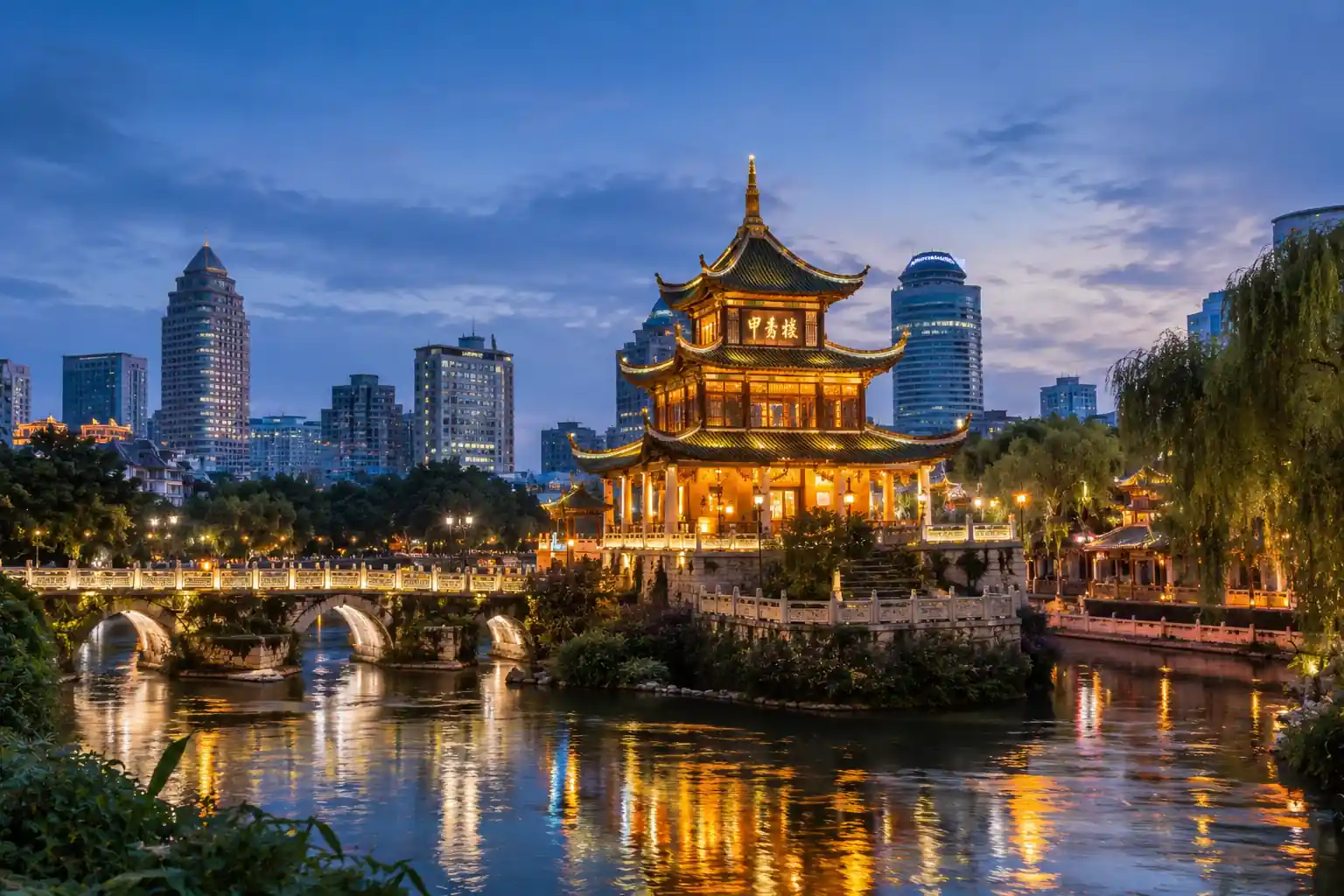
Guiyang is a practical base for Guizhou trips, known for spicy-sour food, karst landscapes nearby, and access to villages and waterfalls.
Suggested stay
1-3 days
Travel style
Gateway
Best for
Guizhou routes, food, ethnic village access
Content confidence
Reviewed for practical travel use
Guiyang city overview, suggested stay, highlights, transport notes, nearby trips, and connected planning guides have been reviewed for practical trip planning.
Use this city page as a planning framework. Confirm current opening hours, ticket windows, transport schedules, and local rules before booking.
Check official sources before booking time-sensitive items.
Planning overview
How to Plan Guiyang
Guiyang works best as both a city break and a staging point for wider Guizhou travel. The city itself is cooler than many lowland Chinese capitals, easier on the budget, and strong on spicy-sour food, hillside parks, and a few historic stops rather than a long checklist of headline monuments. Plan one or two city days around Jiaxiu Pavilion, Qianling, and Huaxi or Qingyan, then use the rest of your time for side trips deeper into the province.
Qianling ParkJiaxiu PavilionQingyan Ancient Town
Best suited for
Guizhou first stops
Spicy-sour food trips
Cooler summer city breaks
Minority culture side routes
Best time to visit
Spring and autumn are the easiest seasons for walking, day trips, and mixed city-plus-countryside planning. Summer is not as brutally hot as many eastern Chinese cities, but it is the wettest period and often cloudy; winter is manageable for urban sightseeing, though it can feel damp and grey.
Stay near Penshuichi, Dashizi, Nanming, or around Guiyang North if you want the easiest mix of food, metro access, and rail connections.
Carry light rain gear and shoes that handle wet pavements well, especially from spring into summer when rain and cloud are frequent.
Use the metro for airport and station transfers, but expect taxis or ride-hailing for outer stops such as Qingyan and some late-night returns.
Treat Guiyang as a base as much as a destination: one or two city days is often enough before moving on to Anshun, Kaili, or other Guizhou routes.
Guiyang makes sense when you see the setting: a large provincial capital folded into hills rather than a flat megacity.
Suggested routes
Itineraries for Guiyang
Qingyan shows the older military-town side of the region and is one of the clearest half-day escapes from central Guiyang.
Wikimedia Commons
1 day
Central city and one classic park
Best for a stopover or a short provincial-capital break. Keep the day compact and city-centered.
1Jiaxiu Pavilion and the Nanming River in the morning
2Dashizi or Penshuichi for a central lunch and street snacks
3Qianling Mountain and Hongfu Temple in the afternoon
4Evening meal focused on sour soup, noodles, or night-market snacks
2 days
Best first visit to Guiyang
Enough time to cover the city's main texture without rushing and still fit one outer district.
3Use spare time for a second central walk or a slower meal-focused afternoon
3-4 days
Guiyang plus Guizhou side trips
This is the most sensible use of a longer stay: keep the city portion lean and spend extra days outside it.
1Day 1: Central Guiyang, Jiaxiu Pavilion, Nanming River, local food
2Day 2: Qianling Mountain, Hongfu Temple, Huaxi or a relaxed urban day
3Day 3: Day trip toward Anshun and the Huangguoshu route, or east toward Kaili
4Day 4: Add Qingyan or continue onward deeper into Guizhou instead of staying only in the city
Neighborhoods
Best Areas to Explore
Central Guiyang and the Nanming River
This is the most useful base for a short stay: old commercial center streets around Dashizi and Penshuichi, the Nanming River, and the city's signature historic pavilion. It is not a preserved old town, but it is the easiest place to combine landmark views, food, and straightforward metro access.
Jiaxiu PavilionDashizi and PenshuichiNanming River walks
Qianling and Yunyan hillside district
Northwest of the center, this is where Guiyang feels greener and less traffic-heavy. Qianling Mountain and Hongfu Temple make it the city's best half-day block when you want forested paths, temple stops, monkeys, and occasional views back over the urban basin.
Qianling MountainHongfu TempleLakeside and hill paths
Huaxi District and Qingyan
South of the city center, Huaxi is the gentler, greener side of Guiyang, useful for slower walks and for reaching Qingyan Ancient Town. This area works well when you want a break from traffic and a more regional, small-town feel without leaving the municipal area.
Huaxi ParkQingyan Ancient TownSouthbound day-trip routes
Guanshanhu and Guiyang North
This is the practical modern district rather than the atmospheric one: newer hotels, wide roads, malls, government buildings, and the main high-speed rail hub. Stay here if logistics matter more than old-city texture, or if Guiyang is mainly your transfer point for wider Guizhou travel.
Guiyang North railway stationModern business district hotelsFast high-speed rail access
What to see
Top Sights
Jiaxiu Pavilion
The best-known landmark in Guiyang, set on the Nanming River and closely tied to the city's visual identity. It gives the center one of its few strongly historic views and is easy to combine with a short river walk and nearby food stops.
Go in late afternoon or early evening, when the pavilion and riverfront work best as a short city walk rather than a stand-alone half day.
Qianling Mountain
An inner-city mountain and park that shows Guiyang at its most locally useful: forested paths, a lake, temple stops, hill views, and the famous resident macaques. It is one of the rare places in a provincial capital where you can shift quickly from traffic to wooded walking.
Do not carry visible snacks in the monkey areas, and wear shoes that cope with damp paths and stairs.
Qingyan Ancient Town
About as close as Guiyang gets to a classic stone-built old-town excursion. Originally a Ming-period military outpost, it is useful for gates, lanes, temples, and a stronger historical atmosphere than central Guiyang itself offers.
Treat it as a half-day or long half-day from the city rather than trying to squeeze it between central stops.
Hongfu Temple
Founded in 1672 on Mount Qianling, this Buddhist temple is the main cultural and religious stop within the park area. It adds depth to a Qianling visit by making the hillside route more than just an urban green space.
Pair it with Qianling Mountain rather than visiting separately, and go earlier if you want a calmer atmosphere.
Huaxi Park
The calmer south-side counterweight to central Guiyang, known more for leisure walking than for grand monuments. It works well when you want a quieter local day before or after continuing to Qingyan or further into southern Guizhou.
Use it on a slower second day, especially if the weather is mild and you do not want another dense central-city schedule.
Getting around
Transport Notes
Arriving by air
Guiyang Longdongbao International Airport lies about 11 km southeast of the city center. Taxis or the airport shuttle can reach downtown in roughly fifteen to twenty minutes in good traffic, and the airport also connects into the city's rail and metro network.
Arriving by train
Guiyang North is the main high-speed rail hub, while Guiyang railway station is more central for conventional trains and older routes. Fast rail links of about 2 hours to Chongqing, 3 hours to Kunming, and around 3 hours to Chengdu make the city a strong inland transfer point.
Getting around
The metro is now a real part of visitor planning rather than a token system: four lines are in operation, and Line 1 is especially useful because it links Guanshanhu, Guiyang North, central districts, Guiyang railway station, and Huaxi-side routes. For short city-center movements, walking still makes more sense than forcing every stop into transit.
Taxis and ride-hailing
Taxis are useful in rain, late at night, or for places that sit awkwardly beyond the metro grid. Keep destination names in Chinese, especially for rail stations, because Guiyang has multiple major stations that are far enough apart to matter.
Food
What to Eat
Start with Guiyang and Guizhou staples
Guiyang is a good introduction to Guizhou's spicy-sour style rather than just straightforward heat. Look first for fish in sour soup (suan tang yu), a representative Guizhou dish built around fermented sour broth, and for siwawa, the thin wrap sometimes called a Guiyang spring roll. For noodles, Huaxi beef rice noodles and changwang noodles are the practical local choices.
Use snack streets and night markets
Guiyang is the kind of city where you can spend days working through Guizhou street foods, especially in evening market areas. This is the right setting for siwawa, tofu snacks, local noodles, pickled vegetables, and small plates that show the province's sourness and chili-heavy dipping style better than a formal restaurant does.
Expect sour as much as spicy
One of the useful distinctions in Guiyang is that the food is not only hot, but sharply sour from fermented broths, pickles, and dipping sauces. If you are cautious, ask for less spice, but do not avoid the sour dishes entirely because they are what most clearly separates Guizhou from Sichuan or Hunan. Minority-influenced dishes and home-style grills add more variety than a checklist of famous restaurants.
Go next
Easy Trips from Guiyang
Anshun and the Huangguoshu route
The easiest classic side trip west of Guiyang: buses to Anshun usually take about 60-90 minutes, and from there many travelers continue toward Huangguoshu Waterfall.
Kaili
Best for access to Miao and Dong villages rather than the city itself; Kaili is reachable from Guiyang by rail or by bus over a few hours and works well as an eastern Guizhou extension.
Zhenyuan
A slower, more atmospheric county-town extension east of Guiyang on the Shanghai-Kunming rail corridor, better as an overnight than a rushed same-day return.
Keep planning
Useful next pages for Guiyang
Connect this city page with the practical setup decisions most likely to affect arrival, tickets, transport, and daily movement.