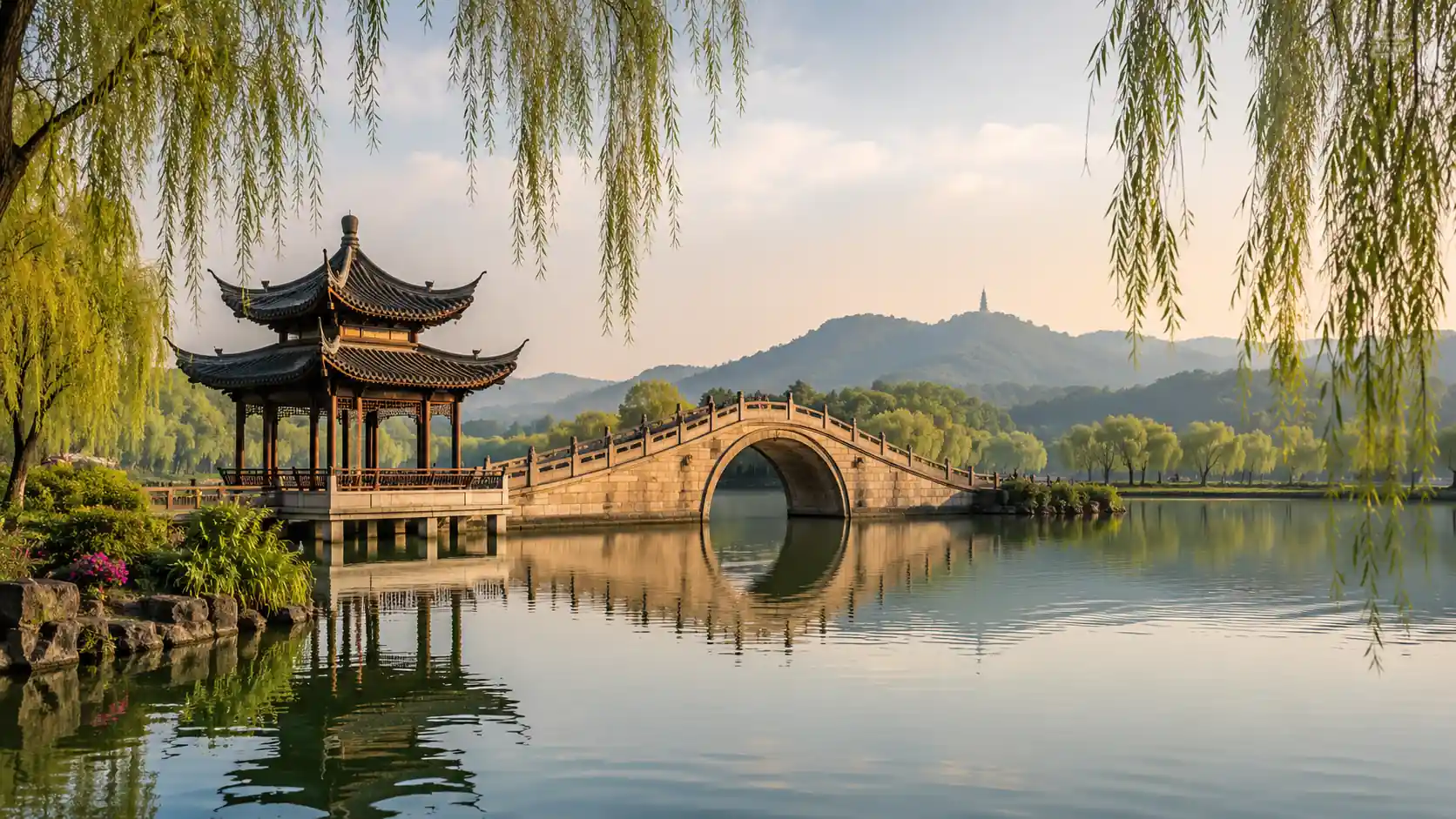
Hangzhou is a scenic city break near Shanghai, shaped by West Lake, Longjing tea villages, temples, and a calmer rhythm than many large Chinese cities.
Suggested stay
1-3 days
Travel style
Scenic
Best for
Nature, tea, slower city breaks near Shanghai
Content confidence
Reviewed for practical travel use
Hangzhou city overview, suggested stay, highlights, transport notes, nearby trips, and connected planning guides have been reviewed for practical trip planning.
Use this city page as a planning framework. Confirm current opening hours, ticket windows, transport schedules, and local rules before booking.
Check official sources before booking time-sensitive items.
Planning overview
How to Plan Hangzhou
Hangzhou works best as a scenic city break rather than a checklist city. Most first-time visits revolve around West Lake, temple hills, and Longjing tea country, with enough urban comfort to make short stays easy. It suits travelers who want a softer pace than Shanghai without giving up good transport or food. Plan by zones, not by isolated pins: one lake day, one hills-and-tea day, and, if you have more time, a wetland, pagoda, or archaeology day.
West LakeLongjing Tea VillageLingyin Temple
Best suited for
Lake and garden scenery
Tea culture and slow travel
Temple and Song-dynasty history
Easy Jiangnan side trips
Best time to visit
Spring and autumn are the easiest seasons for Hangzhou, especially March to May for fresh greenery and tea-season atmosphere, and October to November for cooler walking weather. Early summer is humid and rainy, while July and August are hot enough to make long lake circuits tiring. Winter is chilly and damp, but still workable if you focus more on temples, museums, and shorter outdoor blocks.
Stay on the east side of West Lake or around Wulin if this is your first visit; it keeps the lake, metro, and airport or rail transfers straightforward.
Use the metro for stations and airport runs, but expect taxis or ride-hailing to be more practical for Lingyin, Longjing villages, and evening returns from the hills.
Keep one clear-weather sunset for the lake, especially around Leifeng Pagoda or the south shore.
Start early on weekends and holidays: West Lake, Lingyin Temple, and the tea villages get crowded quickly, and some major sights may require advance ticket checks.
Start with West Lake: it shows why Hangzhou is planned around scenery and walking rather than only landmarks.
Suggested routes
Itineraries for Hangzhou
This image shows the flat-fired Longjing tea that gives Hangzhou one of its clearest cultural identities for visitors.
Wikimedia Commons
1 day
West Lake first impression
Best for a day trip or a short add-on from Shanghai. Keep the route concentrated and save time for a lake sunset.
1West Lake east or north shore in the morning
2Leifeng Pagoda or a partial causeway walk in the afternoon
3Lakeside dinner and evening views after sunset
4Optional short boat ride or tea stop if the weather is clear
2 days
Lake, temple, and tea balance
The strongest first-timer plan. One day stays close to the lake, and the second shifts into the hills.
1Day 1: West Lake circuit, Leifeng Pagoda, and a flexible sunset block
2Day 2: Lingyin Temple and Feilai Feng, then Longjing tea villages or teahouses
3Add Xixi Wetland only if you move efficiently and the weather stays comfortable
3-4 days
Deeper Hangzhou with quieter edges
Use the extra time for wetlands, archaeology, river views, or a short Jiangnan extension instead of repeating crowded lake loops.
1Day 1: West Lake core and Leifeng Pagoda
2Day 2: Lingyin Temple, Feilai Feng, and Longjing tea country
3Day 3: Xixi National Wetland Park or Liangzhu Museum
4Day 4: Liuhe Pagoda and the Qiantang River, or a side trip to Wuzhen or Shaoxing
Neighborhoods
Best Areas to Explore
West Lake core
This is the heart of most Hangzhou visits: causeways, lake views, classic promenade walks, and the city's best-known viewpoints. It is less about one single monument than about linking shoreline segments at a comfortable pace.
Broken Bridge areaSu Causeway and Bai CausewayLeifeng Pagoda
Lingyin and the northwestern hills
Northwest of the lake, Hangzhou turns more wooded and religious, with Lingyin Temple and the Feilai Feng carvings as the main anchors. This area works best as a focused half day rather than as a quick stop between lake sights.
Lingyin TempleFeilai Feng grottosWulin hill scenery
Longjing and the tea villages
Southwest of West Lake, the tea hills are where Hangzhou slows down most clearly. Come here for Longjing tea culture, plantation scenery, teahouses, and a different rhythm from the busy lakefront.
Longjing VillageTea plantationsVillage teahouses
Xixi Wetland and the western edge
Xixi offers a quieter, more spacious counterpoint to the lake, with waterways, vegetation, and slower movement by boardwalk or boat. It is especially useful if you have already done the core Hangzhou circuit and want something calmer.
Xixi National Wetland ParkWater channels and bridgesBirdlife and wetland scenery
What to see
Top Sights
West Lake
West Lake is Hangzhou's defining landscape, with causeways, islands, temple hills, and viewpoints that have shaped the city's identity for centuries. The 2011 UNESCO designation matters less as a checklist item than as a clue to how deeply the lake is tied to local history and planning.
Do not try to circle every shoreline segment in one push. Pick one or two connected stretches and leave room for weather, light, and breaks.
Lingyin Temple and Feilai Feng
Lingyin is one of Hangzhou's main religious and historic anchors, with origins dating to 328, while nearby Feilai Feng adds a dense concentration of grotto carvings. Together they make the clearest non-lake case for Hangzhou as a temple-and-hills city.
Go early and treat the temple and grotto area as one combined visit; it works poorly as a rushed add-on at the end of the day.
Longjing tea villages
The Longjing area southwest of West Lake is where Hangzhou's tea reputation becomes tangible, through plantations, village lanes, teahouses, and the landscape behind Dragon Well tea. It is more rewarding for atmosphere and context than for formal sightseeing boxes to tick.
Use this as a slow lunch or tea block, especially in spring, instead of trying to combine too many distant attractions the same day.
Leifeng Pagoda
On the south side of West Lake, Leifeng Pagoda is one of Hangzhou's classic silhouettes. The original pagoda collapsed in 1924, and the present structure opened in 2002, so it functions today as both viewpoint and historical symbol rather than as a preserved ancient tower.
Use it when you want a structured lake viewpoint, especially late in the day when the light over the south shore improves.
Xixi National Wetland Park
Xixi gives a broader, quieter landscape of waterways, vegetation, and wetland ecology on Hangzhou's western side. It is the best choice when you want green space beyond West Lake and have enough time to slow down.
Choose this for a half day when you want less density and more open space; it is better as a separate outing than as a quick detour.
Getting around
Transport Notes
Arriving by air
Hangzhou Xiaoshan International Airport is east of the city, about 27 km from downtown and roughly 30 km from the city center in the travel guides. It connects by metro, shuttle bus, and taxi, so airport access is straightforward unless you land very late.
Arriving by train
Hangzhou East is the main high-speed rail hub for most visitors. The non-stop high-speed trip from Shanghai Hongqiao is about 50 minutes, and Hangzhou Station is also useful if you want a smaller station closer to the traditional core.
Getting around
The metro is usually the easiest way to cross the city, with 13 lines and 270 stations in operation as of August 2024. For the lake, temple hills, and tea villages, the best pattern is often metro or taxi to the area, then walk within it.
Taxis and ride-hailing
Taxis are metered and practical for hill sights, but they are relatively expensive by China standards, with fares starting at about ¥11. Keep destination names in Chinese, especially for tea villages and less central drop-offs.
Food
What to Eat
Start with classic Hangzhou dishes
Look for Dongpo pork (Dongpo rou), West Lake fish in vinegar (Xihu cuyu), West Lake chuncai soup, and beggar's chicken (jiaohua ji). The local profile leans a bit sweeter and gentler than some other regional cuisines, so this is a city where braised pork, lake-linked dishes, and delicate soups make more sense than spice-chasing.
Use tea culture as part of the meal plan
Longjing tea is not just a souvenir purchase; it is part of how Hangzhou eats and pauses. The tea is associated with sweet, fresh, vegetal, or chestnut-like notes, and lunch in the Longjing area works well when you want a slower, scenery-led block rather than a purely urban restaurant stop.
Keep dinners central and flexible
For most travelers, the easiest food strategy is simple: eat lunch near the day's sightseeing zone, then return toward the lakefront or central commercial areas for dinner. Hangzhou is not a city where you need to cross town for every meal, and over-planning restaurants can make the best parts of the city feel rushed.
Go next
Easy Trips from Hangzhou
Shanghai
The easiest big-city pairing, linked by frequent high-speed trains from Shanghai Hongqiao to Hangzhou East in about 50 minutes.
Wuzhen
A classic water-town extension in northern Zhejiang, commonly reached from Hangzhou in about 90 minutes by bus.
Shaoxing
A natural in-province add-on if you want canals, literary history, and yellow wine culture after Hangzhou's lake-and-tea focus.
Keep planning
Useful next pages for Hangzhou
Connect this city page with the practical setup decisions most likely to affect arrival, tickets, transport, and daily movement.