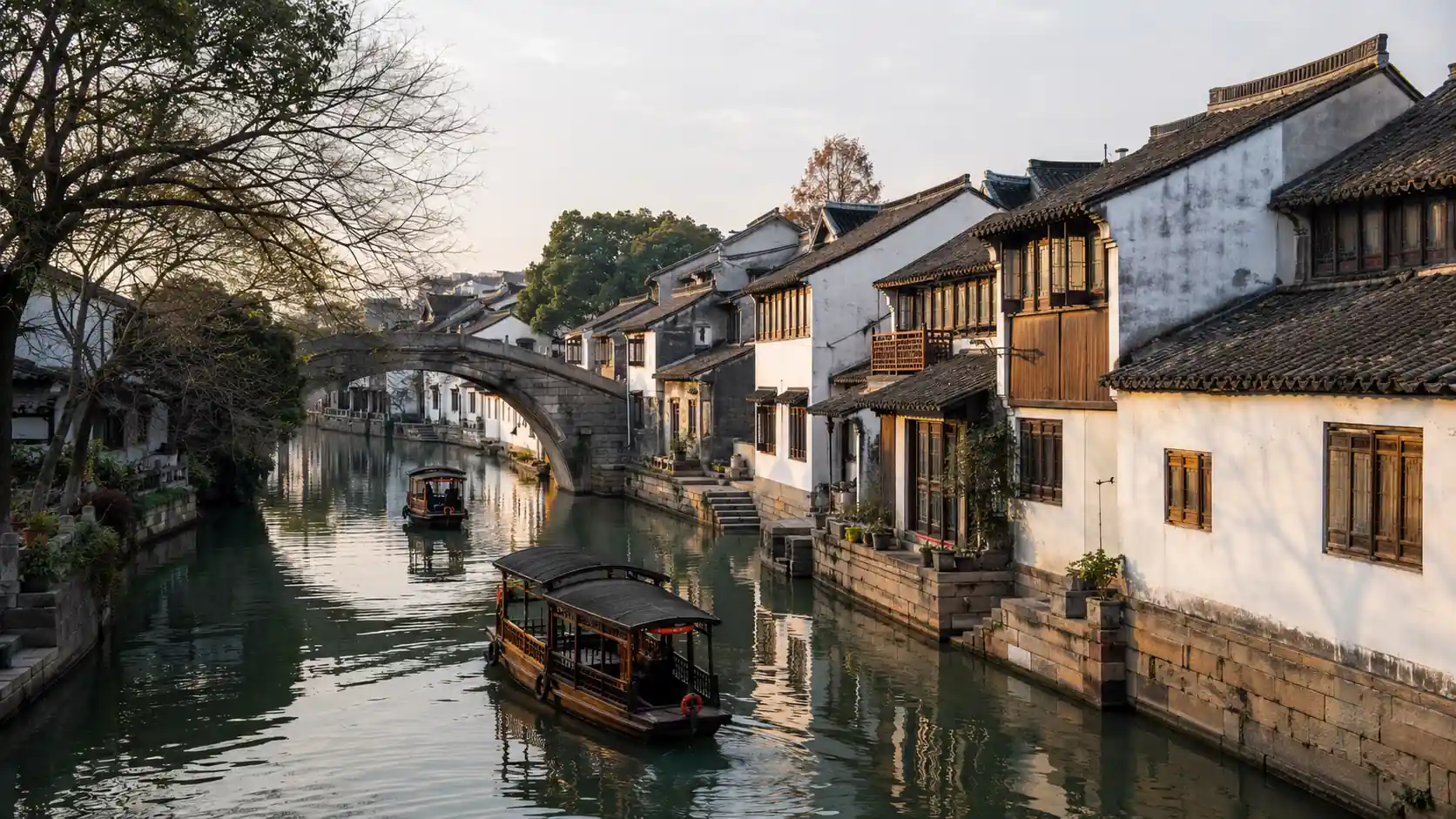
Shaoxing is a compact Zhejiang cultural stop with canals, rice wine heritage, old residences, and easy pairing with Hangzhou or Ningbo.
Suggested stay
1-2 days
Travel style
Canals
Best for
Old towns, canals, Zhejiang culture
Content confidence
Reviewed for practical travel use
Shaoxing city overview, suggested stay, highlights, transport notes, nearby trips, and connected planning guides have been reviewed for practical trip planning.
Use this city page as a planning framework. Confirm current opening hours, ticket windows, transport schedules, and local rules before booking.
Check official sources before booking time-sensitive items.
Planning overview
How to Plan Shaoxing
Shaoxing works best as a compact Jiangnan culture stop rather than a city of big standalone landmarks. Come here for canal lanes, stone bridges, Lu Xun literary history, yellow wine culture, and a slower pace than Hangzhou or Shanghai. Most travelers only need one full day in the old core, but a second day gives you room for East Lake, Lanting, or Anchang without rushing. Plan by clusters: the old city first, then one suburban scenic area.
Lu Xun Native PlaceEast LakeAnchang Ancient Town
Best suited for
Canal-town and bridge walks
Lu Xun and modern Chinese literature
Yellow wine and regional food culture
Easy Zhejiang side trips
Best time to visit
Spring and autumn are the easiest seasons for Shaoxing, especially March to May and October to November, when the old streets and waterside walks are comfortable. June and July are the wettest months, summer is hot and humid, and winter is cold and damp rather than dramatic, though it still works for museums, old residences, and food-focused days.
Base yourself in Yuecheng District if this is your first visit, since Lu Xun Native Place, Shen Garden, canal lanes, and many practical food stops sit close together.
Treat Shaoxing as a walking city with short metro, taxi, or ride-hailing hops; the historic core is more rewarding on foot than through nonstop station-to-station transfers.
Keep outdoor scenic areas such as East Lake, Lanting, and Anchang for clearer weather, because rain and summer haze flatten the quarry and canal views.
Save hotel cards and destination names in Chinese, since English is not widely spoken and that reduces friction with taxis, ride-hailing, and smaller eateries.
Start with the canal city itself: it shows why Shaoxing is best planned as a set of old-town walks rather than a checklist of isolated sights.
Suggested routes
Itineraries for Shaoxing
East Lake shows the more scenic side of Shaoxing, with quarry cliffs and boat views that justify giving the city a second day.
Wikimedia Commons
1 day
Literary old-city first look
Best for a Hangzhou or Shanghai side trip, with the whole day kept compact inside the historic core.
1Lu Xun Native Place in the morning
2Walk Cangqiao Straight Street and nearby canal lanes at midday
3Shen Garden in the afternoon
4Finish with a yellow-wine dinner or an evening stroll in Yuecheng
2 days
Historic core plus scenery
The best balance for most travelers, combining Shaoxing's literary center with one stronger scenic block outside it.
2Day 2: East Lake and the Mausoleum of Yu the Great, with time left for a slower canal walk back in Yuecheng
3Choose Lanting instead of East Lake if you prefer calligraphy history to quarry scenery
3-4 days
Deeper Shaoxing with a western extension
Use the extra time to widen out from the old core instead of repeating the same central lanes.
1Day 1: Yuecheng old city, Lu Xun Native Place, Shen Garden
2Day 2: East Lake and the Kuaiji foothill sites
3Day 3: Lanting and the western suburban side of Shaoxing
4Day 4: Anchang Ancient Town or a rail side trip onward to Hangzhou or Ningbo
Neighborhoods
Best Areas to Explore
Yuecheng old city and Lu Xun area
This is the best first stop for most visitors: old lanes, bridges, former residences, canal scenery, and enough food stops to keep the day compact. It is where Shaoxing feels most literary and most recognizably Jiangnan at the same time.
Lu Xun Native PlaceCangqiao Straight StreetShen Garden
East Lake and the Kuaiji foothills
South and east of the old core, the city opens into quarry scenery, wooded slopes, and some of Shaoxing's oldest historical associations. This area works best when you want something more scenic than urban lanes without turning the day into a long transfer-heavy excursion.
East LakeMausoleum of Yu the GreatKuaiji Mountain area
Lanting and western Shaoxing
The western side around Lanting is where Shaoxing's calligraphy reputation becomes tangible. It suits travelers who want a quieter half day focused on classical garden space, cultural memory, and a more relaxed suburban pace than the city center.
Orchid PavilionLanting Stele areaKeqiao-side day trip routes
Anchang Ancient Town and Keqiao
Anchang is the easiest old-town add-on when you want more canals, covered bridges, and a market-town feel that is less literary and more everyday. Pair it with Keqiao only if you are already heading west, since this works better as a half-day extension than as a rushed detour from the center.
Anchang Ancient TownWaterside lanes and bridgesKeqiao connections
What to see
Top Sights
Lu Xun Native Place
This is the clearest single introduction to Shaoxing for many visitors: the childhood home and neighborhood of Lu Xun, preserved as a larger cultural area rather than a lone house museum. It works because the surrounding lanes, study rooms, ancestral halls, and canal-side atmosphere still feel connected to the writer's world.
Go early or on a weekday if possible, then stay in the neighborhood for food and slower walking instead of treating it as a quick photo stop.
East Lake
East Lake is Shaoxing's strongest scenic counterweight to the old city, known for quarry cliffs, narrow water channels, and boat-based views. It feels more dramatic than the flat canal center and is the best reason to give the city a second day.
Prioritize this on a dry day with decent visibility, because the quarry walls and water reflections matter more here than monument-style checklisting.
Orchid Pavilion (Lanting)
Lanting is tied to Shaoxing's long calligraphy tradition and to the famous Orchid Pavilion Gathering. For travelers interested in literati culture rather than urban canal scenery, this is one of the city's most meaningful suburban stops.
Pair it with a quieter half day and avoid cramming it between central city sights, since the value here is atmosphere and cultural context rather than speed.
Mausoleum of Yu the Great
This site connects Shaoxing to one of the oldest legendary layers of Chinese history through Yu the Great and the Kuaiji mountain tradition. It is less about urban old-town texture and more about historical symbolism, ritual memory, and a broader sense of place.
Combine it with East Lake or another Kuaiji-area stop rather than making a separate cross-city outing only for the mausoleum.
Shen Garden
Shen Garden is a classical garden best known for its association with the Song-dynasty story of Lu You and Tang Wan. It gives the old city a more intimate, landscaped stop between literary sites and canal walks.
Use it as a compact central stop with Lu Xun Native Place and nearby lanes, not as a standalone reason to cross town.
Getting around
Transport Notes
Arriving by air
Shaoxing has no civil aviation airport, so most visitors arrive via nearby Hangzhou Xiaoshan International Airport, about 30 km west of the city. From there, Shaoxing can be reached by shuttle bus, taxi, or private transfer; Ningbo Lishe is another workable backup.
Arriving by train
For most travelers, Shaoxing North is the key arrival point, on the Hangzhou-Ningbo high-speed railway and also served by the Hangzhou-Taizhou high-speed railway. It is connected into the city by Shaoxing Metro Line 1, so rail arrivals are usually easier than air for Zhejiang and Yangtze Delta routing.
Getting around
Shaoxing now has a working metro system, with Line 1 linking Yuecheng and Keqiao through the city and Line 2 adding more urban coverage. That said, the historic center is still best handled by walking, with buses, metro, or short car rides used mainly between clusters such as the old city, East Lake, and Lanting.
Taxis and ride-hailing
Taxis and ride-hailing are the simplest way to bridge gaps to suburban sights or return late from the old city. Keep names saved in Chinese, because English is not widely spoken and that makes pickups and destination confirmation easier.
Food
What to Eat
Start with Shaoxing wine flavors
Shaoxing wine (huangjiu) is the city's signature flavor and is used both as a drink and in cooking. Look for wine-led dishes such as drunken chicken (zuiji) and drunken shrimp (zuixia), along with other cold plates or braised dishes that use the wine for aroma rather than heaviness. If you only try one local marker, make it a meal that clearly uses the city's wine tradition instead of generic Zhejiang food.
Expect lighter Zhejiang cooking
Shaoxing-style Zhejiang cooking is especially strong in poultry and freshwater fish. In practice, that means cleaner, gentler seasoning than in many inland regional cuisines, with an emphasis on texture and freshness. This is a good city to choose local river or lake dishes and let the cooking stay relatively restrained.
Eat around the old city
The easiest food strategy is geographic: stay around Lu Xun Native Place, Cangqiao Straight Street, and the old Yuecheng lanes, where sightseeing and meals fit together naturally. Xian Heng Inn is part of the city's literary memory and remains closely associated with Shaoxing wine culture. This approach works better than chasing one famous restaurant across town.
Go next
Easy Trips from Shaoxing
Hangzhou
The most practical westbound extension, useful if you want West Lake, stronger flight connections, or a larger city before or after a quieter Shaoxing stay.
Ningbo
A good eastbound pairing when you want another Zhejiang city with different food, port history, and airport options beyond Shaoxing's canal-and-literature focus.
Zhuji
If you want to stay within the wider Shaoxing municipality, Zhuji offers a different side of Yue culture and more nature-oriented stops than the old city core.
Keep planning
Useful next pages for Shaoxing
Connect this city page with the practical setup decisions most likely to affect arrival, tickets, transport, and daily movement.