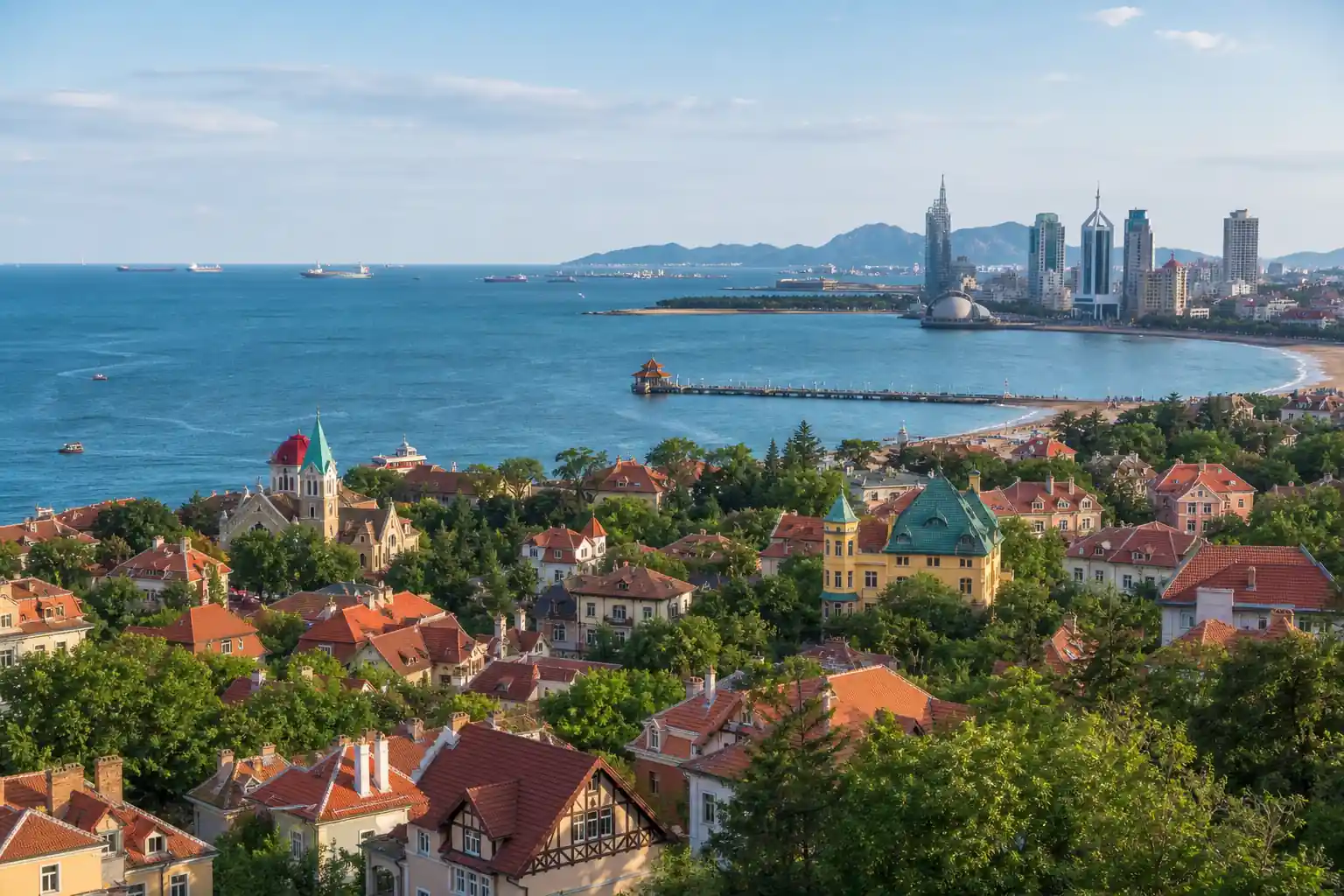
Qingdao offers a breezy coastal China experience with beaches, red-roofed old districts, seafood, beer heritage, and Laoshan mountain routes.
Suggested stay
2-3 days
Travel style
Coastal
Best for
Coast, seafood, summer routes
Content confidence
Reviewed for practical travel use
Qingdao city overview, suggested stay, highlights, transport notes, nearby trips, and connected planning guides have been reviewed for practical trip planning.
Use this city page as a planning framework. Confirm current opening hours, ticket windows, transport schedules, and local rules before booking.
Check official sources before booking time-sensitive items.
Planning overview
How to Plan Qingdao
Qingdao is one of the easier coastal cities to fit into a China trip: breezy, walkable in its core districts, marked by German-era architecture, and strong on seafood and beer culture. It suits travelers who want sea air without giving up urban convenience. Plan it in layers rather than as a beach holiday alone: one part old Shinan for historic streets, one part eastern waterfront for the modern skyline, and one clear-weather day for Laoshan if you have the time.
Zhanqiao PierBadaguanLaoshan
Best suited for
Coastal city breaks
Architecture and history walks
Seafood and beer culture
Summer and shoulder-season travel
Best time to visit
Late spring to early summer and early autumn are the easiest seasons for most travelers, especially from May to June and from September to October. July and August bring the classic beach atmosphere but also humidity, crowds, and more rain, while winter is cold and windy yet still workable for architecture, museums, and food-focused days.
Stay in Shinan for the old city and railway station area, or near May Fourth Square if you want newer hotels and easier metro access.
Keep your Laoshan day flexible because fog, rain, or low visibility can make the mountain routes much less rewarding.
Use the metro for cross-city moves, then walk once you reach areas like Badaguan, Zhongshan Road, or the Fushan Bay waterfront.
The airport is far from downtown, so avoid building a tight same-day plan around a sunset walk or dinner reservation in the city center.
This wide coastal view shows why Qingdao works best when planned by waterfront districts rather than isolated sights.
Suggested routes
Itineraries for Qingdao
Laoshan matters because Qingdao is not only a seafront city; it also gives easy access to a major Taoist mountain landscape.
Wikimedia Commons
1 day
Historic core plus waterfront
Best for a quick stop when you want Qingdao's architecture and seafront without attempting the mountain.
1Zhanqiao Pier and the old station area in the morning
2St. Michael's Cathedral and old Shinan streets around midday
3Badaguan or Huiquan Bay in the afternoon
4May Fourth Square and Fushan Bay after sunset
2 days
First-time Qingdao balance
Enough time to cover the historic center, the newer waterfront, and one slower walking district.
1Day 1: Zhanqiao, cathedral area, Zhongshan Road, then May Fourth Square at night
2Day 2: Badaguan, Huiquan coast, and the Olympic Sailing Center or a museum depending on weather
3Add Tsingtao Brewery culture or a hill viewpoint if you want one extra stop
3-4 days
City plus Laoshan day
Use the extra time for the full mountain-and-coast side of Qingdao rather than overfilling central neighborhoods.
1Day 1: Old Shinan, Zhanqiao, St. Michael's Cathedral, and evening seafood
2Day 2: Badaguan, beaches, and slower coastal walking
3Day 3: Full Laoshan Scenic Area day chosen around weather and route difficulty
4Day 4: Eastern waterfront, sailing center, brewery or museum time, or a Shandong side trip
Neighborhoods
Best Areas to Explore
Old Shinan and Zhongshan Road
This is the historic core for first-time visitors: German-era streets, the old railway station area, church architecture, and the classic approach to the harbor. It is the best part of Qingdao for understanding how the city's colonial and Republican layers still shape the street scene.
Zhanqiao PierSt. Michael's CathedralQingdao Railway Station area
Badaguan and Huiquan Bay
Badaguan is where Qingdao slows down: broad tree-lined roads, old villas, and an easy coastal walking rhythm. Pair it with Huiquan Bay and the nearby bathing beaches when you want a district that feels more residential and scenic than checklist-driven.
Badaguan villa streetsSecond Bathing BeachHuiquan waterfront
May Fourth Square and Fushan Bay
The modern face of Qingdao sits around the civic square, Fushan Bay, and the Olympic sailing waterfront. Come here for evening walks, skyline views, newer hotels, and a cleaner sense of how the city has expanded beyond the old harbor districts.
May Fourth SquareOlympic Sailing CenterFushan Bay night walk
Laoshan coast and mountain approaches
Laoshan is the day-trip side of Qingdao: Taoist temples, granite peaks, and mountain-meets-sea scenery that feels very different from central Shinan. Do not treat it as a quick add-on, because even the simpler routes take planning and clear weather.
The long pier near Qingdao Railway Station is the city's best-known harbor landmark and one of the easiest first stops after arrival. It works less as a stand-alone attraction than as the opening move for exploring old Shinan and the waterfront around the old town.
Go earlier or near sunset, then combine it with the station area and cathedral streets instead of treating it as a separate trip.
Badaguan
Badaguan is Qingdao's most comfortable district for architecture-focused walking, with villa-lined roads, mature trees, and an older seaside rhythm. It is more rewarding when you move slowly and let the streets, gates, and coastal turns build the experience.
Treat it as a walking district, not a quick photo stop, and pair it with Huiquan Bay or a nearby beach.
St. Michael's Cathedral and the old quarter
The cathedral is one of the clearest reminders of Qingdao's European architectural legacy, and it sits in the oldest part of the city near Zhongshan Road. Even visitors who are not especially interested in churches usually find the surrounding streets useful for reading the texture of historic Qingdao.
Combine it with an old-town walk rather than arriving only for the building itself.
May Fourth Square and Qingdao International Sailing Centre
This is the modern seafront version of Qingdao: the May Wind sculpture, broad civic space, and the Olympic sailing waterfront on Fushan Bay. It is especially useful in the evening, when the bay and skyline come together in a single easy walk.
Save it for late afternoon into evening, when the light and waterfront atmosphere are both better.
Laoshan
Mount Lao gives Qingdao a rare mix of sea and mountain scenery, and it is also an important Taoist landscape with temple sites such as Shangqing Temple. For many travelers it becomes the most memorable day, but only if weather and route choice line up well.
Choose one Laoshan route in advance and do not underestimate travel time from central Qingdao.
Getting around
Transport Notes
Arriving by air
Qingdao Jiaodong International Airport is the main airport and it sits far from the central city, roughly 60 km from downtown. Metro Line 8 links the airport with Qingdao North Railway Station, where you can transfer onward into the main urban area, while shuttle buses and taxis are more useful late at night.
Arriving by train
Qingdao Railway Station is the most convenient arrival point for the old city, Zhanqiao, and central Shinan. Qingdao North Railway Station often handles more services and is useful for airport transfers, while Qingdao West Railway Station matters mainly if you are staying in Huangdao.
Getting around
The metro is the easiest way to cross Qingdao, with Line 3 especially useful between the main railway station, Qingdao North, and May Fourth Square. Line 2 helps along the south shore, Line 4 is useful toward older inner-city hills and the Laoshan approach, and Line 11 serves farther Laoshan routes.
Taxis and ride-hailing
Taxis and ride-hailing are practical when weather turns bad, when you are carrying luggage, or when metro connections become indirect. They can be harder to flag during peak summer periods, so having Didi set up and destination names saved in Chinese is useful.
Food
What to Eat
Start with seafood and dumplings
Qingdao is strongest when you keep meals close to the coast: seafood dumplings (haixian shuijiao), stir-fried clams, grilled shellfish, and other simple dishes that let freshness do most of the work. This is not a city where you need elaborate planning for every meal. In the right neighborhood, a practical seafood restaurant can be more rewarding than a heavily hyped destination.
Treat beer as part of the city story
Tsingtao beer is not just a brand here; it is part of how the city explains its German-era history and port identity. A good Qingdao food day often means pairing straightforward seafood or grilled dishes with local beer rather than chasing a formal tasting experience. Keep expectations grounded and use the beer culture as context, not as the only reason to build an itinerary.
Use districts with confidence
Old Shinan works well for classic local meals after sightseeing, while newer eastern districts give you easier hotel-adjacent dining and waterfront evenings. Chengyang is also useful if you want Korean food, reflecting the city's large Korean community. In practice, Qingdao rewards flexible neighborhood eating more than one-restaurant pilgrimages.
Go next
Easy Trips from Qingdao
Weifang
A practical inland Shandong extension if you want a change from the coast, best known for kite culture and easier regional transport links.
Yantai
Another Shandong coastal city and a natural overnight continuation if you want more sea-facing travel beyond Qingdao.
Rizhao
A quieter coastal follow-on to the south, useful when you want beaches and sea views with less of a big-city feel.
Keep planning
Useful next pages for Qingdao
Connect this city page with the practical setup decisions most likely to affect arrival, tickets, transport, and daily movement.