Lhasa is a high-altitude cultural destination centered on Tibetan Buddhist landmarks, old town walks, and careful acclimatization planning.
Suggested stay
3-5 days
Travel style
Tibet
Best for
Tibetan culture, monasteries, plateau travel
Content confidence
Reviewed for practical travel use
Lhasa city overview, suggested stay, highlights, transport notes, nearby trips, and connected planning guides have been reviewed for practical trip planning.
Use this city page as a planning framework. Confirm current opening hours, ticket windows, transport schedules, and local rules before booking.
Check official sources before booking time-sensitive items.
Planning overview
How to Plan Lhasa
Lhasa is a city to plan around altitude, pilgrimage routes, and a slower daily pace rather than a long checklist. It suits travelers who want Tibetan Buddhist sites, old-town walks, and a few carefully chosen monastery visits more than nightlife or dense museum days. Give yourself time to acclimatize, keep the first day light, and treat the old Barkhor-Jokhang core as the anchor for both sightseeing and atmosphere.
Potala PalaceJokhang TempleBarkhor Street
Best suited for
Tibetan Buddhist heritage
Slow high-altitude travel
Pilgrimage atmosphere and street life
Plateau overland routes
Best time to visit
Late spring and autumn are usually the easiest seasons for clear skies, comfortable daytime temperatures, and steady sightseeing. Summer is greener and not as hot as lowland China, but it is also the wetter season and cloud can reduce long views. Winter is cold, especially at night, yet often sunny and dry, which can still work well if you plan shorter outdoor blocks.
Keep your first day deliberately light: short walks in the Barkhor area are better than rushing straight into stairs-heavy sites at 3,650 m.
If you are not a Chinese national, Tibet travel requires permit planning and a guide, so lock logistics before booking flights or train tickets.
Stay in or near the old town if possible; Potala, Jokhang, Barkhor, and many practical services are easier to combine from there.
Verify Potala Palace entry timing and current monastery rules through your operator before building a tight schedule around them.
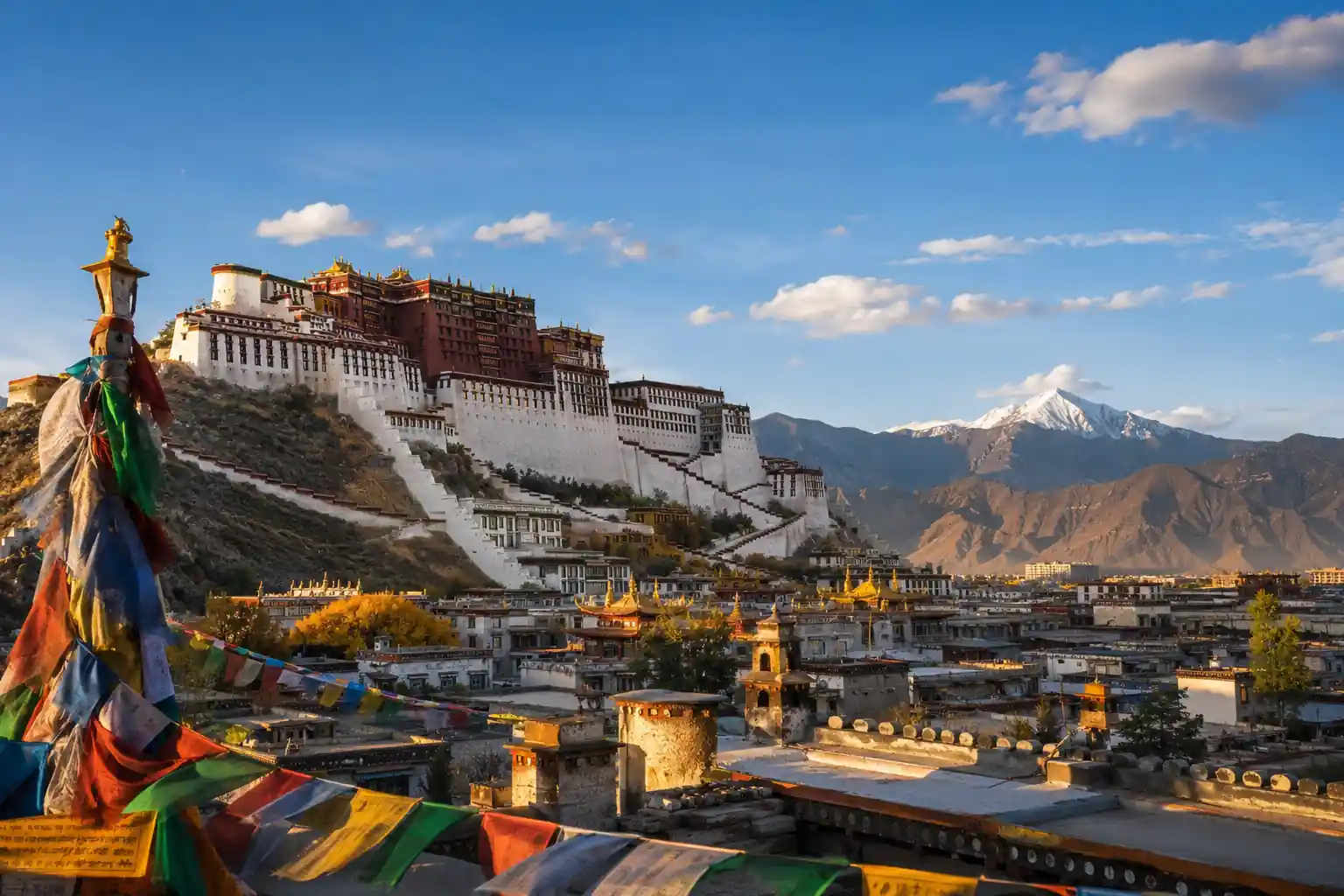
This view shows how the old core, broad valley, and plateau setting fit together, which helps visitors plan realistic walking days.
Suggested routes
Itineraries for Lhasa
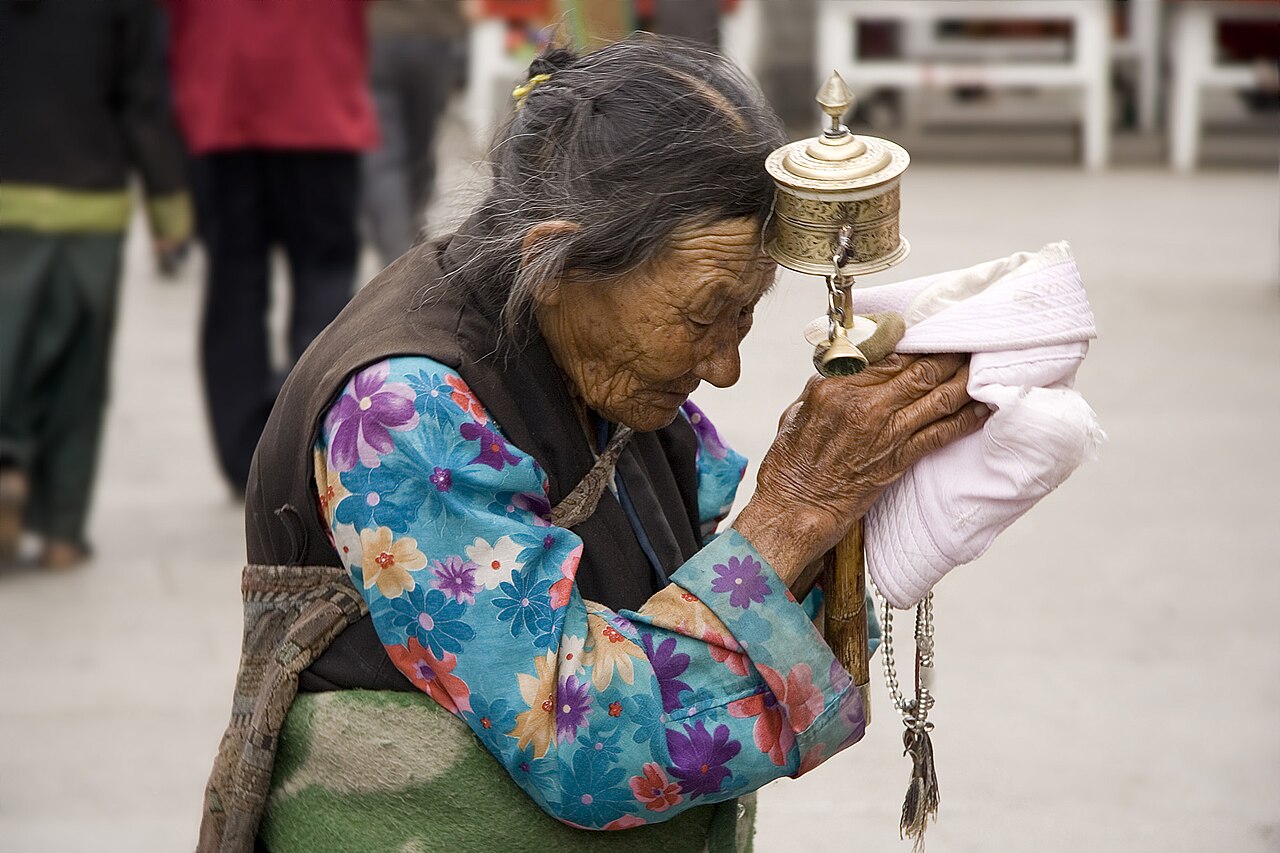
The Barkhor loop matters because it is not just a street scene but an active pilgrimage circuit shaping the rhythm of the old town.
Wikimedia Commons
1 day
Old town and palace essentials
Best for a short stop or a carefully paced first full day after arrival.
1Morning: easy Barkhor walk and Jokhang area without rushing the altitude
2Midday: lunch and rest near the old town
3Afternoon: Potala Palace or its surrounding viewpoints depending on your entry slot
4Evening: return to Barkhor when pilgrim activity and street life pick up again
2 days
First-time Lhasa at a workable pace
Enough time to combine the old town, the main monuments, and one monastery without turning the trip into an altitude test.
1Day 1: Barkhor, Jokhang area, breaks for acclimatization, and Potala Palace or the palace forecourt late in the day
2Day 2: Sera Monastery, then Norbulingka or a second slow walk through the old town
3Add Drepung only if you are already feeling settled at the altitude
3-4 days
Acclimatize, then widen the circle
This is the most sensible length for many visitors because it leaves room for altitude, major sights, and one road trip outside the city.
1Day 1: light Barkhor and Jokhang old town walking only
2Day 2: Potala Palace and a second old-town block
3Day 3: Sera Monastery, Drepung, or Norbulingka depending on energy
4Day 4: a guided day trip such as Ganden Monastery or Yamdrok Lake, or continue onward toward Shigatse
Neighborhoods
Best Areas to Explore
Barkhor and Jokhang old town
This is the most atmospheric part of Lhasa and the easiest place to understand the city's religious life. Around Jokhang Temple, pilgrims move clockwise through the Barkhor circuit, shops sell ritual items and handicrafts, and many visitors find it the best base for a first stay.
Jokhang TempleBarkhor StreetRamoche area
Potala Palace and central Lhasa
The ridge around Potala Palace gives Lhasa its defining skyline and a more monumental, formal feel than the old town lanes. It is useful for the palace visit itself, broad views over the valley, and practical cross-city links between older and newer parts of town.
Potala PalacePalace forecourt and viewpointsCentral city axis
Norbulingka and western Lhasa
West of the old center, the city opens out into broader roads, greener compounds, and a quieter rhythm. Norbulingka, the former summer palace complex, makes this a useful half-day when you want lower-intensity sightseeing after heavier temple and palace visits.
NorbulingkaGarden groundsWestern city avenues
Northern monastery edge
The northern side of Lhasa is where day trips to major monasteries begin to feel more spacious and less urban. Sera Monastery is the main draw here, and this side of the city works best when you want one focused monastery visit rather than another dense old-town walk.
Sera MonasteryRoads toward DrepungQuieter northern streets
What to see
Top Sights
Potala Palace
Lhasa's defining monument, the Potala served as the winter palace of the Dalai Lamas and now functions chiefly as a museum complex. Built on Marpo Ri above the valley, it combines political, religious, and visual importance in one site and remains the city's strongest orientation point.
Do not treat it as a casual walk-up stop. Entry timing is controlled, and it is better scheduled after you have already had some time to adjust to the altitude.
Jokhang Temple
Founded in the 7th century, Jokhang is one of the most important temples in Tibetan Buddhism and stands at the center of Lhasa's religious life. It sits inside the Barkhor circuit and is closely tied to the pilgrimage patterns that still define the old city.
Go with patient expectations and respectful pacing, especially around active worship areas and the pilgrim circuit outside.
Barkhor Street
Barkhor is the commercial and ritual heart of old Lhasa: a roughly one-kilometer clockwise circuit wrapped around Jokhang Temple. It is where visitors most clearly see prayer wheels, prostrations, local street trade, and the continued importance of pilgrimage in daily life.
Walk clockwise with the flow and leave time to observe rather than pushing through it as a shopping stop.
Sera Monastery
Sera is one of the major monasteries on the northern side of Lhasa and is a logical half-day extension beyond the old town. For many travelers, it adds a more spacious monastic setting after the intensity of Barkhor and central Lhasa.
Check the current monastery schedule before you go, especially if you are hoping to align the visit with public debate sessions.
Norbulingka
Norbulingka was established in the 18th century as the summer palace complex of the Dalai Lamas and remains a calmer counterpart to Potala. Its garden setting and western location make it useful when you want a lower-intensity visit after a palace morning or a heavy monastery day.
Use it on a lighter afternoon or as a recovery day site if the altitude is making steeper sightseeing less appealing.
Getting around
Transport Notes
Arriving by air
Lhasa Gonggar International Airport is the main air gateway and sits southwest of the city, roughly 60 km from central Lhasa. The drive typically takes about 40-60 minutes on the airport highway. If your Tibet arrangements include a guide, airport pickup is usually built into the plan.
Arriving by train
Lhasa is linked to inland China by the Qinghai-Tibet railway, with long-distance services continuing via Xining and other major cities. The train takes much longer than flying but can be a more gradual way to reach the plateau. On arrival, transfer planning matters because permit checks and guide meet-ups are part of the process for many foreign travelers.
Getting around
The central zone covering Potala, Jokhang, Barkhor, and Ramoche is workable on foot if you pace yourself. Public buses are numerous and inexpensive, and minibuses also reach places such as Norbulingka, Sera Monastery, and Drepung Monastery. In practice, many visitors mix short walks with a car arranged through their operator.
Taxis and ride-hailing
Taxis are useful for short hops or when altitude makes walking less appealing, but shared rides can happen. Didi and other Chinese ride-hailing apps may also be usable. Keep hotel and destination names in Chinese to reduce confusion.
Food
What to Eat
Start with Tibetan staples
Look first for yak-based dishes, momos, and hand-pulled or hand-torn soups such as thenthuk. Butter tea and sweet tea matter as much as full meals in Lhasa, and tsampa often appears as the simplest traditional staple. On your first day, lighter soups and dumplings are usually easier than a heavy meat-focused dinner.
Use the old town for easy meals
Around Barkhor and the Jokhang area, it is easy to fit food into a sightseeing day without crossing the city. This is the practical zone for tea houses, simple Tibetan meals, and mixed Tibetan, Nepali, and Chinese options between temple visits.
Eat with the altitude in mind
Lhasa is one of the few cities where travel logistics affect appetite. Hydration, warm drinks, and regular breaks matter, and many travelers do better by spacing meals through the day rather than forcing a big itinerary lunch and a late heavy dinner.
Go next
Easy Trips from Lhasa
Ganden Monastery
One of the classic monastery excursions from Lhasa, usually done by road as a focused half-day or day trip once you have had time to acclimatize.
Yamdrok Lake
A common scenic plateau drive from Lhasa, better for travelers who want open high-altitude landscapes after the city's religious and architectural core.
Shigatse
The main westbound extension from Lhasa, usually better as an overnight continuation than a rushed day trip if you are moving deeper into Tibet.
Keep planning
Useful next pages for Lhasa
Connect this city page with the practical setup decisions most likely to affect arrival, tickets, transport, and daily movement.