Yangzhou is a refined Jiangsu city known for Slender West Lake, garden culture, canals, and one of China's most enjoyable breakfast scenes.
Suggested stay
1-2 days
Travel style
Jiangnan
Best for
Gardens, food, slower canal city travel
Content confidence
Reviewed for practical travel use
Yangzhou city overview, suggested stay, highlights, transport notes, nearby trips, and connected planning guides have been reviewed for practical trip planning.
Use this city page as a planning framework. Confirm current opening hours, ticket windows, transport schedules, and local rules before booking.
Check official sources before booking time-sensitive items.
Planning overview
How to Plan Yangzhou
Yangzhou suits travelers who want East China at a slower pace: classical gardens, canal history, old streets, and a food culture built around morning tea rather than late nights. It works especially well as a one- or two-night stop between Nanjing, Shanghai, and other Jiangsu cities. Plan it in compact clusters instead of criss-crossing town: pair Slender West Lake with the northwest scenic belt, then use the old city, Ge Garden, and He Garden for the rest.
Slender West LakeGe GardenDongguan Street
Best suited for
Classical garden walks
Canal-city itineraries
Breakfast and teahouse culture
Slower Jiangsu side trips
Best time to visit
Spring and autumn are the easiest seasons for Yangzhou, especially March to May and September to November, when gardens, canals, and walking streets are comfortable. Summer is hot, humid, and noticeably wetter, while winter is cold but still workable if you are focusing on food, old streets, and shorter garden visits.
Stay around Wenchang Pavilion, Dongguan Street, or the central old city if this is your first visit and you want easy food-and-sightseeing evenings.
Start one day early for Yangzhou breakfast culture, then move straight into the gardens before tour groups build up.
Treat Slender West Lake as a real half-day stop: it is larger than it first looks, ticketed, and works poorly as a rushed add-on before a train.
Use taxis or ride-hailing between spread-out sights such as the stations, He Garden, and Slender West Lake, then walk once you are inside the old city.
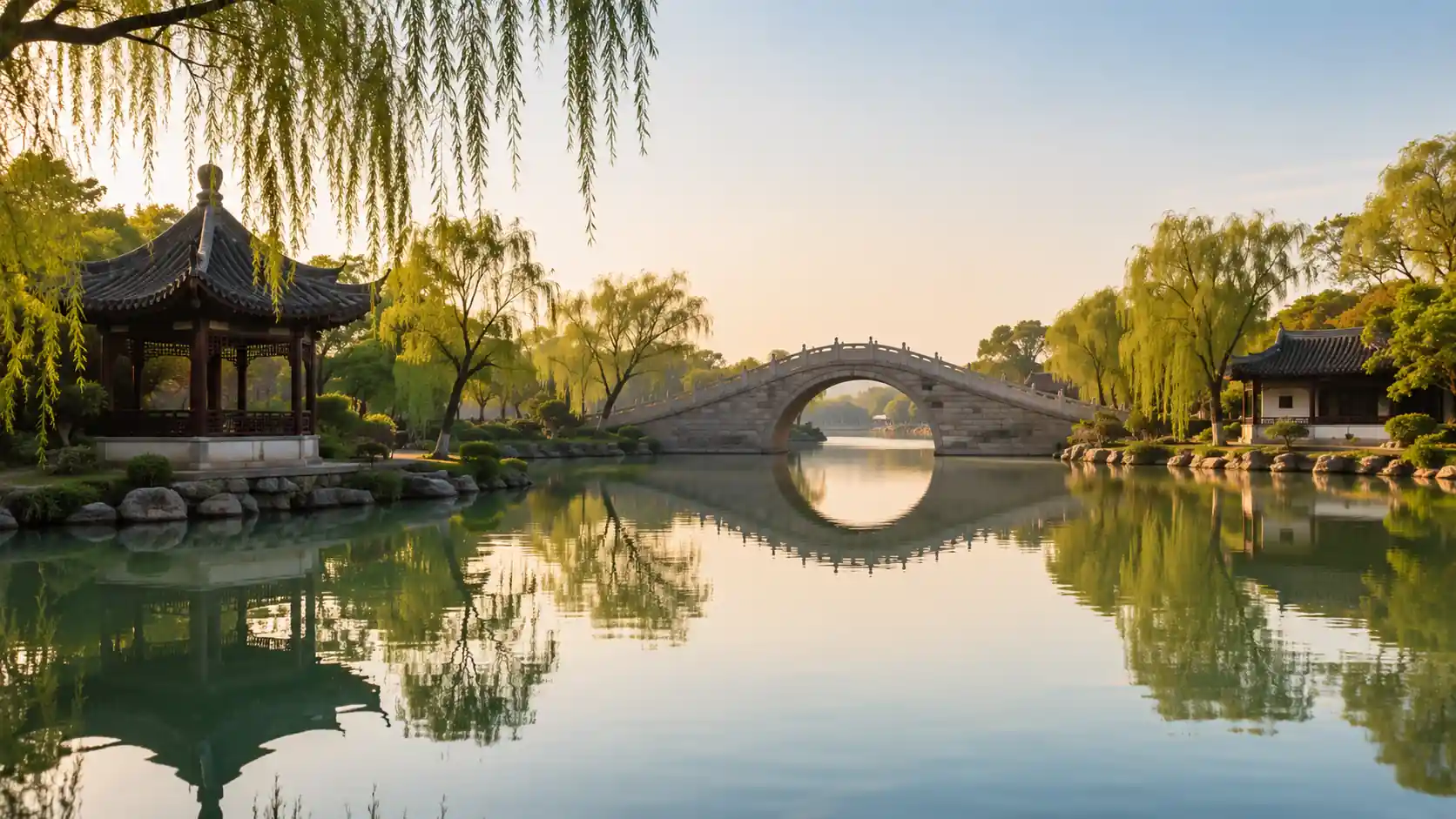
This view shows Yangzhou's best-known waterside landmark and gives travelers the clearest visual summary of the city's garden-and-canal character.
Suggested routes
Itineraries for Yangzhou
The canal view matters because Yangzhou makes the most sense when you understand it as a historic water-and-trade city, not just a garden stop.
Wikimedia Commons
1 day
Classic Yangzhou in one compact day
Best for a short stopover. Keep the day focused on one scenic zone and one old-city zone instead of trying to cover every garden.
1Morning tea breakfast in the old city
2Slender West Lake through late morning and early afternoon
3Ge Garden or He Garden in the late afternoon
4Dongguan Street and Wenchang Pavilion in the evening
2 days
First-time Yangzhou at the right pace
This is the most balanced option, giving one day to the lake and one day to the gardens, old streets, and canal edge.
1Day 1: Morning tea, Dongguan Street, Ge Garden, Wenchang Pavilion, old-city evening walk
2Day 2: Slender West Lake, Five Pavilion Bridge zone, He Garden or Wenfeng Pagoda
3Keep one meal flexible for a traditional teahouse rather than pre-booking every stop
3-4 days
Yangzhou plus a nearby Jiangsu extension
Use the extra time to slow down rather than overfilling the city itself. Yangzhou is strongest when paired with another nearby rail stop.
1Day 1: Old city, Dongguan Street, Ge Garden, evening around Wenchang Pavilion
2Day 2: Slender West Lake and the northern scenic belt
3Day 3: He Garden, old canal edge, Wenfeng Pagoda, second breakfast or market-focused food day
4Day 4: Take a rail side trip to Nanjing, Zhenjiang, or onward to Shanghai
Neighborhoods
Best Areas to Explore
Slender West Lake and the northern scenic belt
This is Yangzhou's signature landscape zone northwest of the historic center, where lakes, bridges, pavilions, and landscaped parkland come together in one long scenic stretch. It is the right place for a first half-day, especially in softer morning or late-afternoon light.
Slender West LakeFive Pavilion BridgeWhite Pagoda
Wenchang Pavilion, Dongguan Street, and the old city core
The old center is where Yangzhou feels most urban and lived-in: historic street patterns, old commercial lanes, teahouses, and evening foot traffic all concentrate here. Use it for your breakfasts, evening strolls, and the easiest low-stress sightseeing between major stops.
East of the city core, the lanes around Ge Garden are the best place to understand Yangzhou's garden tradition at a more intimate scale. This area works well when you want architecture, bamboo, walls, courtyards, and slower neighborhood walking instead of open park scenery.
Ge GardenYipu GardenResidential lanes near Dongguan Street
He Garden and the south canal edge
South of the old core, this area shifts from merchant-garden elegance to canal-side landmarks. It is useful for a second day, especially if you want to combine He Garden with the older waterway landscape and Wenfeng Pagoda instead of repeating the main lake circuit.
He GardenOld Grand CanalWenfeng Pagoda
What to see
Top Sights
Slender West Lake
Yangzhou's best-known scenic area is a long, narrow lake landscape rather than a single viewpoint, with bridges, embankments, pavilions, and ornamental compositions unfolding as you walk. It is the clearest expression of the city's refined, garden-oriented identity.
Go earlier or later in the day if possible, and leave enough time to walk rather than treating it as a photo stop only.
Ge Garden
Ge Garden is Yangzhou's most famous private garden and one of the city's strongest architectural visits. It is especially known for bamboo and for rockeries arranged to evoke the four seasons, making it rewarding even for travelers who usually avoid formal gardens.
Pair it with Dongguan Street on the same outing, because the surrounding old-city lanes add context and save unnecessary transport.
He Garden
He Garden is a late Qing private garden built in 1883 and is one of Yangzhou's best places to see how residence, courtyard, and garden design fit together. Compared with Ge Garden, it feels more like a lived-in estate and less like a purely symbolic composition.
Choose this if you only have time for one additional garden beyond Ge Garden and want a stronger sense of domestic architecture.
Dongguan Street
This historic street was once a commercial and cultural center and still works well as Yangzhou's easiest old-street walk. It is more useful as a lived corridor of food, gates, side lanes, and atmosphere than as a single monument.
Visit in the evening for street life, but come earlier if you want photos or quieter access to nearby gardens.
Old Grand Canal and Wenfeng Pagoda
Yangzhou's canal setting explains the city's long trading history more clearly than any one museum label. The old canal edge and Wenfeng Pagoda give a different mood from the polished lake scenery, with a stronger sense of transport history and the older urban water system.
Use this on a second day when you want variety after the gardens, or combine it with He Garden on the south side of the center.
Getting around
Transport Notes
Arriving by air
Yangzhou Taizhou International Airport serves the city from Jiangdu, roughly 30-40 km from central Yangzhou depending on your exact destination. In practice, most travelers use a taxi or airport bus; Nanjing Lukou is also a realistic alternative when flight choices are better.
Arriving by train
Yangzhou Railway Station sits on the west side of the city, about 7 km from Wenchang Pavilion, and has frequent high-speed service toward Nanjing and Shanghai as well as some longer conventional routes. Yangzhoudong (Yangzhou East) is the newer station on the east side and is often the more useful arrival point for faster intercity rail.
Getting around
Yangzhou is flat and pleasant for walking once you are inside the old city, Dongguan Street, or a garden complex. The main tourist zones are not all adjacent, so buses or short car rides help between the stations, Slender West Lake, He Garden, and the canal edge.
Taxis and ride-hailing
Taxis and ride-hailing are practical for first-time visitors because the city's key sights are spread across several clusters. Save destination names in Chinese, especially for the stations and gardens, to make short transfers easier.
Food
What to Eat
Start with morning tea, not dinner
Yangzhou is one of the best places in China to build a morning around food. Traditional teahouses such as Fuchun are part of the point, and the focus is usually on steamed buns, soup dumplings (tangbao), and other small breakfast dishes rather than a single headline meal. If you only plan one distinctly local food experience, make it breakfast.
Look for Huaiyang-style precision
Yangzhou cooking is associated with the broader Huaiyang tradition, which usually means cleaner flavors, careful knife work, soups, and a more refined style than heavily spiced regional cuisines. Dishes commonly tied to the city include Yangzhou fried rice (Yangzhou chaofan), while garden-city meals often lean toward delicate savory dishes rather than aggressive heat.
Use the old city for flexible eating
Dongguan Street and the streets around Wenchang Pavilion are the easiest places to build a practical eating day because you can move between teahouses, snack stops, and sit-down meals without crossing town. It is worth stepping off the busiest tourist strip for lunch or dinner, then returning to the main street for the evening atmosphere.
Go next
Easy Trips from Yangzhou
Nanjing
The obvious history-heavy extension, with major museums, city walls, and republican-era sites; high-speed rail connections from Yangzhou make it a realistic day trip or next stop, often in about an hour.
Zhenjiang
A practical short extension across the Yangtze if you want another Jiangsu city with a different feel; it is commonly handled as a short rail or road trip of around an hour.
Shanghai
An easy contrast if you want to move from canal-and-garden Yangzhou to a major modern city; trains from the Yangzhou side toward Shanghai typically keep the trip under about two hours.
Keep planning
Useful next pages for Yangzhou
Connect this city page with the practical setup decisions most likely to affect arrival, tickets, transport, and daily movement.