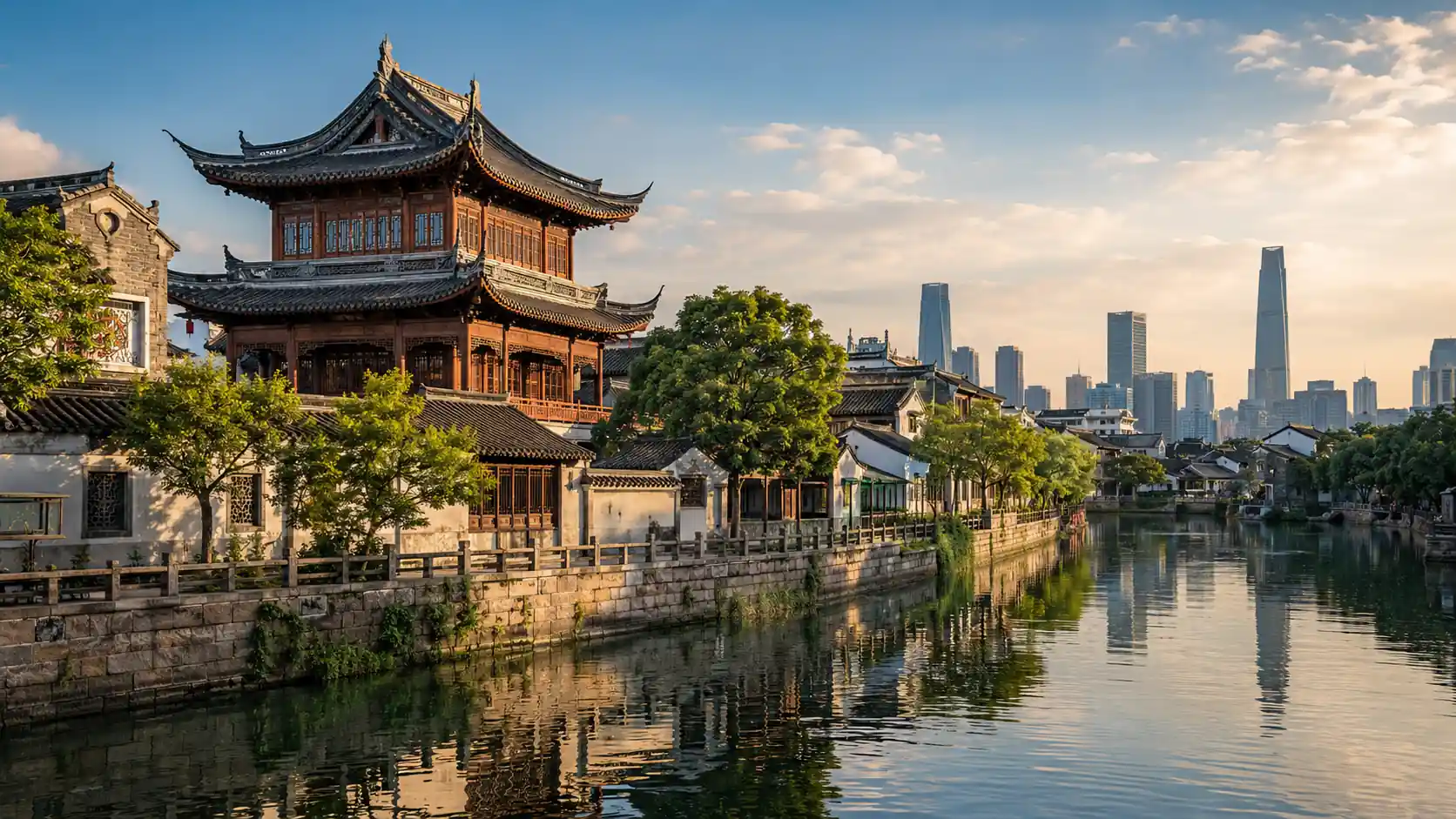
Ningbo is a practical Zhejiang coastal city with old libraries, temples, seafood, and easy links to islands and mountain sites.
Suggested stay
1-2 days
Travel style
Port City
Best for
Seafood, temples, Zhejiang coast routes
Content confidence
Reviewed for practical travel use
Ningbo city overview, suggested stay, highlights, transport notes, nearby trips, and connected planning guides have been reviewed for practical trip planning.
Use this city page as a planning framework. Confirm current opening hours, ticket windows, transport schedules, and local rules before booking.
Check official sources before booking time-sensitive items.
Planning overview
How to Plan Ningbo
Ningbo suits travelers who want a calmer East China city with real historical depth rather than a checklist of headline landmarks. It is a port city with old libraries, Buddhist sites, riverfront treaty-port history, and strong seafood culture, but it is also practical to navigate and easy to pair with Hangzhou, Shaoxing, Zhoushan, or southern Zhejiang. Plan one day for the old urban core and waterfront, then add Dongqian Lake or a heritage side trip if you stay longer.
Tianyi PavilionLaowaitanDongqian Lake
Best suited for
Temple and heritage travelers
Seafood-focused city breaks
Second-time East China routes
Calmer urban walks
Best time to visit
Spring and autumn are the easiest seasons for Ningbo, when the old city, riverfront, and Dongqian Lake are comfortable on foot. Summer is hot, humid, and wetter under the monsoon pattern, so outdoor plans work better early or late in the day. Winter is cool rather than severe, and still reasonable for museums, temple visits, and food-focused trips.
Stay around Haishu, Tianyi Square, Moon Lake, or the railway station area if you want the easiest first visit.
Use the metro for airport, railway station, and cross-city moves, then walk within compact clusters such as Moon Lake, Tianyi Pavilion, and the Old Bund.
Keep Dongqian Lake or other outer-district plans weather-dependent, especially in summer when heat and humidity are strongest.
For temples, libraries, and museums, verify opening days and ticket rules before building a full day around a single site.
Start with the riverfront and old core together: they explain why Ningbo works best as a practical heritage city rather than a landmark sprint.
Suggested routes
Itineraries for Ningbo
Dongqian Lake matters because it gives Ningbo an easy outdoor extension when you want water, temples, and more space than the center offers.
Wikimedia Commons
1 day
Old core and riverfront
Best for a stopover or a compact first look at Ningbo without forcing in distant districts.
1Tianyi Pavilion and Moon Lake in the morning
2Lunch and central walking around Tianyi Square
3Old Bund and riverfront in the late afternoon
4Stay by the waterfront or return to Haishu for dinner
2 days
City essentials plus one outer district
Enough time to cover Ningbo properly and still add either a lake day or a temple-heavy extension.
1Day 1: Tianyi Pavilion, Moon Lake, central Haishu, Old Bund in the evening
2Day 2: Choose Dongqian Lake and Temple of King Ashoka, or Baoguo Temple with a slower northern heritage day
3Keep dinner flexible for seafood rather than crossing town for a single famous address
3-4 days
Deeper Ningbo with a side trip
Best if you want city heritage plus one meaningful excursion instead of stretching the center too thin.
1Day 1: Haishu old core, Tianyi Pavilion, Moon Lake, evening walk
2Day 2: Old Bund, riverfront museums or cafes, slower neighborhood food stops
3Day 3: Dongqian Lake and eastern temple sites
4Day 4: Add Xikou, Yuyao and Hemudu, or onward travel toward Mount Putuo depending on your route
Neighborhoods
Best Areas to Explore
Haishu old core
This is the most useful part of Ningbo for a first visit: Tianyi Pavilion, Moon Lake, old streets, and several of the city's most meaningful heritage stops sit close enough to combine on foot. It feels more lived-in and less performative than many better-known Jiangnan cities.
Tianyi PavilionMoon LakeDrum Tower area
Old Bund and Yong River waterfront
Laowaitan is Ningbo's treaty-port waterfront on the north bank of the Yong River. Come here for preserved port-era buildings, river views, and an evening walk rather than for a museum-heavy day.
Old BundRiverfront walksNingbo Museum of Art
Tianyi Square and the modern center
The modern center is useful more as a base than as a destination in itself. It keeps hotels, malls, food options, and transport simple, and it sits close enough to older districts that you can return here without wasting much time.
Tianyi SquareCentral shopping streetsEasy metro connections
Dongqian Lake and eastern outskirts
This is the city's best outdoor extension when the weather cooperates. The lake area slows the pace, and nearby temple stops make it a good contrast to the denser urban core.
Dongqian LakeTemple of King AshokaLakeside paths
What to see
Top Sights
Tianyi Pavilion
Tianyi Pavilion is Ningbo's anchor sight: a Ming-era library and garden complex, widely noted as the oldest existing private library in Asia. It works because it is not only about books; it also gives you one of the clearest entry points into the city's scholarly and mercantile history.
Pair it with Moon Lake on the same half day, and go earlier if you want a quieter atmosphere.
Old Bund
Ningbo's Old Bund is a treaty-port riverfront where port-era buildings and later commercial structures still shape the waterfront. It is more rewarding as an evening walk than as a rushed daytime checklist, especially if you want to see the city's maritime identity in a concrete way.
Come in the late afternoon and stay into the evening, when the district feels most coherent.
Dongqian Lake
Dongqian Lake is the easiest escape from the city center when you want more space, water views, and a slower pace. It is less about one landmark than about giving balance to a Ningbo stay that might otherwise be entirely urban.
Choose this on a clear or at least dry day, otherwise the long outer-district move is less rewarding.
Baoguo Temple
Baoguo Temple sits north of the city and is especially important for travelers interested in architecture: its main hall dates to 1013 in the Northern Song period and is one of the oldest well-preserved wooden structures in southern China. This is a stronger stop for heritage-minded visitors than for casual city-break travelers.
Treat it as a focused heritage stop and combine it with only one other northern outing rather than overloading the day.
Temple of King Ashoka
This major Buddhist temple in Yinzhou connects Ningbo to some of the earliest layers of Buddhism in the region. It makes most sense for travelers who want a religious or historical counterweight to the city's library-and-port narrative.
Go with conservative timing and clothing expectations, and combine it with Dongqian Lake only if you are comfortable with a longer day.
Getting around
Transport Notes
Arriving by air
Ningbo Lishe International Airport is close to the city by China standards, about 11 km from downtown. A typical drive takes around 20 minutes, taxi fares are often around CNY 45-60, and metro access from the airport area makes air arrivals comparatively simple.
Arriving by train
Ningbo Railway Station is the main station and sits centrally, with metro underneath and major bus terminals nearby. From Hangzhou, high-speed trains commonly take about 1 to 1.5 hours, and there are also frequent routes from Shanghai via Hangzhou.
Getting around
Use the metro for cross-city moves, especially for the airport, railway station, and other longer transfers. Inside compact zones such as Haishu old core or the Old Bund, walking is usually the better choice.
Taxis and ride-hailing
Taxis are useful for temple visits, lake districts, and late returns, when direct metro links are less convenient. Keep destination names in Chinese, especially for outer-district stops.
Food
What to Eat
Start with seafood and coastal flavors
Ningbo is one of the Chinese cities most closely associated with seafood, so this should be your first food focus. Look for yellow croaker, crab, shrimp, shellfish, and other coastal dishes prepared more for freshness and texture than for heavy spice. If you already know inland Zhejiang food, Ningbo will feel noticeably more marine and salt-forward.
Do not skip the starches and snacks
Ningbo tangyuan, the local sweet glutinous-rice dumplings usually filled with black sesame, are the city's best-known snack outside Zhejiang. Cicheng rice cakes are another useful local reference point, and they fit well into breakfast or simple market eating rather than formal restaurant meals.
Eat by district, not by a single famous address
Haishu, Tianyi Square, and the Old Bund area make the easiest food geography for short stays. Use lunch for straightforward local dishes near the old core, then save one dinner for seafood or a waterfront meal without turning the city into a cross-town restaurant hunt.
Go next
Easy Trips from Ningbo
Yuyao and Hemudu
A strong archaeology-and-history side trip, especially if you want to connect Ningbo with the Hemudu culture; Ningbo Railway Station also has commuter rail service toward Yuyao.
Xikou
A good extra day for travelers who want a traditional town and mountain foothill setting south of central Ningbo rather than more urban sightseeing.
Mount Putuo
Best for Buddhist heritage and island scenery; it needs combined road and ferry planning, so it works better as a deliberate excursion than as an improvised add-on.
Keep planning
Useful next pages for Ningbo
Connect this city page with the practical setup decisions most likely to affect arrival, tickets, transport, and daily movement.