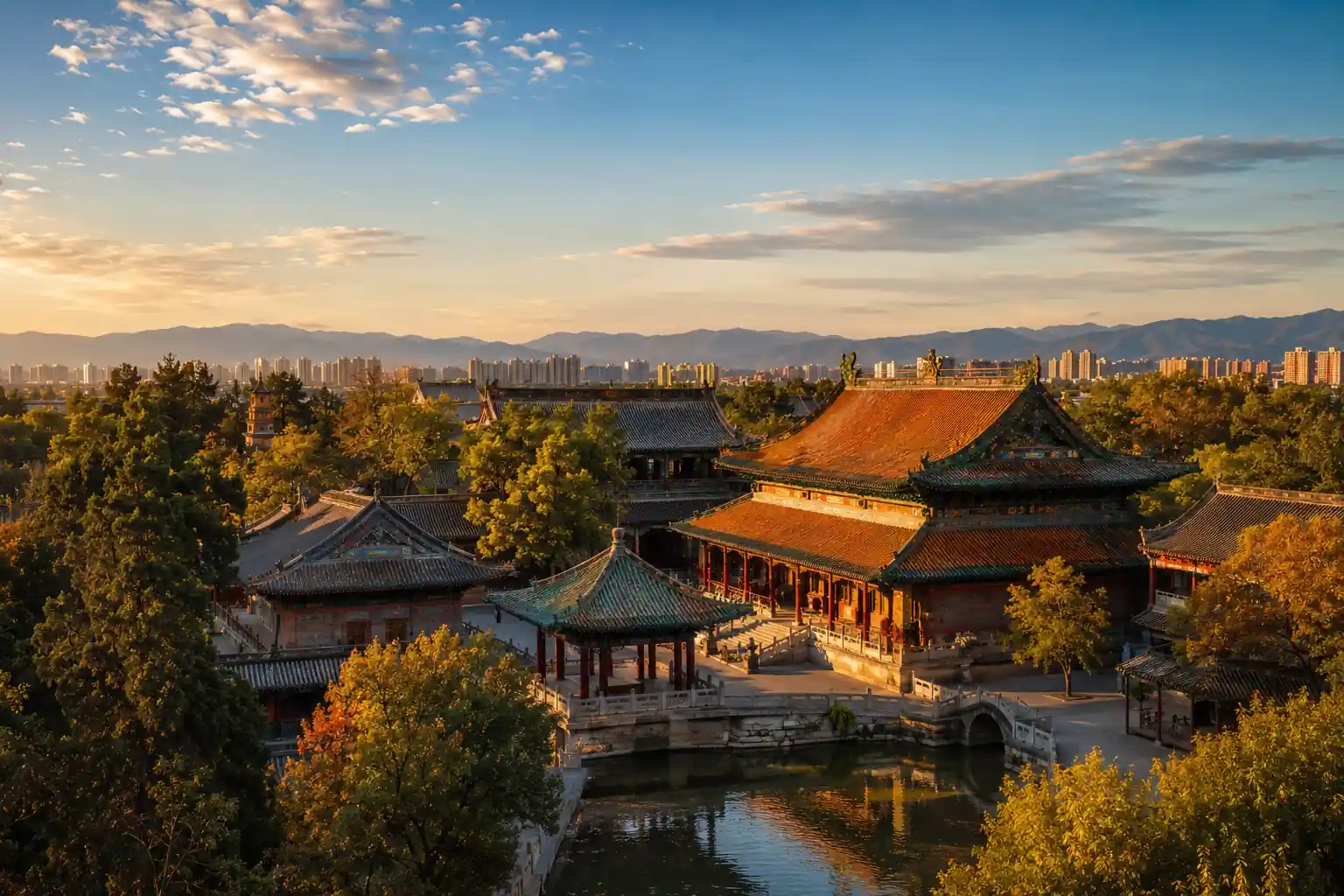
Taiyuan is a practical base for Shanxi history routes, with major temples, provincial museums, and access to Pingyao or Wutai Mountain.
Suggested stay
1-2 days
Travel style
Heritage Base
Best for
Shanxi history, museums, onward routes
Content confidence
Reviewed for practical travel use
Taiyuan city overview, suggested stay, highlights, transport notes, nearby trips, and connected planning guides have been reviewed for practical trip planning.
Use this city page as a planning framework. Confirm current opening hours, ticket windows, transport schedules, and local rules before booking.
Check official sources before booking time-sensitive items.
Planning overview
How to Plan Taiyuan
Taiyuan works best as a practical Shanxi base rather than a city of nonstop headline sights. Its strengths are older temple architecture, a strong provincial museum, and straightforward onward links to places such as Pingyao, Datong, and Mount Wutai. Give the city at least one focused day if Shanxi history matters to you: one half for a major heritage site such as Jinci, one half for central museums or pagodas. Plan by specific stops, not by wandering for atmosphere.
Jinci TempleShanxi MuseumTwin Pagoda Temple
Best suited for
Shanxi history routes
Temple and Buddhist art
Museum-first city stops
Base for Pingyao or Wutai
Best time to visit
Spring and autumn are the easiest seasons for city walks and heritage days outside the center. Summer is greener around Jinci and the southwest hills, but it is also the wettest season; winter is cold and dry, yet still workable if your plan leans toward museums, temples, and short urban hops.
Stay near Wuyi Square, central Yingze, or another stop with easy access to Metro Lines 1 and 2 if this is your first visit.
Group Jinci, Mengshan Giant Buddha, and Tianlongshan on the same southwest day; they are not quick add-ons from downtown.
Use Shanxi Museum as your indoor anchor on hot, rainy, or hazy days, then add Fen River walks or pagodas if conditions improve.
Save the Chinese names for Jinci, Yongzuo Temple, and Chongshan Temple on your phone, because drivers may not recognize English names alone.
Jinci shows why Taiyuan matters to heritage travelers: it concentrates major Song-era architecture and sculpture in one manageable stop.
Suggested routes
Itineraries for Taiyuan
Shanxi Museum is the best single overview stop before you continue to other heritage cities in the province.
Wikimedia Commons
1 day
Taiyuan essentials
Best for travelers using Taiyuan as a Shanxi base but still wanting one meaningful city day.
1Jinci in the morning before the site gets busier
2Shanxi Museum after lunch for provincial context
3Twin Pagoda Temple in the late afternoon
4Return to central Taiyuan for dinner around Wuyi Square or your hotel area
2 days
City plus southwest heritage
Enough time to separate central Taiyuan from the more spread-out heritage belt and avoid rushing.
2Day 2: Jinci and the southwest belt, adding Mengshan or Tianlongshan
3Day 3: Day trip or overnight extension to Pingyao Ancient City
4Day 4: Continue toward Mount Wutai or Datong if you are building a larger Shanxi route
Neighborhoods
Best Areas to Explore
Central Taiyuan and Wuyi Square
This is the most practical base for a short stay, with strong metro access, hotels, and easy movement between the main railway station, shopping streets, and older temple stops. Taiyuan is not a city where every district is equally rewarding on foot, so staying central saves time.
Wuyi SquareChongshan TempleTaiyuan Railway Station corridor
Fen River west bank and museum quarter
The west bank of the Fen River gives Taiyuan some breathing room, and it is the logical half-day for travelers who want context before heading deeper into Shanxi. Shanxi Museum is the anchor here, with river walks and open views helping break up heavier historical sightseeing.
Shanxi MuseumFen River pathsWest-bank city views
Jinyuan and the southwest heritage belt
This is the most important planning zone for serious visitors. Jinci, Mengshan Giant Buddha, and Tianlongshan Grottoes are spread across the southwestern edge of the city, so the day works best when you treat it as a dedicated heritage circuit rather than a quick suburban detour.
JinciMengshan Giant BuddhaTianlongshan Grottoes
Twin Pagoda area and southeast urban edge
The area around Yongzuo Temple is useful for one of Taiyuan's signature visual stops, especially if you want a shorter half-day close to the city rather than a full southwestern excursion. It pairs well with central Taiyuan, not as a standalone district for long wandering.
Jinci is Taiyuan's strongest heritage site and the clearest reason to give the city more than a simple transit stop. The complex is known for the Hall of the Holy Mother, Song-dynasty clay sculptures, ancient cypresses, springs, and layers of temple, garden, and memorial architecture.
Treat it as a half-day anchor and do not leave it until the very end of an already crowded itinerary.
Shanxi Museum
For many travelers, this is the most useful stop in Taiyuan after Jinci. It gives a broad introduction to Shanxi's dynastic history, Buddhist art, archaeology, and regional culture, which makes later visits to Pingyao, Datong, or mountain temples much more legible.
Use it early in your Shanxi route if possible, especially before longer heritage side trips.
Twin Pagoda Temple
Yongzuo Temple, commonly called the Twin Pagoda Temple, is the city's best-known landmark image. The paired Ming pagodas are the main draw, but the site also has stone steles and seasonal peonies that make it more than a quick photo stop.
It fits well at the end of a central city day, especially when you want a shorter outing rather than another long museum block.
Chongshan Temple
Chongshan Temple is one of the easiest major temple stops inside the city proper and a good counterweight to the museum-heavy side of Taiyuan. The surviving Hall of Great Compassion preserves Ming-style architecture and monumental Buddhist statuary that reward travelers who want one serious central heritage stop.
Pair it with Wuyi Square or the railway-station side of the city rather than making a separate cross-town trip for it.
Tianlongshan Grottoes
The grottoes are historically one of Taiyuan's most important Buddhist art sites, with caves developed from the Northern Qi to the Tang period. Many sculptures were removed abroad in the 20th century, so the site today is strongest for travelers who care about art history and ruined but significant places rather than perfectly intact monuments.
Choose this over lighter city sightseeing only if Buddhist sculpture and cave heritage are already part of your Shanxi plan.
Getting around
Transport Notes
Arriving by air
Taiyuan Wusu International Airport is about 15 km southeast of downtown. It is the province's main airport, and Metro Line 1 now reaches the airport terminals, making city transfers easier than in many second-tier Chinese cities.
Arriving by train
Taiyuan Railway Station and Taiyuan South Railway Station are the key rail gateways. Taiyuan South is especially useful for high-speed routes, while the city as a whole works as the main rail base for wider Shanxi travel.
Getting around
The metro is useful for the central city, with Line 2 running north-south and Line 1 linking the airport, Taiyuan Railway Station, Taiyuan South Railway Station, and central stops such as Wuyi Square. For the southwest heritage belt, however, you will often still rely on taxi or car.
Taxis and ride-hailing
Taxis and ride-hailing are often the simplest way to reach Jinci, Mengshan, or Tianlongshan without wasting time on transfers. Save destinations in Chinese and confirm which gate or scenic-area entrance you want before you leave.
Food
What to Eat
Start with Shanxi noodles and vinegar
Taiyuan is a good place to begin understanding Shanxi food through noodles rather than through one famous signature dish. Look for knife-cut noodles (daoxiao mian), oat noodle rolls (youmian kaolao), and dishes seasoned with mature Shanxi vinegar, which gives the local food its sharper, deeper edge.
Keep meals central and flexible
For short stays, eat near Wuyi Square, central Yingze, or inside dependable mall food floors rather than crossing the city for one restaurant name. Taiyuan is more rewarding when food supports your route between museum and temple stops instead of becoming a separate logistics project.
Add one broader Shanxi meal
Beyond noodles, this is a good city for a simple Shanxi dinner built around dumplings, potstickers (guotie), braised dishes, or lamb-based soups and stir-fries. The best approach is to order widely from a reliable local restaurant and treat Taiyuan as your entry point to regional cuisine, not as a fine-dining destination.
Go next
Easy Trips from Taiyuan
Pingyao
The easiest classic extension from Taiyuan, reached by rail and best done as a long day or overnight for walls, courtyards, and Shanxi merchant history.
Mount Wutai
One of China's major Buddhist mountain destinations, usually approached from Taiyuan as an overnight or early-start side trip rather than a casual city add-on.
Datong
A strong northbound continuation if your Shanxi route includes major Buddhist art and frontier history, especially Yungang and other Datong-area sights.
Keep planning
Useful next pages for Taiyuan
Connect this city page with the practical setup decisions most likely to affect arrival, tickets, transport, and daily movement.