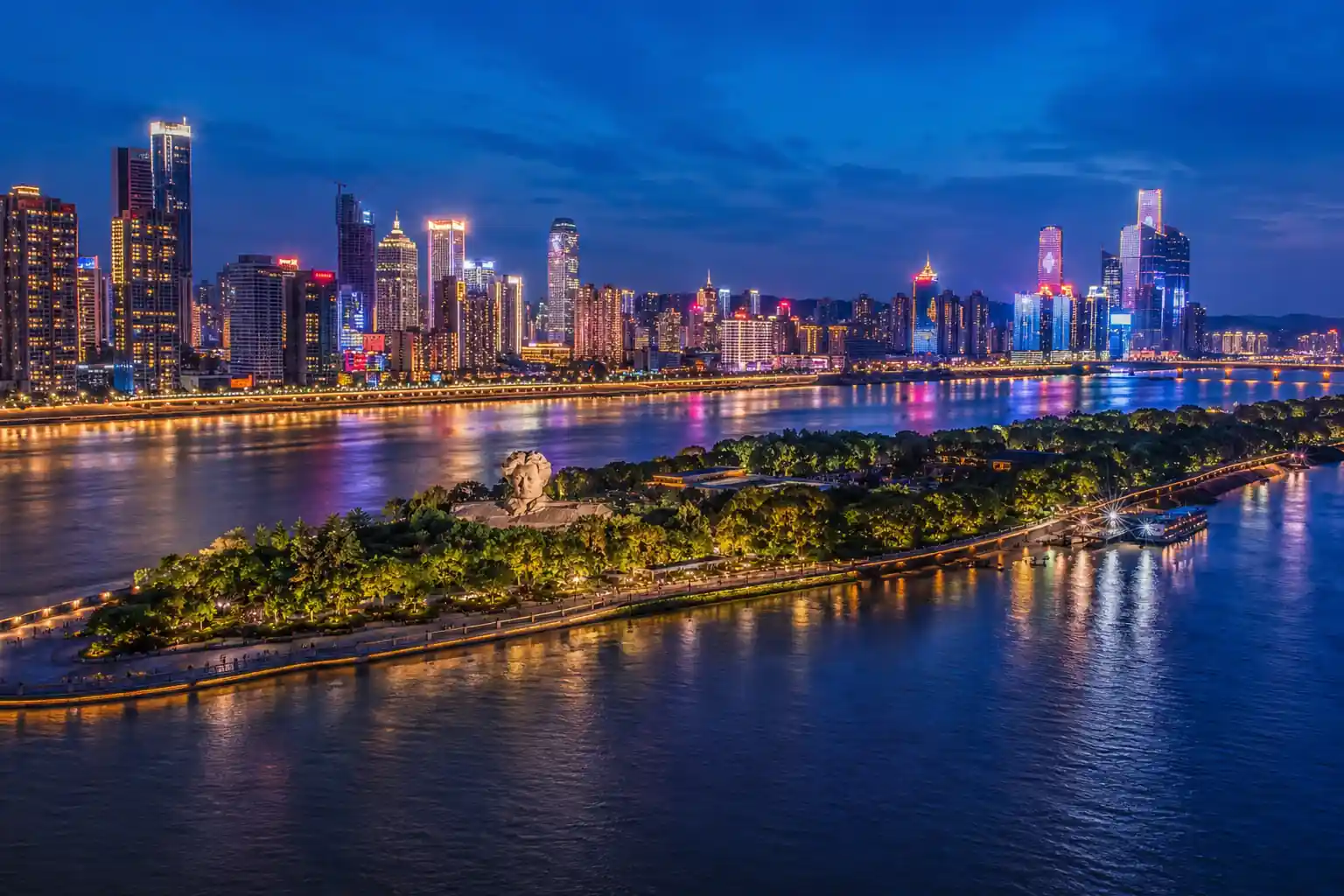
Changsha is a lively Hunan capital known for spicy food, late-night streets, museums, island walks, and an energetic local travel scene.
Suggested stay
2-3 days
Travel style
Food
Best for
Hunan food, nightlife, city breaks
Content confidence
Reviewed for practical travel use
Changsha city overview, suggested stay, highlights, transport notes, nearby trips, and connected planning guides have been reviewed for practical trip planning.
Use this city page as a planning framework. Confirm current opening hours, ticket windows, transport schedules, and local rules before booking.
Check official sources before booking time-sensitive items.
Planning overview
How to Plan Changsha
Changsha suits travelers who want a contemporary Chinese city with strong local food, late hours, and a few historically weighty stops rather than a long monument checklist. The city stretches along the Xiang River, so planning works best when you separate the Yuelu Mountain side, Orange Isle, and the central shopping-and-food core into different blocks. Give it two or three days: one for culture, one for riverfront walks and food, and another for nightlife or a short Hunan side trip.
Orange IsleHunan MuseumTaiping Street
Best suited for
Hunan food trips
Nightlife and urban weekends
Modern-city China context
Short Hunan rail extensions
Best time to visit
Spring and autumn are the easiest seasons for long walks, riverfront evenings, and Yuelu Mountain. Summer is very hot, humid, and rainy, so outdoor sightseeing is better done early or late, while winter is damp and gray but still workable for museums, food, and short city breaks.
Stay near Wuyi Square, Huangxing Road, or another central metro stop if this is your first Changsha visit.
Use the metro for the main cross-city moves, then expect extra walking on Orange Isle, around Yuelu Mountain, and along the riverfront.
Plan food later in the day than you might elsewhere: central snack streets and night eating areas are strongest in the evening.
Check reservation and entry rules before building a day around Hunan Museum or other popular cultural sites.
The Xiang River corridor is the easiest way to understand how Changsha fits together for visitors.
Suggested routes
Itineraries for Changsha
Orange Isle matters because it combines a river walk with one of the city's clearest historical reference points.
Wikimedia Commons
1 day
Changsha essentials in one long day
Best for a short city break. Keep the route central, and use the evening for food rather than one more museum.
1Hunan Museum in the morning if you have a reservation
2Orange Isle or a Xiang River walk in the afternoon
3Wuyi Square, Huangxing Road, and Taiping Street for dinner and snacks
4Optional Du Fu River Pavilion or riverfront night view
2 days
Food and culture balance
Enough time to give Changsha both a serious cultural block and the late-night city block it deserves.
1Day 1: Yuelu Academy, Yuelu Mountain, Aiwan Pavilion, then Orange Isle or the riverfront
2Day 2: Hunan Museum, Kaifu Temple or Martyrs Park, then central food streets after dark
3Keep one evening open for snacks, crayfish, or bars rather than overscheduling landmarks
3-4 days
Deeper Changsha plus a Hunan side trip
Use the extra time to slow down the city core and add one short regional rail trip instead of forcing more urban attractions.
1Day 1: Yuelu Mountain side, academy, and west-bank walking
2Day 2: Hunan Museum, Kaifu Temple, and the central shopping-and-food core
3Day 3: Orange Isle, Du Fu River Pavilion, and a relaxed night focused on food
4Day 4: Take a rail side trip to Yueyang, Zhuzhou, or Xiangtan depending on your interests
Neighborhoods
Best Areas to Explore
Yuelu Mountain and the west bank
This is the most rewarding side of Changsha for travelers who want older cultural layers rather than malls and night streets. Yuelu Academy, Hunan University, Aiwan Pavilion, and the slopes of Yuelu Mountain fit naturally into one slower half-day or full day.
Yuelu AcademyAiwan PavilionHunan University area
Orange Isle and the Xiang Riverfront
Orange Isle sits in the Xiang River and gives Changsha its most recognizable public-space walk. It is best treated as an outdoor block for open views, the Young Mao Zedong statue, and a clear sense of the river separating the historic west bank from the modern core.
Orange IsleYoung Mao Zedong statueXiang River promenades
Wuyi Square and the central walking streets
The commercial center around Wuyi Square is where many first-time visitors base themselves because transport is easy and the city stays active late. Huangxing Road, Taiping Street, side lanes, malls, snack stops, and bars all overlap here, so it works best for evenings and flexible meals.
Wuyi SquareHuangxing Road Pedestrian StreetTaiping Street
Museum and temple quarter north of the core
North of the main shopping center, the pace becomes less hectic and the city feels more civic than commercial. Hunan Museum, Martyrs Park, and Kaifu Temple make this the right zone when you want Changsha's historical and local side without committing to a full west-bank excursion.
Hunan MuseumMartyrs ParkKaifu Temple
What to see
Top Sights
Yuelu Academy
Founded in 976, Yuelu Academy is one of the best reasons to take Changsha seriously as a cultural city. It sits on the east side of Yuelu Mountain and reads as both a historic Confucian academy and part of the longer story that leads into modern Hunan University.
Combine it with Yuelu Mountain and Aiwan Pavilion instead of treating it as an isolated ticket stop.
Orange Isle
The island runs down the Xiang River through the middle of the city and works as Changsha's signature outdoor landmark. It is less about intricate sightseeing and more about space, river views, and the city's political memory through the Young Mao Zedong statue.
Do not rush it as a quick photo stop; allow time for walking and choose a cooler part of the day in summer.
Yuelu Mountain
Yuelu Mountain gives Changsha its most useful elevated walking area, with wooded paths, pavilions, university edges, and broad urban views. It is especially helpful if the city center starts to feel too commercial and you want a slower block without leaving town.
Start earlier in the day if the weather is warm and humid, and pair the walk with the academy at the foot of the mountain.
Hunan Museum
The provincial museum is the city's strongest indoor stop and the best place to understand Hunan beyond the current city break image. Its key holdings come from Mawangdui, including major Han-dynasty finds associated with the tombs of the Marquis of Dai and Xin Zhui.
Treat this as a real half-day anchor and verify reservation rules before you go.
Kaifu Temple
Kaifu Temple adds a quieter religious layer to a city more often marketed for food and youthful nightlife. The temple dates to 927 and offers a calmer, more devotional atmosphere than the pedestrian-street core.
Visit on the same day as Hunan Museum or the northern part of the city, not as a long cross-town detour by itself.
Getting around
Transport Notes
Arriving by air
Changsha Huanghua International Airport is the city's main airport. For many travelers, the simplest transfer is either Metro Line 6 into the city or the maglev to Changsha South Railway Station, which covers the airport-station link in just over 10 minutes before you switch to the metro.
Arriving by train
Changsha South Railway Station is the key high-speed rail hub, connecting the Beijing-Guangzhou-Shenzhen-Hong Kong and Shanghai-Kunming corridors. Changsha Railway Station still matters for conventional and regional services, so check which station your ticket actually uses.
Getting around
The metro is the easiest way to move between the main visitor zones. It works especially well for the central core, Orange Isle connections, and train-station transfers, while the riverfront and Yuelu side still reward walking once you arrive.
Taxis and ride-hailing
Taxis and ride-hailing are useful late at night, in bad weather, or when summer heat makes extra walking less appealing. Keep hotel names and major destinations in Chinese to avoid friction.
Food
What to Eat
Start with Hunan heat
Changsha is a strong city for travelers who want bold, direct flavors rather than delicate regional cooking. Look for chopped chili fish head (duojiao yu tou), stir-fried pork with chili (xiaochao rou), stinky tofu, and other dishes where fresh and pickled chilies shape the whole meal.
Eat around the central walking streets
The easiest eating strategy is geographical rather than restaurant-specific. Wuyi Square, Huangxing Road, Taiping Street, and the surrounding lanes give you the highest density of snacks, chain standbys, late-night options, and places to keep sampling without crossing town.
Lean into late-night Changsha
One of the city's strengths is that it stays social after dinner, with snack stops, crayfish, tea shops, and busy pedestrian streets carrying the evening. If you only eat a formal early dinner and go back to the hotel, you miss part of what makes Changsha feel distinctly local.
Go next
Easy Trips from Changsha
Yueyang
A strong history-and-lake extension north of Changsha, commonly reached by high-speed rail in under an hour if you want to add Yueyang Tower and Dongting Lake context.
Zhuzhou
Useful for travelers who want to see another major Hunan city without a long transfer, with regional rail links making it an easy short add-on from Changsha.
Xiangtan
Connected by the Changsha-Zhuzhou-Xiangtan intercity railway, Xiangtan works as a quieter regional stop and a practical extension toward Mao-related sites in the wider area.
Keep planning
Useful next pages for Changsha
Connect this city page with the practical setup decisions most likely to affect arrival, tickets, transport, and daily movement.