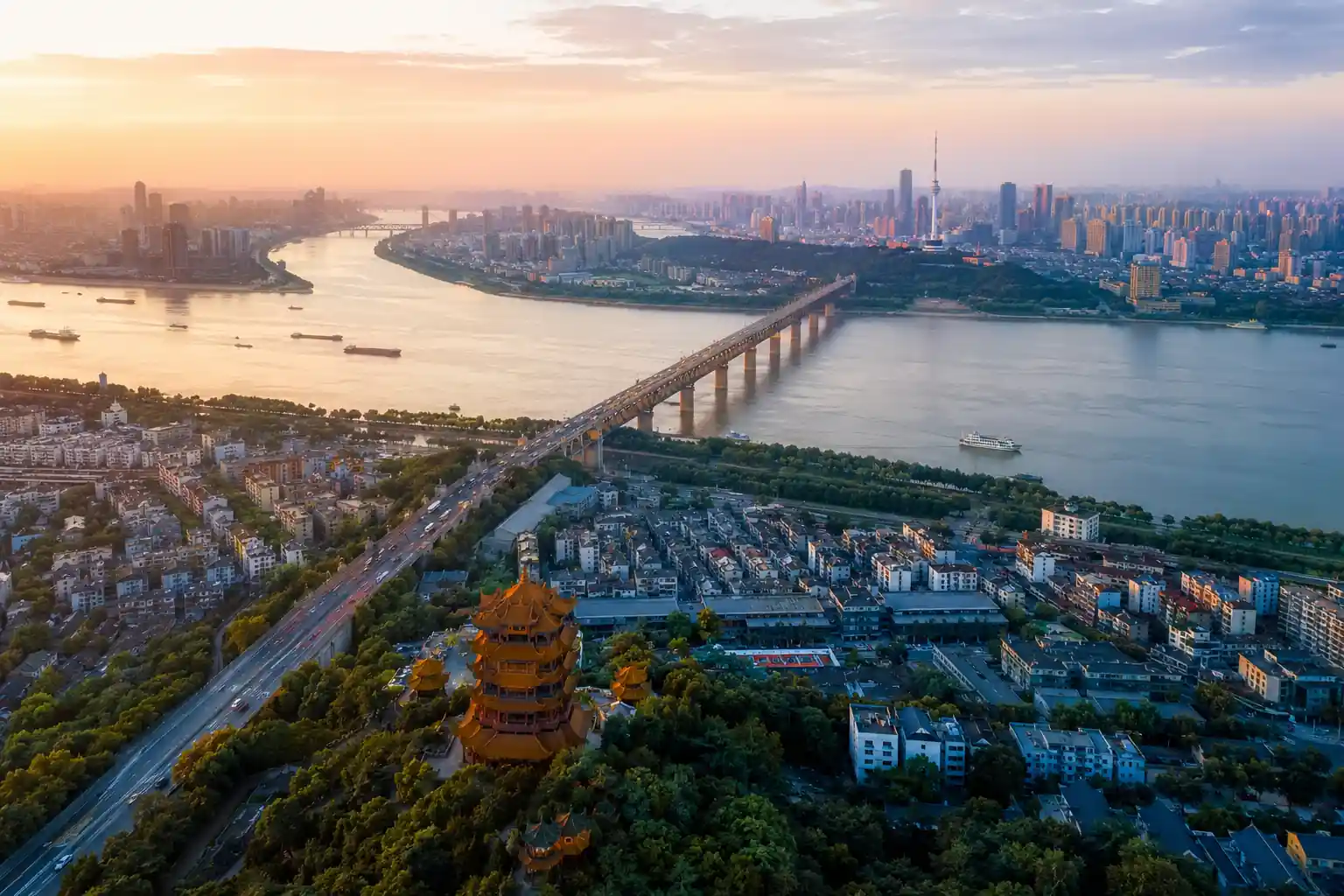
Wuhan is a large central China hub with river bridges, lakes, universities, history, and some of the country's best breakfast culture.
Suggested stay
2-3 days
Travel style
River City
Best for
Food, river views, transit hub routes
Content confidence
Reviewed for practical travel use
Wuhan city overview, suggested stay, highlights, transport notes, nearby trips, and connected planning guides have been reviewed for practical trip planning.
Use this city page as a planning framework. Confirm current opening hours, ticket windows, transport schedules, and local rules before booking.
Check official sources before booking time-sensitive items.
Planning overview
How to Plan Wuhan
Wuhan works best for travelers who want a large Chinese city with strong local habits rather than a polished postcard center. The appeal is in the mix: Yangtze viewpoints, republican-era history, East Lake green space, major museums, universities, and one of China's strongest breakfast cultures. Plan it by riverbank and district, not by trying to cross the whole city too many times in one day.
Yellow Crane TowerEast LakeHubu Alley
Best suited for
Breakfast and snack-focused trips
River-city walks and viewpoints
Republican-era and 1911 history
Big-city stops beyond Beijing and Shanghai
Best time to visit
Spring and autumn are the easiest seasons for Wuhan, especially March to May and October to November. Summer is famously hot and humid, while winter is workable but damp and grey, making museums and food districts more rewarding than long scenic days.
Stay in Wuchang for Yellow Crane Tower, East Lake, and easier first-time sightseeing, or in Hankou if you want historic streets, shopping, and a more commercial base.
Use the metro for most long moves, but group sights by side of the river because Wuhan is broad and cross-river detours can waste time.
Avoid building heavy outdoor days in July and August unless you handle heat well; Wuhan summers are humid, hot, and tiring by mid-afternoon.
Put breakfast on the itinerary, not just dinner: hot dry noodles, doupi, mianwo, and other snacks are part of the city's rhythm.
Start with the river scale: Wuhan makes more sense once you see how the Yangtze and Han divide the city.
Suggested routes
Itineraries for Wuhan
The bridge shows why Wuhan is best planned as a river city, not just a list of isolated attractions.
Wikimedia Commons
1 day
River city essentials
Best for a stopover or a fast first visit. Keep the route mostly in Wuchang so you are not spending the day crossing the river.
1Yellow Crane Tower in the morning
2Hubu Lane or nearby Wuchang snacks for lunch
3Walk or view the Wuhan Yangtze River Bridge area in the afternoon
4Ferry or riverfront evening depending on weather
2 days
First-time Wuhan
Enough time to combine history, a major museum, and the city's best green space without rushing across every district.
1Day 1: Yellow Crane Tower, Wuchang riverfront, bridge views, and an evening ferry or Hankou walk
2Day 2: Hubei Provincial Museum, East Lake, and Wuhan University or nearby lake walks
3Add Hankou historic streets if you want more city texture after dark
3-4 days
Deeper city and slower neighborhoods
Use the extra time for food, old commercial blocks, and one quieter district rather than turning Wuhan into a checklist.
1Day 1: Wuchang old core, Yellow Crane Tower, and the Yangtze riverfront
2Day 2: Hubei Provincial Museum, East Lake, and Wuhan University
3Day 3: Hankou riverfront, old concessions, Jianghan Road, and evening food streets
4Day 4: Hanyang with Guiyuan Temple and Qintai area, or use the day for a nearby rail trip
Neighborhoods
Best Areas to Explore
Wuchang old core
This is the most useful first-time sightseeing base if you want Wuhan's oldest identity: Yellow Crane Tower, the riverbank, ferry links, and 1911-revolution history. It feels less polished than the biggest east-coast cities, but that is part of the point.
Eastern Wuhan gives you the city's best green break: East Lake trails, Wuhan University, and the Hubei Provincial Museum. It is the strongest area when you want a slower day that mixes water, campus scenery, and one major indoor stop.
East Lake GreenwaysHubei Provincial MuseumWuhan University
Hankou riverfront and old concessions
Hankou carries the city's treaty-port and commercial history, with surviving concession-era architecture, broad avenues, and busy retail streets. It is less about one monument than about walking the riverfront, old blocks, and transport-linked shopping areas together.
Historic concession streetsJianghan Road areaWuhan Customs House Wharf
Hanyang and the western bank
Hanyang is the quieter counterweight to Wuchang and Hankou, useful for temple visits, industrial-modern history, and good river perspectives back toward the main skyline. It works well when paired with the Yangtze bridge area rather than as a separate full day.
Guiyuan TempleQintai areaGuishan waterfront
What to see
Top Sights
Yellow Crane Tower
Wuhan's best-known landmark stands above the Wuchang side of the Yangtze and links the city to older poetry, river traffic, and imperial-era memory. The current structure is modern, but the value for visitors is the overview of the city's geography and the symbolic weight it still carries.
Pair it with the bridge area and nearby Wuchang streets rather than treating it as a standalone taxi stop.
East Lake
East Lake is the city's main breathing space: a huge scenic area with greenways, parks, dikes, and access points spread across a large section of eastern Wuhan. It is better approached as a choose-one-part landscape day than as a single attraction you can fully cover in an hour.
Enter from one practical access point such as the museum or Liyuan side and accept that you are only seeing one slice of a very large park.
Hubei Provincial Museum
This is Wuhan's strongest museum stop and one of the most useful ways to understand Hubei beyond the city itself. Its collections of excavated artifacts, musical instruments, and Chu-related material make it a worthwhile anchor even for travelers who are not building the trip around archaeology.
Do not leave this for late afternoon; it is popular, and it works best when paired with East Lake on the same side of the city.
Wuhan Yangtze River Bridge
Built with Soviet aid and opened in the 1950s, the bridge remains one of the clearest expressions of modern Wuhan as an industrial and transport crossroads. For visitors, it is valuable less as engineering trivia than as a way to feel the scale between Wuchang and Hanyang.
Use it in good visibility and combine it with Yellow Crane Tower or the nearby riverbanks instead of making a special cross-city trip just for the bridge.
Guiyuan Temple
Guiyuan Temple is one of the city's most rewarding religious sites and a good change of pace after river viewpoints and museums. The temple complex is especially known for its Arhat Hall and offers a calmer, more devotional atmosphere than the city's headline landmarks.
Visit on a weekday morning if possible, when the temple is easier to appreciate without weekend crowds.
Getting around
Transport Notes
Arriving by air
Wuhan Tianhe International Airport is the city's main air gateway. For many travelers the simplest transfer is Metro Line 2, which runs directly between the airport and major urban districts.
Arriving by train
Wuhan has multiple useful rail gateways rather than one single station. Wuhan Railway Station is important for many high-speed routes, while Hankou and Wuchang Railway Stations are often more convenient depending on which side of the river you stay on.
Getting around
The metro is the most practical way to cover long distances in this spread-out city, and the network is large enough that most travelers can rely on it for the core sights. Walking works best once you are already inside one district, especially around East Lake, Wuchang riverfront zones, and parts of Hankou.
Taxis and ride-hailing
Taxis and ride-hailing are useful late at night, in summer heat, or when metro transfers become awkward across the river. Keep destination names in Chinese and expect traffic to be slower than the map suggests at peak times.
Food
What to Eat
Start with breakfast, not with dinner
Wuhan is one of China's best breakfast cities. Look first for hot dry noodles (reganmian), doupi, and mianwo, because these are everyday foods that make more sense in the morning than as late-night novelty snacks. If you only arrive hungry for dinner, you miss part of what locals talk about when they talk about Wuhan food.
Use classic snack streets carefully
Hubu Lane is famous and still useful as a quick orientation stop because it gathers signature snacks in one place, including reganmian and mianwo. It is better treated as a practical tasting stop than as the city's single best food experience; after that, keep eating in ordinary neighborhood streets and mall food floors.
Go beyond noodles
Wuhan food is not just about one bowl of noodles. Add duck neck for a stronger snack style and lotus root soup for something more rooted in Hubei home cooking. A good Wuhan food day usually mixes quick breakfast items, spicy snacks, and one slower meal rather than chasing only one famous street.
Go next
Easy Trips from Wuhan
Yueyang
A reasonable southbound extension if you want another Yangtze-side city with a famous historic tower and a different Hunan feel.
Jingzhou
Good for travelers who want a more history-led Hubei stop with old walls and a slower pace than Wuhan.
Yichang
A natural onward move if your route is heading toward the Three Gorges or broader Yangtze travel in western Hubei.
Keep planning
Useful next pages for Wuhan
Connect this city page with the practical setup decisions most likely to affect arrival, tickets, transport, and daily movement.