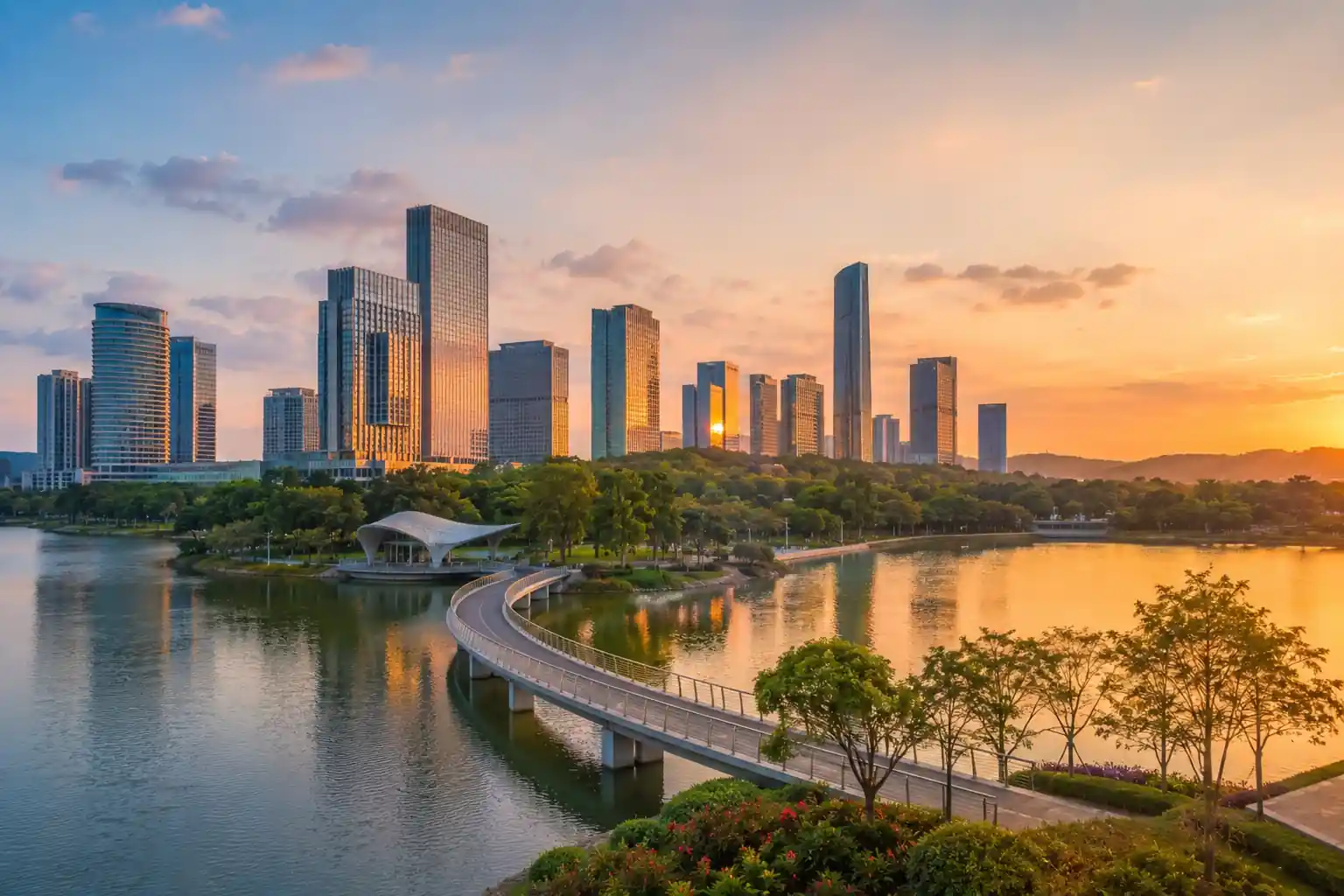
Dongguan is a practical Greater Bay Area stop with Humen history, parks, food streets, and easy movement between Guangzhou and Shenzhen.
Suggested stay
1 day
Travel style
Bay Area
Best for
Business travel, Bay Area routes, short stops
Content confidence
Reviewed for practical travel use
Dongguan city overview, suggested stay, highlights, transport notes, nearby trips, and connected planning guides have been reviewed for practical trip planning.
Use this city page as a planning framework. Confirm current opening hours, ticket windows, transport schedules, and local rules before booking.
Check official sources before booking time-sensitive items.
Planning overview
How to Plan Dongguan
Dongguan works best as a practical Pearl River Delta stop rather than a destination you overplan. It suits business travelers with a free day, repeat visitors to south China, and anyone interested in seeing how a manufacturing city still carries older Lingnan gardens, Opium War history, and a few useful green spaces. Keep the day in two clusters: central Dongguan for Keyuan and civic stops, then Humen if you want the city's strongest historical material.
Keyuan GardenHumen BridgeSongshan Lake
Best suited for
Business trips with one free day
Opium War history
Greater Bay Area routing
Low-key local city stops
Best time to visit
October to December is usually the easiest period for walking, with lower humidity and more manageable temperatures. March and April are workable, but the city can already feel damp. Late spring and summer are hot, wet, and storm-prone, so indoor museums and flexible transport matter more then.
Stay in Nancheng, Dongcheng, or near Humen Station if you are fitting Dongguan around a broader Guangzhou-Shenzhen route.
Do not plan Dongguan as a walk-everywhere city: use Line 2 where it helps, then expect ride-hailing for cross-town moves.
If Humen is the point of your visit, check current reservation rules for the Opium War Museum sites before you travel.
Keep meals practical and local: Dongguan is spread out, so it is usually better to eat near the area you are already visiting.
Dongguan is easier to understand as a spread-out Pearl River Delta city with a few strong clusters rather than a single compact historic core.
Suggested routes
Itineraries for Dongguan
This image shows the Humen waterfront where bridge infrastructure and Opium War fortifications sit in the same landscape, which is why many visitors make Humen their second anchor.
Wikimedia Commons
1 day
Historic Dongguan in two clusters
Best for a day trip or a free day on a business stay. Keep the morning central, then shift to Humen for the city's strongest history.
1Start with Keyuan and nearby Guancheng museums in the morning
2Move through Nancheng for lunch or a short museum break if weather is poor
3Spend the afternoon at the Opium War Museum or Sea Battle Museum in Humen
4Finish with Weiyuan Fort and the Humen waterfront before returning by rail or car
2 days
City history plus a slower outdoor day
A better first-time plan if you want both Dongguan's historical material and a sense of its newer, greener edge.
1Day 1: Keyuan, Guancheng, Nancheng civic stops, then Humen museums and fortifications
2Day 2: Songshan Lake, a slower park or lakeside walk, and optional time around the science and technology district
3Use the extra time for Yuehui Garden or South China Mall only if you prefer a lighter, less historical second day
3 days
Dongguan with regional flexibility
This only makes sense if Dongguan is part of a wider Greater Bay Area route or a work trip with open time.
1Day 1: Keyuan, Guancheng, Nancheng, and one evening meal close to your hotel base
2Day 2: Humen, Opium War Museum, Sea Battle Museum, Weiyuan Fort, and the bridge viewpoint area
3Day 3: Songshan Lake or Dalingshan, then decide whether the evening stays local or shifts onward to Guangzhou or Shenzhen
Neighborhoods
Best Areas to Explore
Guancheng and Keyuan
This is the best first stop if you want the older side of Dongguan. Keyuan, the museum cluster, and surviving historic fragments such as Ying'en Gate make more sense here than in the newer business districts, and the area is manageable enough for a short half day.
KeyuanDongguan MuseumYing'en Gate Tower
Nancheng civic center
Nancheng is the modern working core: broad roads, libraries, museums, hotels, malls, and practical transport links. It is not the city's most atmospheric area, but it works well for a business stay or as an indoor-weather fallback around the library, science museum, and botanical garden.
Dongguan LibraryDongguan Science and Technology MuseumDongguan Botanical Garden
Humen waterfront and museums
Humen is where Dongguan becomes historically distinctive. The Opium War Museum sites, Sea Battle Museum, Weiyuan Fort, and the bridge views over the Bocca Tigris make this the right area when you want more than a generic Pearl River Delta city day.
Opium War MuseumSea Battle MuseumWeiyuan Fort
Songshan Lake and Dalingshan side
This is the greener and more contemporary side of Dongguan, mixing lakeside leisure with tech-zone development. It works best when you have extra time, want a slower outdoor stretch, or are already staying nearby for work in the science and technology parks.
Songshan LakeHuawei Ox Horn Campus viewsDalingshan memorial and park areas
What to see
Top Sights
Keyuan
Keyuan is Dongguan's clearest heritage anchor, one of Guangdong's four famous gardens and an important example of Lingnan garden architecture. More than a decorative private garden, it is tied to the city's cultural history and is the easiest place to understand Dongguan before its manufacturing era.
Do this early in the day and pair it with the nearby museum area, because it works better as part of a central Guancheng block than as a standalone detour.
Opium War Museum
The Opium War Museum, also known as the Humen Lin Zexu Memorial Hall, is the main interpretive stop for the 1839 destruction of seized opium and the history around it. It is the best place to understand why Humen matters nationally, not just locally.
Check current reservation requirements before you go, and leave enough time to see the smoke-pit area and nearby temple rather than rushing through the main hall.
Sea Battle Museum and Weiyuan Fort
These two nearby stops make the Humen story concrete: the Sea Battle Museum explains the military context of the Opium Wars, while Weiyuan Fort keeps the landscape itself in view under the Humen Bridge. Taken together, they are stronger than either one alone.
Treat them as one combined visit and use public transport or ride-hailing, because parking can be tight and the site is better when you walk between museum and fort.
Songshan Lake
Songshan Lake is the city's most useful green-space break, especially if you are staying nearby for work or want to see Dongguan's tech-oriented side. It is less about a single monument and more about a slower lakeside route that contrasts with the road-heavy urban core.
Use this when you have extra time or milder weather; it is better as a relaxed half day than as a rushed stop squeezed between central-city sights.
Dongguan Botanical Garden
The botanical garden is one of the prettiest and easiest green stops in the central city, with landscaped ponds, Chinese-style garden elements, and enough space to feel like a break from Dongguan traffic. It is especially useful if you want something outdoors without committing to a long transfer.
Choose this for a lighter central stop, especially in cooler months or when you need a calmer alternative to another museum.
Getting around
Transport Notes
Arriving by air
Dongguan does not have its own major commercial airport, so most visitors arrive through Guangzhou Baiyun or Shenzhen Bao'an. Both airports are usually about an hour from central Dongguan in decent traffic, while Hong Kong International Airport can also work via bus connections and the Humen ferry link.
Arriving by train
Humen Railway Station is the key high-speed entry point on the Guangzhou-Shenzhen-Hong Kong corridor. Dongguan Railway Station, Changping, Dongguan East, and Dongguan West also matter depending on your route, with Changping especially useful for some Hong Kong-linked services and Dongguan West for intercity connections.
Getting around
Dongguan is more car-centric than Guangzhou or Shenzhen, so public transport is workable but not always elegant. Line 2 connects Dongguan Railway Station with Humen, and intercity rail helps on some corridors, but many visitors still rely on ride-hailing for the final leg between museums, parks, and hotel zones.
Taxis and ride-hailing
Ride-hailing is often the most practical option because taxis can be scarce in some areas. Keep destination names in Chinese, especially for Humen sites and outlying park areas, and leave buffer time in wet weather.
Food
What to Eat
Start with Dongguan staples
Start with Chinese sausages (lap cheong), lychees in season, and roast goose. That gives you a sensible local short list: preserved sausage for a classic Cantonese pantry flavor, roast goose for a richer Pearl River Delta meal, and fresh lychees if you happen to be here in the right season.
Use the district you are already in
Because Dongguan is spread out, meal planning works better by area than by chasing a single famous address. Guancheng and central districts are fine for practical local meals around sightseeing, while Humen is easy if your day is built around the Opium War sites. Mall dining and hotel buffets are also common here in a way that fits the city's business-travel rhythm.
Expect a practical dining city
Dongguan is not a polished food-tourism city in the same way as Guangzhou, but it is easy to eat well if you stay flexible. Smaller Chinese restaurants are often the best-value choice, though English menus can be limited; Dongcheng's bar area is a useful fallback when you want more expat-oriented Western options.
Go next
Easy Trips from Dongguan
Guangzhou
The easiest northbound extension, practical by high-speed or intercity rail and usually manageable as a same-day move if Dongguan is only one stop in a longer Pearl River Delta route.
Shenzhen
The natural southbound contrast, with newer urban districts, design-heavy neighborhoods, and simpler first-timer sightseeing; rail links make it an easy next stop from Humen or other Dongguan stations.
Hong Kong
A reasonable onward move if your route stays inside the Greater Bay Area. Depending on your start point, you can use Humen's high-speed corridor, Changping's Hong Kong-linked rail service, or cross-border coach options, but always leave time for border formalities.
Keep planning
Useful next pages for Dongguan
Connect this city page with the practical setup decisions most likely to affect arrival, tickets, transport, and daily movement.