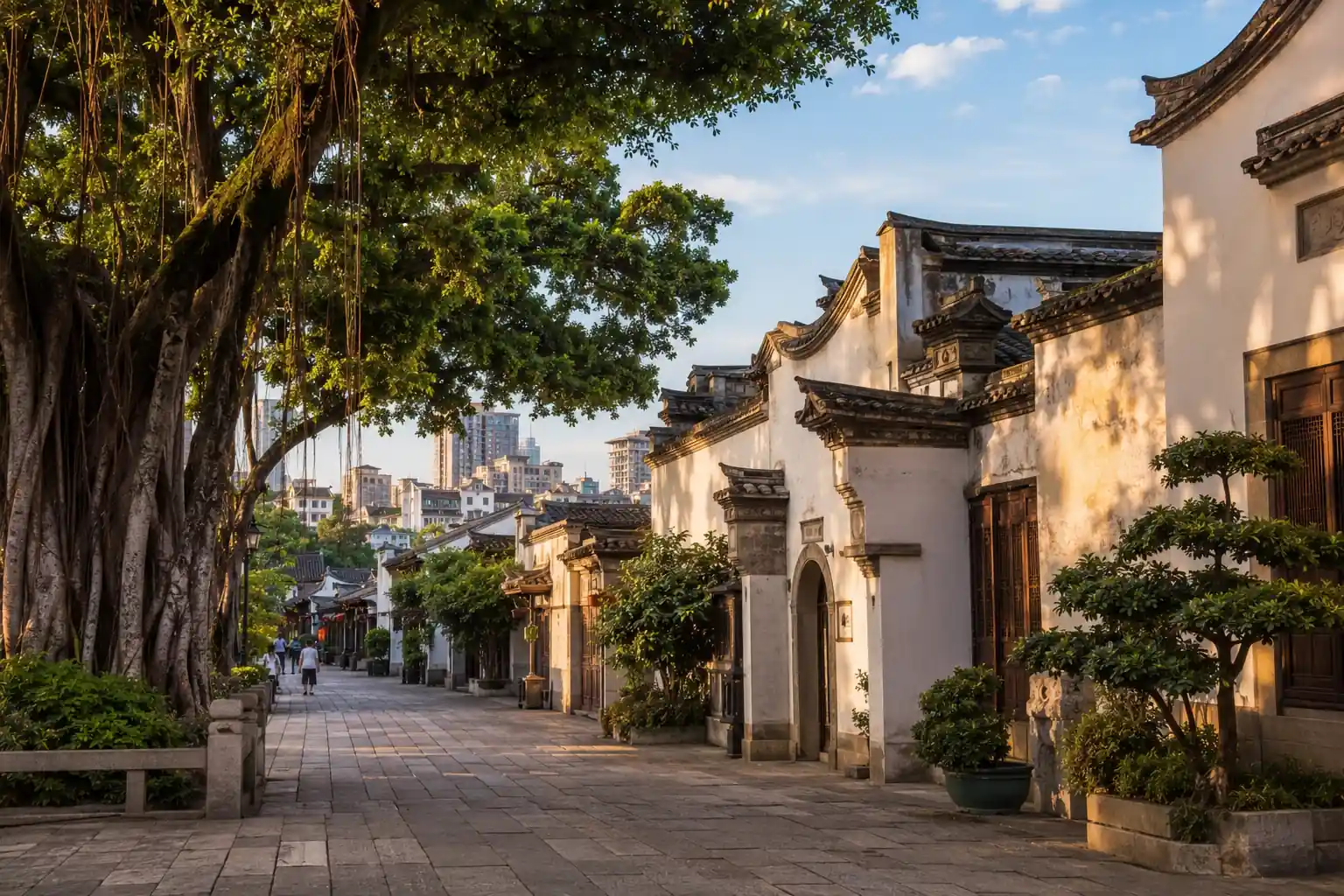
Fuzhou is a calmer Fujian city with old lanes, hot springs, river parks, and a useful position between Xiamen and northern Fujian routes.
Suggested stay
1-2 days
Travel style
Local Culture
Best for
Old streets, hot springs, Fujian food
Content confidence
Reviewed for practical travel use
Fuzhou city overview, suggested stay, highlights, transport notes, nearby trips, and connected planning guides have been reviewed for practical trip planning.
Use this city page as a planning framework. Confirm current opening hours, ticket windows, transport schedules, and local rules before booking.
Check official sources before booking time-sensitive items.
Planning overview
How to Plan Fuzhou
Fuzhou works best for travelers who want a Fujian city with real historical texture but a calmer pace than Xiamen or Guangzhou. Its strengths are not a giant checklist but a combination of preserved lanes, old temples, shaded parks, and practical rail links across the province. Plan it as one compact city day or a light two-day stop, with one half-day for the historic core and another for a park, temple, or mountain outing.
Three Lanes and Seven AlleysWest Lake ParkGushan Mountain
Best suited for
Historic lanes and temples
Calmer Fujian city breaks
Regional food-focused trips
Rail-based Fujian routing
Best time to visit
Spring and autumn are the easiest seasons for walking, with milder temperatures and less oppressive humidity. June to August is very hot and wet, while winter is fairly mild by north China standards but can feel damp. If you come in summer, keep parks, temple hills, and riverfront walks for the cooler ends of the day.
Stay around Gulou, Three Lanes and Seven Alleys, or near a Line 1 metro stop if this is your first visit.
Use the old city and West Lake on the same day, then keep Gushan or a longer temple visit for a separate half-day.
Summer is hot, wet, and typhoon-prone, so outdoor plans are easier early or late in the day.
If you are flying out, check whether the Binhai Express line or airport bus is better for your timing rather than assuming a road transfer.
Fuzhou is easier to understand as a mix of old lanes, temple roofs, and park-filled urban space rather than as a skyline city.
Suggested routes
Itineraries for Fuzhou
West Lake matters because it shows the greener side of Fuzhou that makes the city more comfortable for slower walking.
Wikimedia Commons
1 day
Historic core and park balance
Best for a short Fujian stop when you want one preserved quarter and one easier green-space block.
1Three Lanes and Seven Alleys in the morning
2Hualin Temple or nearby historic stops before lunch
3West Lake Park in the afternoon
4Min River or Zhongzhou Island area after dark
2 days
First-time Fuzhou
Enough time to cover the preserved center properly and still add one temple or mountain half-day.
1Day 1: Three Lanes and Seven Alleys, Hualin Temple, West Lake, evening riverfront
2Day 2: Gushan and Yongquan Temple, then return for dinner in central Gulou or Taijiang
3Swap Gushan for Xichan Temple and a slower city day if the weather is poor
3-4 days
City plus Fujian extension
Use the extra time for one deeper city day and one outward-looking Fujian continuation rather than overfilling central Fuzhou.
1Day 1: Three Lanes and Seven Alleys, Hualin Temple, central Gulou
2Day 2: West Lake Park, Xichan Temple, Taijiang and the Min River
3Day 3: Gushan and Yongquan Temple
4Day 4: Continue to Pingtan, Quanzhou, or Wuyishan depending on your route
Neighborhoods
Best Areas to Explore
Three Lanes and Seven Alleys
This is the historic core most travelers picture first: a dense block of Ming- and Qing-era residences, museums, memorial houses, courtyards, and pedestrian lanes. It is the right place to begin if you want Fuzhou's architecture, local memory, and a walkable first impression in a single area.
Nanhou StreetHistoric residences and memorial housesLane network of the old quarter
West Lake and northern Gulou
This side of central Fuzhou is better for a slower half-day than for box-ticking. West Lake Park, nearby museum stops, and older temple areas give you shade, water, and a break from the denser commercial streets around the historic core.
West Lake ParkFujian Museum areaNearby temple and park walks
Taijiang and the Min River riverfront
The south-central urban side of Fuzhou is more useful for evening walks, transport, and seeing how the city opens toward the river. Come here for Zhongzhou Island views, broader avenues, and a more lived-in urban rhythm than the preserved historic quarter.
Zhongzhou IslandMin River bridges and riverfront viewsCentral shopping and transit corridors
Gushan and eastern Fuzhou
When you need more space, head east for Fuzhou's mountain side. Gushan gives the city a different scale, with temple stops, rock inscriptions, and broader views that work well once you have already covered the old center.
Gushan MountainYongquan TempleRock inscriptions and lookout points
What to see
Top Sights
Three Lanes and Seven Alleys
Fuzhou's signature preserved quarter is a large historic and cultural area built around three lanes and seven alleys, with a strong concentration of Ming- and Qing-era residences. It is less about one monument than about walking the whole fabric slowly and dipping into selected former residences, courtyards, and museum spaces.
Go earlier or later in the day if possible, because the area is more rewarding when the main street is not at its busiest.
West Lake Park
West Lake is one of the easiest places to feel Fuzhou's reputation as a greener city of parks and water. It works less as a single blockbuster attraction and more as a reset between historical sites, especially if you want a slower afternoon of bridges, pavilions, trees, and local park life.
Pair it with nearby museum or temple stops rather than making a long cross-city journey just for the lake alone.
Gushan and Yongquan Temple
Gushan, or Mount Gu, is the city's main mountain outing and the place to add elevation, temple atmosphere, and older stone inscriptions to a city-focused trip. Yongquan Temple is the best-known stop on the mountain, and the overall visit works well when you want a half-day away from traffic and shopping streets.
Treat this as a half-day or longer outing and do not squeeze it into the same block as the old city unless you are moving very fast.
Hualin Temple
Hualin Temple is one of Fuzhou's most important historic structures because its main hall preserves the architectural style of the early Song dynasty. Even if you are not planning a temple-heavy visit, it is a strong stop for travelers interested in old timber architecture and the city's longer historical depth.
This is best combined with the Gulou old-city area rather than treated as a separate cross-town destination.
Xichan Temple
Xichan Temple is a larger Buddhist complex that gives a more active temple visit than Hualin, with bigger grounds and a stronger sense of a functioning religious site. It suits travelers who want temple architecture without leaving the urban area for the mountain.
Use this as your temple choice on hot or wet days when you want something substantial without committing to Gushan.
Getting around
Transport Notes
Arriving by air
Fuzhou Changle International Airport is in Changle District east of the city. The Binhai Express line links the airport corridor with central Fuzhou and reaches Fuzhou Railway Station in roughly 45 minutes, while road transfers are closer to an hour depending on traffic.
Arriving by train
Fuzhou Railway Station and Fuzhou South Railway Station are the two main rail gateways. Fuzhou South is the key station for many high-speed services on the coastal corridor, while Fuzhou Station is more convenient for some central arrivals and airport-rail transfers.
Getting around
The metro is now strong enough for most visitor logistics, with six lines in operation across the city and airport corridor. Line 1 is especially useful because it links the two main railway stations, and central historic areas can then be covered on foot once you arrive.
Taxis and ride-hailing
Taxis and ride-hailing are practical for temple stops, late evenings, or summer heat, especially when you are moving between the old city and Gushan. Keep destination names in Chinese and do not assume that every scenic area is easiest by metro alone.
Food
What to Eat
Start with the classic Fuzhou dishes
Fuzhou cuisine is known for lighter seasoning and a sweet-sour balance compared with many other Chinese regional styles. Look first for Buddha Jumps Over the Wall (fotiaoqiang), Fuzhou fish balls, and lychee pork. If you want something more everyday than a banquet dish, rouyan made with yanpi wrappers and ding bian hu are better everyday anchors.
Use the old city for flexible eating
Three Lanes and Seven Alleys and the surrounding central districts are the easiest places to sample snacks and local dishes without building your whole day around one restaurant. This is a good city for grazing between sights rather than forcing a formal sit-down meal at every stop.
Understand the local flavor profile
Fuzhou food is often more about broth, seafood umami, texture, and gentle balance than about spice. That means a better meal here may be a sequence of soup, fish balls, buns such as guang bing or kompyang, and one stronger signature dish, rather than chasing heat or heavy oil.
Go next
Easy Trips from Fuzhou
Pingtan
A good coastal extension if you want bridges, sea wind, and beaches after a city stop; it works best as an easy onward move or overnight from Fuzhou.
Quanzhou
A stronger history continuation to the south, especially if you want maritime heritage, temples, and a denser old-city atmosphere than Fuzhou.
Wuyishan
Best as an overnight or longer rail extension if you want tea-country scenery, river landscapes, and a very different Fujian setting.
Keep planning
Useful next pages for Fuzhou
Connect this city page with the practical setup decisions most likely to affect arrival, tickets, transport, and daily movement.