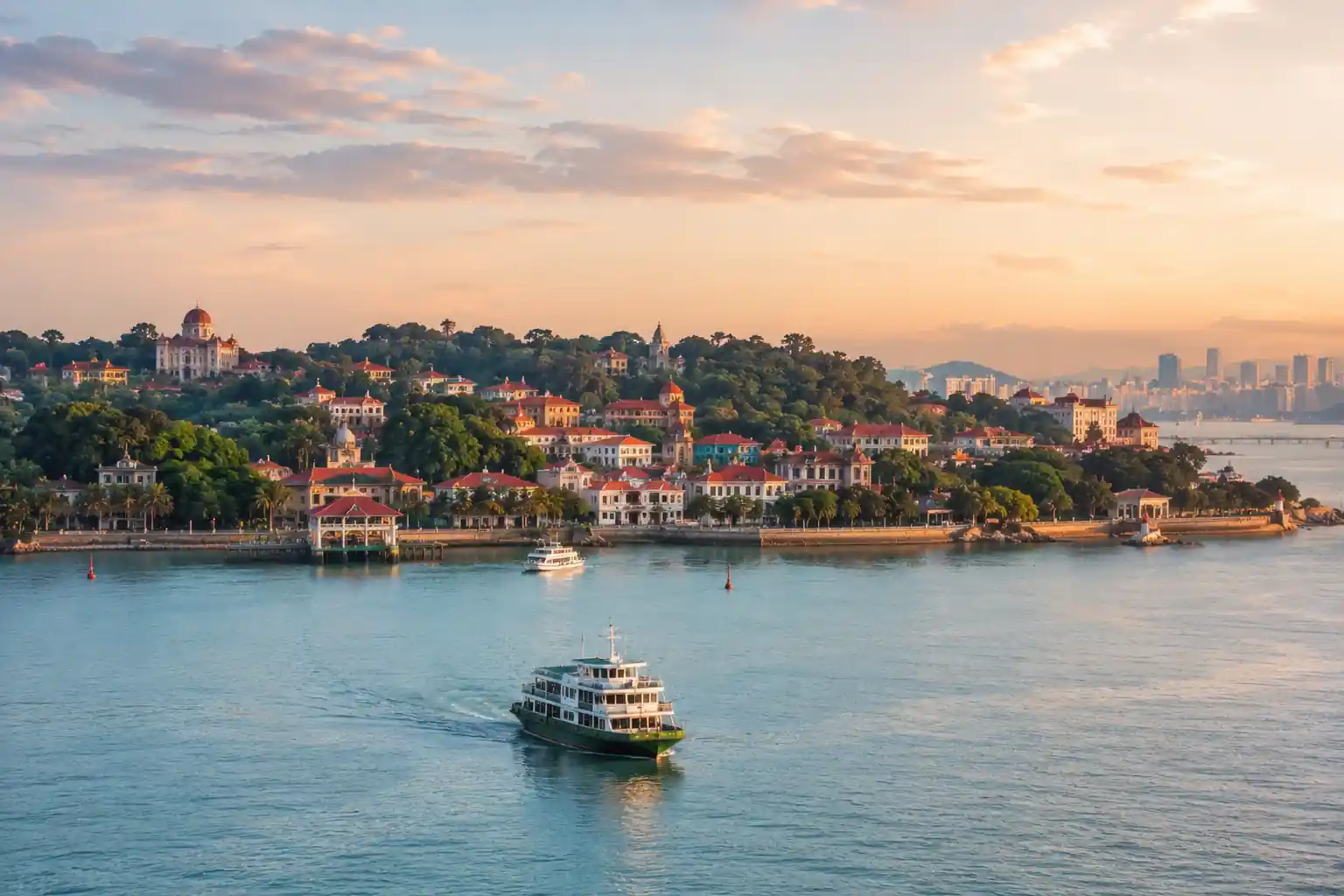
Xiamen is a relaxed coastal city with Gulangyu island, seaside paths, university districts, Fujian food, and good links to tulou routes.
Suggested stay
2-3 days
Travel style
Coastal
Best for
Coast, island walks, Fujian routes
Content confidence
Reviewed for practical travel use
Xiamen city overview, suggested stay, highlights, transport notes, nearby trips, and connected planning guides have been reviewed for practical trip planning.
Use this city page as a planning framework. Confirm current opening hours, ticket windows, transport schedules, and local rules before booking.
Check official sources before booking time-sensitive items.
Planning overview
How to Plan Xiamen
Xiamen is one of the easier coastal cities in China to enjoy at a slower pace: ferry links, seafront walks, a manageable historic core, and enough food and culture to fill two or three relaxed days. It suits travelers who want a softer urban break after bigger inland cities, or who are building a Fujian route around Gulangyu, Minnan culture, and a tulou or Quanzhou extension. Plan by zones, because the best days usually stay on one side of the water.
GulangyuZhongshan RoadHuandao Road
Best suited for
Seaside city breaks
Gulangyu and historic port culture
Fujian food and Minnan heritage
Easy Fujian side trips
Best time to visit
Spring and autumn are the easiest seasons for most travelers, especially March-April and October-November, when walking days are more comfortable and the coast usually feels less oppressive. Summer is hot, humid, and wetter, with typhoon risk from roughly July to September. Winter is mild rather than cold, so it still works well for city walks, ferries, and food-focused trips.
Stay around Zhongshan Road, Shapowei, or near Xiamen Railway Station if this is your first visit and you want easy metro access.
Treat Gulangyu as a half-day or full-day block rather than a quick stop, because ferry queues and walking time can eat into the day.
Use the metro and BRT for longer cross-city moves, then walk along the coast or within compact areas such as Gulangyu, Zhongshan Road, and Jimei.
Keep outdoor plans flexible in summer and typhoon season: heat, rain, and ferry conditions can matter more than the sightseeing checklist.
The waterfront matters because Xiamen works best as a city of ferries, sea views, and slower coastal routes.
Suggested routes
Itineraries for Xiamen
Jimei shows the educational and overseas-Chinese side of Xiamen, which adds depth beyond the island waterfront.
Wikimedia Commons
1 day
Harbor and old-city snapshot
Best for a short stay. Focus on the central harbor and one coastal block instead of trying to cover both island and mainland in a rush.
1Morning ferry to Gulangyu with time for slow walking
2Late lunch back near Zhongshan Road or the ferry side of Siming
3Afternoon South Putuo Temple or Shapowei depending on energy
4Evening coastal walk or skyline views back across the water
2 days
Classic Xiamen first visit
Enough time to balance Gulangyu, the old commercial core, and the southeastern coast without spending the whole trip in transit.
1Day 1: Gulangyu, ferry return, Zhongshan Road, and the old waterfront
2Day 2: South Putuo Temple, Hulishan Fortress, Baicheng Beach, Huandao Road, or Shapowei
3Add Jimei if weather is poor on the coast or if you want a less tourist-heavy half-day
3-4 days
Deeper city plus Fujian extension
Use the extra time to see Jimei properly and add one regional day instead of overfilling the urban core.
1Day 1: Gulangyu and the central harbor district
2Day 2: South Putuo, Hulishan Fortress, Xiamen University area, and the coast
3Day 3: Jimei School Village and a slower food-focused evening back on the island
4Day 4: Day trip to Quanzhou, Kinmen, or a Fujian tulou route depending on logistics and weather
Neighborhoods
Best Areas to Explore
Gulangyu
The city's signature visitor zone is the car-free island just off central Xiamen, known for colonial-era villas, narrow lanes, gardens, and harbor views back to the mainland. It is best approached slowly, with time for detours rather than a strict checklist.
Sunlight Rock viewpointsHistoric villa lanesFerry approach and harbor views
Zhongshan Road and the old Siming waterfront
This is the practical historic-commercial core for many first-time visitors: arcaded streets, ferry links, old port texture, and easy evening food walks. It is less about monuments than about keeping central Xiamen simple and walkable.
South Putuo, Xiamen University, and the southeast coast
This side of Siming combines temple culture, a major university setting, fortifications, beaches, and the long coastal road. It works well as a full scenic day, especially if you want more sea air and less shopping.
South Putuo TempleHulishan FortressBaicheng Beach and Huandao Road
Jimei
Across the water on the mainland, Jimei adds a different rhythm: school architecture, broad avenues, and a strong link to the city's overseas-Chinese history. It is the best area to add if you have more than one day and want Xiamen beyond the tourist island.
Jimei School VillageDragon Boat Pond areaTan Kah Kee heritage
What to see
Top Sights
Gulangyu
Gulangyu is the anchor sight because it pulls together several parts of Xiamen's identity at once: treaty-port history, harbor scenery, villas, gardens, and a quieter pedestrian atmosphere than the mainland. It is a UNESCO-listed historic settlement and still feels best on foot.
Go early or leave a full half-day, and check the current ferry arrangement before you build the day around it.
South Putuo Temple
South Putuo Temple is one of the city's most important religious landmarks and sits in a very useful location near Xiamen University and the coast. Even travelers who are not building a temple-focused trip often find it a good cultural anchor for the southeastern side of the island.
Pair it with nearby coastal stops rather than treating it as a standalone cross-city detour.
Hulishan Fortress
The late Qing fortress on the southeastern coast gives Xiamen a military and maritime counterpoint to the softer Gulangyu image. It works well because it is scenic in its own right and easy to combine with the coast road, beach, and temple-university district.
Use it as part of a coastal route, not as the only stop on this side of the island.
Zhongshan Road
Zhongshan Road is less about one monument than about everyday city texture: arcaded façades, snack stops, shopping, and easy access to the ferry side of town. For many first-timers it is the most practical evening base in central Xiamen.
Come when you actually want to eat or people-watch; it works better as a flexible evening corridor than as a strict daytime attraction.
Jimei School Village
Jimei School Village opens up the mainland side of Xiamen through a campus district tied to Tan Kah Kee and the city's overseas-Chinese heritage. Architecturally and historically, it adds a different layer from the treaty-port and seaside story on Xiamen Island.
Save it for the second or third day, when you have time to cross out of the main island without rushing back immediately.
Getting around
Transport Notes
Arriving by air
Xiamen Gaoqi International Airport is on the north side of Xiamen Island in Huli, about 10 km from downtown. That makes arrivals easier than in many Chinese cities, especially if you are staying on the island. A new Xiang'an airport is under construction, but Gaoqi remains the active airport for now.
Arriving by train
Xiamen Railway Station in Siming is the more central arrival point for many travelers, while Xiamen North Railway Station in Jimei is the larger high-speed rail hub on the mainland side. If your hotel is on Xiamen Island, station choice can affect the first hour of the trip more than the train itself.
Getting around
The metro is practical and now has three operating lines, with Line 1 especially useful for linking the island with Jimei and Xiamen North, and Lines 2 and 3 handling cross-island and airport-side movements. Xiamen also has a useful BRT system. For visitors, the most effective pattern is metro or BRT for the long jump, then walking along the coast or inside a compact district.
Taxis and ride-hailing
Taxis and ride-hailing are useful with luggage, late arrivals, or when summer weather makes longer walks unpleasant. Keep your destination in Chinese, especially for ferry terminals, stations, and district-level places with similar English names.
Food
What to Eat
Start with Minnan staples
Look first for shacha noodles (shacha mian), a southern Fujian noodle soup built around shacha sauce, and oyster omelette (o-a-tsian), a Minnan classic with small oysters and starch-thickened egg. Peanut soup (huasheng tang) is another common local stop when you want something softer and less savory-heavy. Xiamen food is often less blunt than Sichuan or Hunan cooking, leaning more on seafood, broth, and layered sauces.
Use districts for flexible eating
Zhongshan Road and the lanes around the old waterfront are the easiest places for snack-hopping and first-night meals. Shapowei and nearby Siming neighborhoods work better when you want cafes, seafood, and a younger evening scene. Gulangyu is fine for breaks during the day, but many travelers eat more seriously before or after the ferry.
Keep space for tea and coastal seafood
Xiamen sits in the Minnan cultural zone, so tea culture is part of the food rhythm, not just a souvenir category. A good Xiamen day often mixes one noodle or snack meal with a slower seafood dinner rather than trying to turn every meal into a famous-dish hunt. If you are continuing deeper into Fujian, Xiamen is also a gentle introduction to broader Fujian flavors before heavier regional detours.
Go next
Easy Trips from Xiamen
Quanzhou
One of the strongest cultural extensions from Xiamen: a major historic port city with dense religious heritage, usually reached by high-speed rail in well under an hour.
Kinmen
Visible from the Xiamen side and historically tied to the city, Kinmen works as a cross-strait side trip if your documents and ferry logistics are in order.
Fujian tulou routes
The earthen fortified tulou clusters inland from the coast are one of Fujian's most distinctive UNESCO-listed landscapes, usually handled as a full-day or overnight extension from Xiamen.
Keep planning
Useful next pages for Xiamen
Connect this city page with the practical setup decisions most likely to affect arrival, tickets, transport, and daily movement.